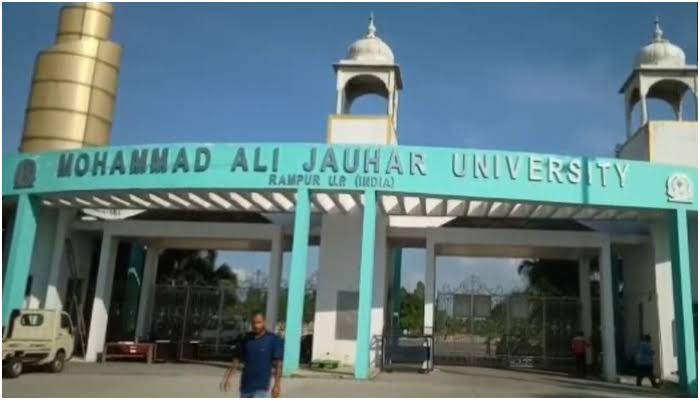

Summary
A recent protest led by Samajwadi Party’s Kuldeep Singh Bhullar highlighted ongoing tensions surrounding the proposed demolition of Maulana Mohammad Ali Jauhar University in Rampur, which is perceived as an attack on educational institutions linked to the Sikh and Muslim communities. Protesters allege that the demolition order by the Rampur Development Authority could severely impact the futures of thousands of students and is emblematic of broader trends of discrimination within the region.
Protests Against Demolition Order
On Tuesday, a coalition of protesters gathered at Maulana Mohammad Ali Jauhar University, expressing substantial discontent over a demolition order issued by the Rampur Development Authority (RDA). This directive seeks to raze 38 out of the 40 university buildings, branding them as unauthorized constructions that lack proper governmental approval. The protest, predominately involving Sikh community members, signifies deep-rooted concerns about perceived governmental bias against educational institutions that serve minority communities.
Kuldeep Singh Bhullar articulated that the university symbolizes hope and learning for many and criticized the government’s intent to dismantle what he termed a “temple of education” as being driven by malice. The backlash has continued for four consecutive days as students remain steadfast in their demands for the RDA to revoke the demolition order.
Community Solidarity and Student Activism
Expressions of solidarity from local communities have been evident. Bhullar mentioned that the Sikh community’s members visited the campus to show support, calling for collective action against the demolition. Students are also actively voicing their concerns; for instance, Iqra, a student from Uttarakhand, remarked on the impact that a demolition would have on the academic futures of thousands. She advocated for fines and regulatory measures instead of outright demolition to address any alleged irregularities.
Mohammad Shoaib and Mohammad Shavez, pharmacy students, echoed the sentiments of urgency, threatening to confront the demolition machinery if necessary and even consider a hunger strike. As the protests escalate, the students’ resolve highlights the desperate attempts of marginalized communities to safeguard their educational institutions against what they perceive as systemic discrimination.
Government’s Justification and Broader Implications
The government structures, through the RDA, have justified the order by claiming that the university’s buildings were constructed without proper authorization. The Public Works Department further complicates the matter by classifying the university’s main gate and internal roads as public thoroughfares, rendering them illegal as per department regulations. Additionally, notices citing irregularities have emerged from both the Fire Department and the Income Tax Department, adding to the climate of fear and uncertainty.
This situation is indicative of a larger backdrop in which minority institutions are under increasing scrutiny. The targeting of Jauhar University resonates with ongoing concerns about educational policies contributing to social exclusion, particularly affecting Muslim and Sikh communities in India. Such instances raise questions about the equity of governmental scrutiny and the overarching political dynamics that may fuel marginalization.
Why It Matters
This incident leverages a deeper understanding of the sociopolitical landscape in India, particularly regarding relations between religious minorities and the ruling government. The government’s actions against Jauhar University reflect wider patterns of discrimination and exclusion in educational access for marginalized communities. For stakeholders—developers, policymakers, and civil society organizations—this scenario underscores the critical need for inclusive policies and regulatory frameworks that safeguard the rights of minority educational institutions to ensure social equity and justice.
Frequently Asked Questions
What is Maulana Mohammad Ali Jauhar University?
Maulana Mohammad Ali Jauhar University is an educational institution located in Rampur, India, aimed at providing educational opportunities to various communities, including those that are often marginalized.
Why is the protest happening against its demolition?
The protest is fueled by the Rampur Development Authority’s order to demolish the majority of the university’s buildings, which protesters claim targets educational institutions serving minority communities out of malice.
What is the government’s rationale for the demolition order?
The government asserts that the buildings were constructed without proper authorization and are therefore deemed illegal. The situation has raised concerns about the fairness of the regulatory processes affecting minority institutions.
What are the potential consequences of the demolition for students?
The proposed demolition could jeopardize the education and future of thousands of students currently enrolled at the university, leading to increased unrest and activism among those affected.