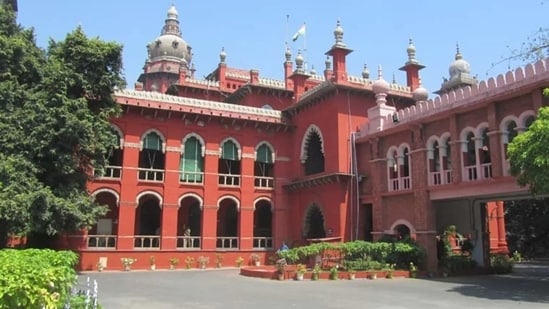

The Madras High Court recently ruled against a Tamil Nadu government order that permitted individuals from various backward classes who converted to Islam to continue receiving reservation benefits. This decision emphasizes the legal precedent that conversion to Islam does not equate to membership in one of the recognized Backward Class Muslim communities.
The Court’s Ruling and Its Implications
On June 25, 2024, Justices GR Swaminathan and PB Balaji of the Madras High Court held that an executive order could not overturn a binding legal precedent. The court reaffirmed a principle established over seven decades ago, stating that converting to Islam changes one’s religion but does not automatically confer membership in a registered backward class community. This ruling stems from a case involving Sameer Ahamed, who converted to Islam and sought to identify himself as a Muslim Lebbai. His application for backward class status was rejected by a tehsildar, a decision which the court upheld.
A Historical Context of Legal Precedents
The foundation for this ruling can be traced back to the 1951 case of G Michael vs S Venkateswaran, where the court concluded that conversion results in a person merely becoming a “Mussalman,” severing ties with their previous caste identity without gaining membership in any specific Muslim community. Justice Swaminathan reiterated in the recent ruling that this understanding has been upheld consistently over the years, illustrating that while Islam promotes equality, Indian society has historically created distinct birth-based social groups within it.
The Executive Order’s Unconstitutionality
The Tamil Nadu government’s order issued on March 9, 2024, aimed to classify converts from backward classes as members of backward class Muslim communities, allowing them to access reservation benefits. However, the court deemed this initiative unconstitutional, asserting that it conflicted with established legal principles. Any changes to the law must arise through legislative measures rather than administrative directives. Additionally, the court noted that the government’s attempt to combine distinct categories into common communities was arbitrary and legally unjustifiable.
Why It Matters
This ruling has broader implications for social justice and equality within the Indian context. It reinforces the importance of legal precedents in shaping social policies and emphasizes that executive actions cannot circumvent established jurisprudence. For the Muslim population in India, this decision highlights the complexities of navigating social identity, state recognition, and the pursuit of equitable benefits. It raises questions about the allocation of resources and opportunities, particularly in a diverse society where caste and religion intertwine, affecting access to education, employment, and political representation.
Frequently Asked Questions
What was the recent ruling by the Madras High Court regarding reservation benefits for Muslim converts?
The court ruled that individuals from backward classes who convert to Islam cannot claim backward class status, reaffirming that conversion alters religious identity but does not confer membership in designated backward communities.
Why was the Tamil Nadu government’s order deemed unconstitutional?
The court deemed the government order unconstitutional because it attempted to override binding judicial precedents and classifying converts from various categories into singular communities without legislative backing.
What historical case influenced the court’s recent decision?
The 1951 case of G Michael vs S Venkateswaran significantly influenced the ruling, establishing that conversion to Islam expels an individual from their caste, preventing automatic membership in any particular Muslim community.
How does this ruling affect the Muslim community in Tamil Nadu?
This ruling could limit access to social schemes and benefits for many Muslims who convert from backward classes, thereby emphasizing the need for a clear legal framework that recognizes the nuances of caste and religion.