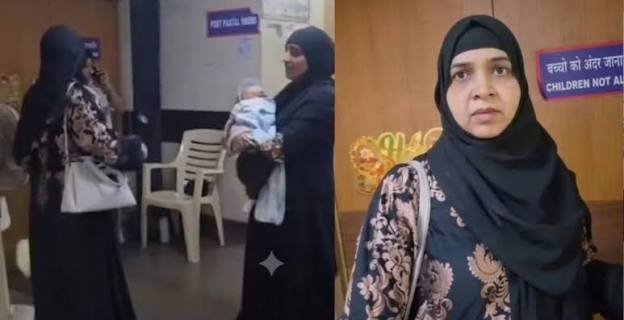

In a controversial incident at Cooper Hospital in Mumbai, two Muslim women were allegedly barred from entering the maternity ward due to their attire, specifically their burqas. This event has triggered widespread condemnation from various political and social leaders who argue that it reflects a growing trend of discrimination against Muslim individuals in India.
Incident Details: Discrimination at the Hospital
Advocate Jahanara reported that she was stopped from entering the maternity ward of Cooper Hospital because she was wearing a hijab. Despite introducing herself and seeking clarification, she claims she was told, “No matter who you are, we will not allow you to enter in a burqa.” The security personnel allegedly cited security concerns around baby thefts as the reason for their actions.
Another advocate, Zahra Shaikh, shared a similar experience, confirming that the videos circulating on social media about the incident were authentic. She described being told she needed to remove her burqa to enter the ward, despite her attempts to comply by showing her face. This raises questions about the hospital’s policies towards individuals wearing traditional Islamic attire.
Political and Social Reactions
The incident sparked a fierce backlash from various political figures. Vidya Chavan, spokesperson for the NCP-SP, condemned the actions as an infringement on religious rights, stating, “If their religion requires them to wear a burqa, no watchman or man has the right to question why they are wearing one.” She demanded an inquiry into the hospital’s security protocols.
Mumbai Mayor Ritu Tawde remarked that the incident is a matter of basic humanity, emphasizing that hospitals should never judge individuals based on their religion. She assured that action would be taken against any workers involved in the incident, highlighting the governance issues within the municipal corporation.
Criticism also came from AIMIM spokesperson Waris Pathan, who pointed out that the incident is part of a larger pattern of targeting Muslims for their attire. He stressed that the presence of burqas and hijabs should not be equated with extremism, and called for better security measures such as increased CCTV surveillance rather than discriminatory practices.
Security vs. Discrimination: A Balancing Act
Shiv Sena spokesperson Krishna Hegde acknowledged the need for security in hospitals but insisted that everyone has the right to wear the clothing of their choice. His comments reflect a complex balancing act between ensuring safety within public spaces and respecting individual rights, especially for marginalized communities.
The reliance on security excuses to justify discrimination can signal a dangerous precedence in a diverse society like India. The incident at Cooper Hospital raises broader questions regarding policy-making in public institutions, particularly in how they accommodate diverse religious practices without compromising safety.
Why It Matters
The situation underscores the ongoing challenges faced by Muslim communities in India, particularly under current socio-political climates that often promote exclusionary practices. The incident at Cooper Hospital is not an isolated one, but rather part of a rising trend of marginalization. Such instances can have profound implications for community relations and individual rights, leading to increased tensions and a breakdown of social cohesion. Moreover, they challenge the constitutional promise of religious freedom, which is vital for India’s secular identity.
If discrimination persists, it risks further alienating communities and may hamper efforts toward national unity and integration. Hence, the importance of respectful dialogue and comprehensive legal frameworks to protect all citizens cannot be overstated, especially in the context of ongoing political narratives supported by certain ideologies.
Frequently Asked Questions
What happened to the two Muslim women at Cooper Hospital?
They were reportedly denied entry to the maternity ward due to wearing burqas, with security staff citing concerns over baby thefts as justification.
How have political leaders reacted to the incident?
Political leaders from various parties, including NCP-SP and AIMIM, condemned the actions taken by the security personnel and called for inquiries into discrimination against Muslim women.
What measures are being suggested to improve security at hospitals?
Parliamentarians like Waris Pathan have suggested enhancing security through better surveillance, such as increased installation of CCTV cameras, rather than employing discriminatory practices.
What does this incident signify for Muslim communities in India?
The incident illustrates broader issues of discrimination and exclusion that Muslim communities face, potentially exacerbating social tensions and challenging the secular framework of Indian governance.