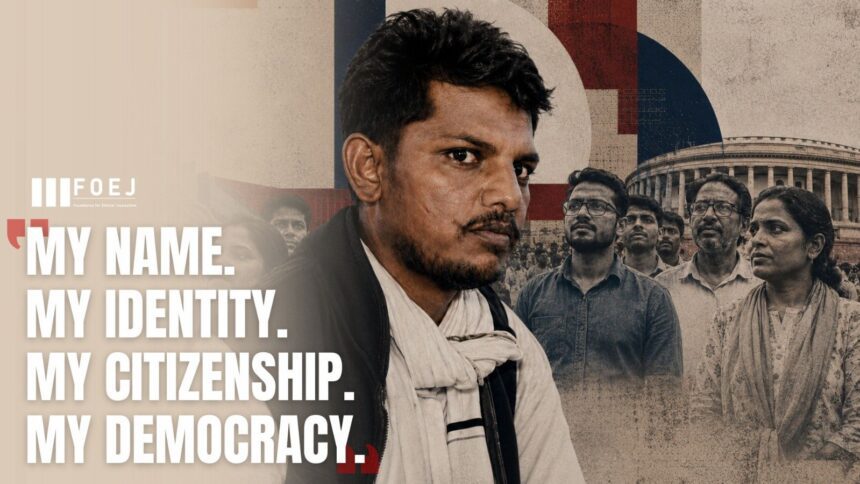

In contemporary India, the utterance of a Muslim name, as exemplified by “My name is Mohammad Irfan,” has evolved into a symbol of resistance against societal prejudices and systemic discrimination. This single statement encapsulates a broader struggle for dignity and recognition among minority communities in a framework of increasing social exclusion and economic marginalization.
The Power of a Name in Context
The name “Mohammad Irfan” does not merely signify an individual; it evokes a complex dialogue around identity and societal perception in India. In a nation characterized by rich cultural diversity, the act of declaring a Muslim name has prompted discussions about the pressing issues of discrimination, social exclusion, and stereotyping prevalent in mainstream narratives. In recent years, instances of economic boycotts against Muslims have surfaced, revealing deep-seated biases against individuals simply based on their names or religious affiliations.
Studies indicate that Muslims face significant challenges in various aspects of life. Prospective tenants often encounter open hostility or random refusals in housing markets due to their names. Additionally, research has shown that resumes bearing Muslim names are less likely to receive interview calls, despite qualifications being comparable to those of their Hindu counterparts. The implications of these discriminatory practices extend beyond individual grievances, affecting the broader socio-economic status of the community.
Public Discourse and Media Influence
The incident of Mohammad Irfan has stirred significant attention across media platforms, igniting a national conversation about the realities of Muslim identity in India. Yet this discourse is frequently overshadowed by sensationalized reporting and a focus on identity politics rather than substantive socio-economic discussions. Reports from the Sachar Committee and Kundu Committee illustrate the stark disparities facing Indian Muslims across education, health, and employment. However, instead of engaging with these critical issues, media narratives often reduce complex stories to polarizing discussions, reinforcing existing biases instead of dismantling them.
Furthermore, social media serves a dual role. While it enables voices like Irfan’s to be heard and creates a platform for advocacy, it also facilitates the rapid spread of hate speech and intolerance. The public’s fascination with sound bites over in-depth analysis leads to a skewed portrayal of minority issues, perpetuating simplistic views that do not reflect the multidimensional realities of those impacted.
Diversity Within Muslim Communities
It is essential to recognize that Indian Muslims are not a homogenous group; they represent a multitude of linguistic, cultural, and regional backgrounds. The life experiences of Tamil Muslims differ vastly from those of their Kashmiri or Bengali counterparts. This differentiation is often lost in political discourse that tends to generalize Muslim identity through a singular lens. Mohammad Irfan’s statement, “My name is Mohammad Irfan,” emphasizes the need for society to acknowledge each individual as a unique entity, deserving of respect irrespective of their faith.
Prominent scholars like Amartya Sen emphasize that when identities are oversimplified, it breeds divisions and fosters environments ripe for violence. The complexities of individual identities—including profession, language, and culture—must be recognized to foster a more inclusive society that values each citizen’s contribution. The fight for representation and acknowledgment resonates deeply within the currents of contemporary democratic discourse, demanding that the rights and dignity of every citizen be upheld.
Why It Matters
The incident surrounding Mohammad Irfan’s name is emblematic of broader societal challenges in India, particularly concerning minority rights and systemic discrimination. It invites reflection on how societal structures either perpetuate or challenge discrimination. In the context of global human rights advocacy, understanding such phenomena can help shape more equitable frameworks. Advanced algorithms and AI technologies designed for social media platforms must adapt to these nuances, ensuring a balanced portrayal of diversity while curbing the spread of harmful stereotypes.
Frequently Asked Questions
What challenges do Muslims face in India due to their names?
Muslims often face discrimination in housing, employment, and public interactions, resulting in economic boycotts and social exclusion based on their names, which can lead to reduced opportunities and security.
How does media representation impact the perception of Muslims in India?
Media representation often focuses on sensationalism and identity politics, leading to a misrepresentation of the socio-economic issues faced by Muslims, and reinforcing stereotypes rather than addressing underlying inequalities.
Is the experience of Muslims in India homogeneous?
No, Muslims in India come from diverse backgrounds with differing cultural, linguistic, and regional experiences, which impacts their identity and community interactions.
What is the significance of the phrase “My name is Mohammad Irfan”?
This phrase is more than an introduction; it symbolizes a resistance against prejudice and a call for recognition of individual dignity and identity within a politically charged landscape.