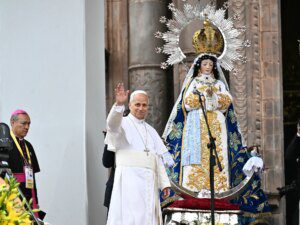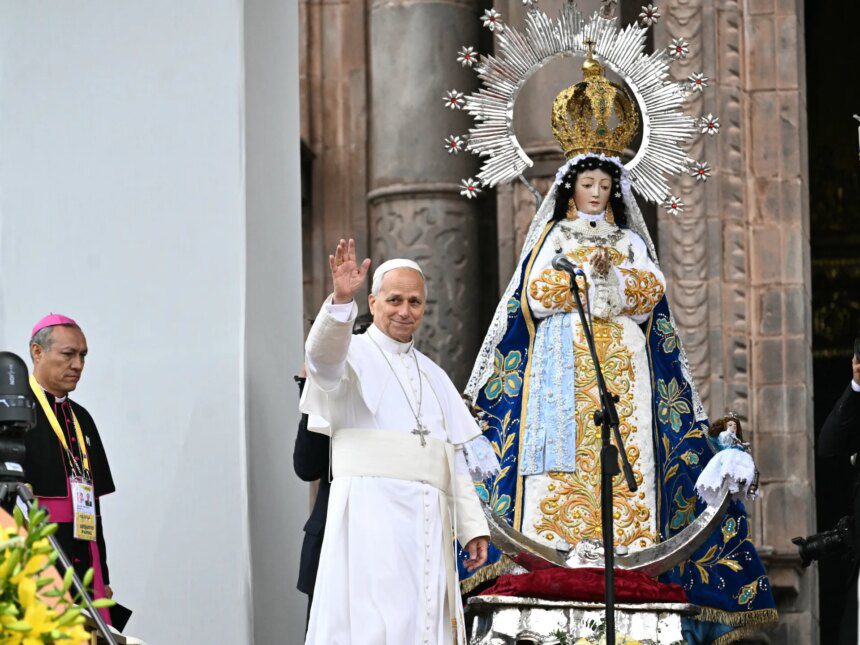

Pope Leo XIV’s recent tour of Latin America highlighted critical issues surrounding Indigenous rights and environmental protection. His stops in Peru, particularly in Cusco and Pucallpa, underscored the intertwining of culture, spirituality, and socio-political advocacy, presenting a challenge that resonates globally, including in India.
Engagement with Indigenous Culture
On the final full day of his Latin American tour, Pope Leo XIV spent the morning in Cusco, a city steeped in the legacy of the Inca Empire. Here, the pontiff delivered a poignant speech at the Indigenous fortress of Saqsaywaman. He highlighted the importance of celebrating traditional festivities that blend Indigenous and Catholic faiths, stressing that the future of such traditions lies in active transmission and not mere preservation.
“The future of these traditions lies not only in preserving what has been handed down, but also in passing it on in a living way,” he remarked, reflecting his commitment to cultural continuity, a concept also echoed in various ways among India’s many indigenous communities.
Papal Advocacy for the Environment
In the afternoon, Pope Leo visited Pucallpa, located near the Amazon basin. This part of his journey was particularly focused on environmental concerns, reinforcing the messages of his predecessor, Pope Francis, regarding ecological conservation. While addressing the audience in Pucallpa, Leo spoke out against the violence faced by Indigenous leaders who protect their land and resources from exploitation.
“Many Indigenous leaders have been murdered for defending their territories,” he asserted, drawing attention to the systemic threats posed by illegal mining, deforestation, and pollution that plague not just Peru but resonate worldwide. In India, similar challenges affect tribal communities, particularly in resource-rich areas like Odisha and Jharkhand.
Health and Resilience of the Pope
Pope Leo, who is recovering from lung cancer surgery, faced the physical demands of his itinerary with resilience, navigating the high-altitude city of Cusco, which sits at over 3,400 meters above sea level. Notably, despite being 71 years old, he demonstrated stamina throughout the 12-day tour, which also included previous stops in Uruguay and Argentina.
His visit not only marks his deepening ties to Peru—he became a citizen in 2015—but also positions him as the first Peruvian to hold the papacy. The enthusiasm exhibited by huge crowds in Cusco emphasizes his connection with the local populace, reminding observers of the communal bonds that religion can foster.
What This Means
Pope Leo XIV’s Latin American tour and his focus on Indigenous rights and environmental advocacy reflect a growing global awareness of these issues. For Indian readers, this underscores the universal challenges faced by Indigenous communities, which persist largely due to economic pressures and globalization. As India grapples with its own Indigenous rights issues, including access to land and the protection of natural resources, the Pope’s messages resonate. They remind us of the importance of cultural heritage and environmental stewardship, offering guideposts for activism and policy reform.
Frequently Asked Questions
Who is Pope Leo XIV?
Pope Leo XIV is the first Peruvian citizen to hold the papacy, having acquired citizenship in 2015 after years of service in Peru as Bishop of Chiclayo.
What were the key messages from Pope Leo’s visit to Cusco?
Pope Leo emphasized the importance of preserving Indigenous traditions and spoke out about the violence faced by Indigenous land defenders, while calling for justice and environmental protection.
How does Pope Leo XIV connect with Indigenous issues in Peru?
Pope Leo has directly addressed the rights and challenges faced by Indigenous communities, aligning his papacy with advocacy for cultural preservation and land rights, echoing similar struggles in other countries.
What parallels can be drawn between Peru and India regarding Indigenous issues?
Both nations face challenges surrounding Indigenous rights, including land displacement due to mining and deforestation. The emphasis on cultural heritage and environmental protection in Pope Leo’s messages resonates with ongoing issues faced by Indigenous tribes in India.