
Understanding the Marginalization of Muslims in Historical Context
The often overlooked contributions of the Muslim community during Goa’s colonial era reveal a significant gap in historical narratives dominated by Hindu and Catholic perspectives. Recent research by Dr. Sharmila Pais sheds light on these contributions, indicating military service, economic activities, and political representation, thereby challenging the marginalization of Muslims in documented history.
Historical Contributions of Muslims in Goa
Dr. Sharmila Pais, an esteemed historian and Associate Professor at St. Xavier’s College, Mapusa, emphasizes the underrepresentation of Muslims in Goan historiography. Her research points out that while the Portuguese era is extensively chronicled for its Hindu and Catholic elites, the participation of Muslims is scantily documented. Notably, her findings include references to Muslim contingents and local militias in Ponda and South Goa who served the Portuguese regime loyally. These groups, headed by Muslim corporals, formed part of the colonial military framework, suggesting significant trust and integration that has been historically overlooked.
Economic Engagement and Political Representation
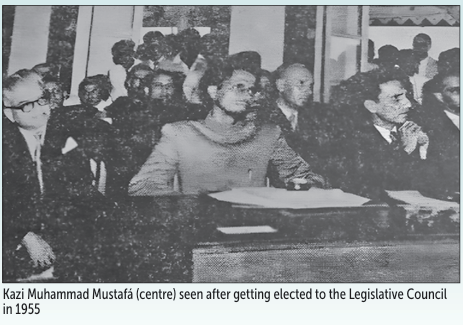
Evidence from the 19th century showcases the Muslim community’s active role in commerce, owning businesses ranging from bicycle shops to being classified as “minor capitalists.” This involvement in trade signifies a nuanced economic presence as essential contributors rather than mere spectators of colonial exploitation. Furthermore, Dr. Pais’s research indicates that Muslim participation in elections began gaining documentation post-1910, culminating in the election of Kazi Muhammad Mustafá in 1955, the only Muslim candidate in Goa’s Legislative Council before its Liberation. This reflects both a gradual inclusion and recognition of Muslims in Goan society during significant political changes.
Contemporary Implications of Historical Exclusion
The historical oversight of the Muslim community’s contributions also raises questions about current socio-political dynamics under the BJP and Sangh Parivar. The narrative of exclusion extends beyond historical analysis and resonates in contemporary policies, wherein political rhetoric often marginalizes Muslim voices. This ongoing socially constructed narrative may perpetuate discrimination and economic disenfranchisement, as evident in various forms of economic boycotts and social exclusion faced by Muslims today. Such systemic biases have implications for social harmony and equitable development in India.
Why It Matters
The significance of acknowledging the historical contributions of marginalized communities, particularly Muslims in Goa, extends to contemporary governance and societal structures. It underscores the importance of inclusive narratives in historical documentation, which can inform current policies and rectify historical injustices. Addressing these gaps fosters broader social cohesion, essential for national unity. Understanding this context is vital for policymakers, educators, and the general public as they navigate the complexities of communal relations in India today.
Frequently Asked Questions
What were the roles of Muslims in Goa during Portuguese rule?
Muslims participated in military service, trade, and governance, contributing significantly to the local economy and political landscape, though their roles have often been overshadowed by Hindu and Catholic narratives.
How has the historical exclusion of Muslims impacted modern-day Goa?
The underrepresentation of Muslims in historical documentation has led to ongoing marginalization and exclusion in societal narratives, perpetuating discrimination and socio-economic challenges faced by the community today.
Who is Dr. Sharmila Pais, and what is her research focus?
Dr. Sharmila Pais is a historian and Associate Professor at St. Xavier’s College, specializing in the contributions of the Muslim community in Goa during the colonial era, revealing crucial aspects often neglected in mainstream historiography.
Why is it important to acknowledge the contributions of minorities in history?
Recognizing the contributions of marginalized communities is crucial for fostering an inclusive society. It helps to rectify historical narratives, promoting social cohesion and equity in governance.