
Congress Party Highlights Temple Property Theft Consequences
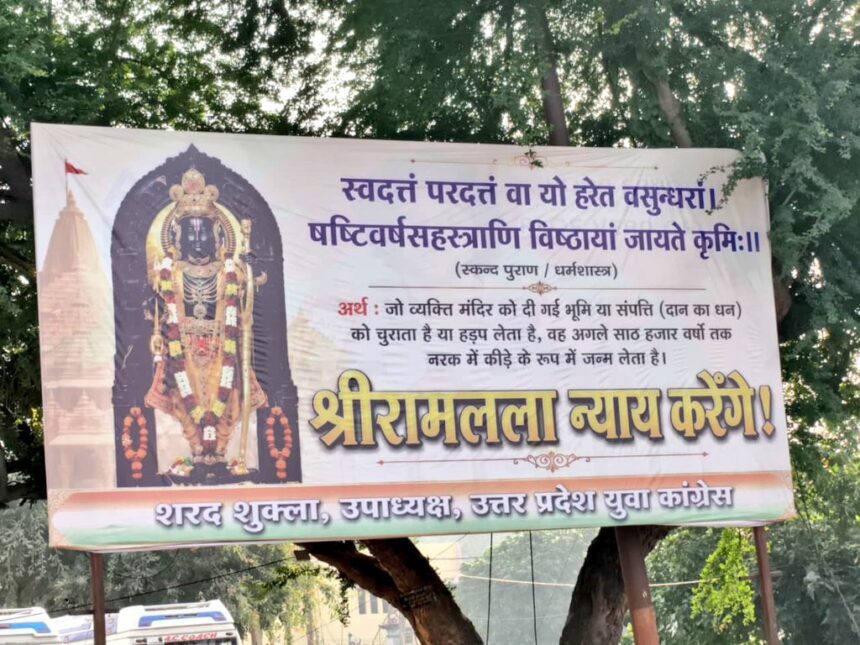
The Congress party recently raised eyebrows in Ayodhya by putting up hoardings that reference a verse from the Skanda Purana. The verse explicitly condemns theft of temple property, emphasizing severe spiritual ramifications for wrongdoers—suggesting they would be reborn as worms in hell for the duration of 60,000 years.
Context of the Hoardings
The hoardings display a verse focusing on the grave consequences of stealing from temples, aligning the Congress party’s message with cultural and religious narratives. By utilizing religious texts like the Skanda Purana, the party not only addresses the issue of corruption but also seeks to connect with the religious sentiments of the populace. In a region like Ayodhya, which has deep-rooted cultural significance, such messages can resonate powerfully with voters.
Cultural Significance in Ayodhya
Ayodhya holds a prominent place in Indian spirituality and politics, being considered the birthplace of Lord Ram. The temple at Ayodhya has been at the center of longstanding political and communal conflicts. The Congress party’s choice to use religious text for political commentary reflects an intensified approach to addressing issues surrounding corruption, especially related to religious organizations. This tactic also attempts to reposition the party as a defender of Hindu religious values, which could attract more voters in this sensitive region.
Analysis of the Political Implications
The deployment of this hoarding can be viewed as a strategic move by the Congress party to connect with voters who are concerned about corruption, particularly involving religious institutions. The message suggests a moral high ground that the Congress party is attempting to claim over its political rivals. It reflects an acute awareness of the changing dynamics of Indian politics, where religious sentiment and ethical governance intersect. As voters become increasingly aware of the misuse of temple funds and resources, the Congress party positions itself as a guardian of religious sanctity against corruption.
Why This Matters
The significance of this move lies in the way it combines religious sentiment with political strategy to address rampant corruption. In a country where faith plays a crucial role in everyday life, linking political narratives to religious texts potentially enhances a party’s appeal. The Congress party appears to recognize the importance of addressing voter concerns regarding ethical governance, especially in a landscape where trust in political institutions is waning. As the political landscape evolves, such messages may play a pivotal role in shaping voter behavior and preferences leading up to future elections.
Frequently Asked Questions
What does the Skanda Purana verse say?
The verse asserts that individuals who steal from temple property are destined to be reborn as worms in hell for 60,000 years, serving as a stern warning against corruption in sacred spaces.
Why is Ayodhya significant for political messaging?
Ayodhya is culturally and spiritually significant, being regarded as the birthplace of Lord Ram. The ongoing political and religious significance makes it a crucial area for parties to engage with religious narratives.
How does this move affect Congress’s image?
This initiative may enhance the Congress party’s image as a defender of ethical governance and religious values, positioning it against perceptions of corruption among its political rivals.
What implications does this have for future elections?
Using religious texts to highlight moral issues like corruption could affect voter sentiment and influence election outcomes, especially in regions sensitive to religious identity and ethics.