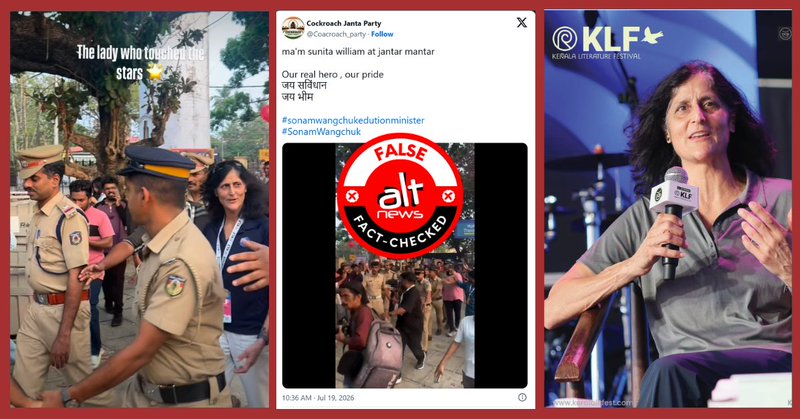

A misleading video is circulating on social media, falsely claiming that former NASA astronaut Sunita Williams visited the CJP protest site at Jantar Mantar in Delhi. This video, however, is actually from a January 2026 event at the Kerala Literature Festival, where Williams was present. As of July 19, 2026, she has not visited the protest site.
Understanding the False Claims
The viral video shows Sunita Williams walking through a crowd, escorted by police personnel, leading many to believe she was making a significant appearance at Jantar Mantar. The claim gained traction primarily through social media platforms, where users quickly associated the footage with ongoing protests, particularly those related to the Citizenship Amendment Act (CAA) and National Register of Citizens (NRC).
This misrepresentation not only misleads the public regarding her agenda but also uses her reputation as an astronaut and public figure to lend credibility to the claims surrounding the protests. As a celebrated figure, Williams’s perceived involvement could significantly impact public sentiment, making the distortion particularly concerning.
The Role of Social Media in Misinformation
Today’s digital landscape plays a crucial role in the rapid spread of misinformation. Videos and images can be manipulated, taken out of context, or misattributed to create narratives that can easily capture the public’s attention. In this case, the false association of Williams with the Jantar Mantar protest capitalizes on the emotional resonance of the ongoing civil rights protests in India.
Social media platforms can exponentially amplify such falsehoods, leading to a broader misinformation cycle that undermines informed discourse. This not only affects individual reputations but poses a threat to the overall narrative surrounding important national issues, as misinformation can lead to heightened tensions and polarization among the public.
Public Reactions and Implications
The widespread belief in the false claims surrounding Williams’s alleged visiting of the protest site has seen a polarized public reaction. Supporters of the protest movements expressed enthusiasm, interpreting her presence as a noteworthy endorsement from an esteemed figure. Conversely, skeptics criticized the attempts to fabricate narratives for political leverage, demanding more accountability in what circulates as news.
The implications of mischaracterizing the event reach beyond Williams; they raise questions of trust and integrity in both media reporting and social platforms. An informed public is essential in a democracy, and ensuring accuracy is critical in promoting a healthy discourse on sensitive issues like citizenship and national identity.
Why This Matters
The misrepresentation involving Sunita Williams highlights critical issues surrounding misinformation, especially in the context of Indian politics. As India faces ongoing debates over citizenship rights, the narratives constructed around influential figures can significantly sway public opinion.
The ability to discern fact from fiction is essential for citizens, enabling them to engage meaningfully in national dialogues. Furthermore, public figures inadvertently caught in political machinations must exercise caution, as their reputations can be exploited to bolster narratives that may not align with their actual beliefs or actions.
Frequently Asked Questions
What was the video about?
The video in question falsely depicts former NASA astronaut Sunita Williams at the CJP protest site in Delhi when it was actually footage from an event she attended in January 2026 at the Kerala Literature Festival.
Why is this misinformation significant?
Misinformation can disrupt public discourse and undermine trust in credible figures and sources. The erroneous claim could influence public perceptions about the ongoing protests in India and potentially escalate tensions surrounding citizenship issues.
How can one verify the authenticity of such claims?
To verify claims, one can check reliable news sources, fact-checking websites, and official social media channels of individuals involved to confirm their whereabouts and statements.
What impact do public figures have in such political scenarios?
Public figures, like Sunita Williams, carry significant weight in shaping perceptions. Their alleged endorsements or disavowals can mobilize public sentiment and influence political movements, making it critical that their actions and statements are accurately represented.