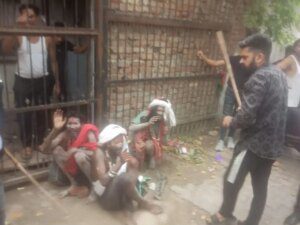
A recent court ruling in Uttar Pradesh has ordered the demolition of the Saharanpur Collectorate Mosque, imposing a fine of ₹6.41 crore on its occupants. This action has raised concerns about discrimination and marginalization of the Muslim community under the current political climate, reflecting a pattern of similar incidents across the state.
Background of the Case
The order was issued by City Magistrate Kuldeep Singh, following a complaint from Vikas Tyagi, a former provincial coordinator of the Bajrang Dal. Tyagi claimed that the mosque, situated within a high-security government complex, had been illegally constructed and was being misused for commercial purposes, including renting out rooms and operating a post office. This complaint gained traction after Tyagi met with Chief Minister Yogi Adityanath, leading to the government’s scrutiny.
Political and Community Reactions
The decision has ignited significant political backlash, particularly from local Congress MP Imran Masood, who cited the ruling as unlawful. Masood claimed that due legal processes, such as a fair hearing and a 15-day notice for responses, were not followed. He expressed that fear of violent opposition led them to refrain from resisting the demolition physically. On the other hand, district officials defended the ruling as standard anti-encroachment procedure, alleging that the mosque was built without authorization and that notices were issued prior to the demolition order.
Context of Widespread Discrimination
This incident is part of a wider trend of anti-Muslim actions in Uttar Pradesh. Earlier this year, parts of the Madni Mosque in Kushinagar faced demolition for similar alleged encroachments, leading to a Supreme Court contempt petition. The Supreme Court had previously established guidelines stating that demolitions should not occur without due process, except for specific unauthorized structures such as those on public roads. However, the imposition of heavy fines on mosque caretakers in regions like Sambhal and Sitapur reflects a concerning pattern of systemic discrimination, particularly against places of worship.
Why It Matters
The Saharanpur case is significant beyond its local impact; it underscores a worrying trend of institutionalized discrimination against minorities in India. This aligns with broader political narratives under the ruling Bharatiya Janata Party (BJP) and its affiliates, who have often been accused of marginalizing Muslim communities. Such actions not only violate legal norms, but they also exacerbate socio-economic divides, push vulnerable groups into further isolation, and generate an environment of fear and hostility towards Muslims. This sets a troubling precedent, threatening the fabric of India’s secular ethos and undermines the rule of law.
Frequently Asked Questions
What prompted the court’s order for demolition of the mosque?
The court ordered the demolition after a complaint was filed alleging that the mosque was illegally constructed in a high-security government complex and being misused for commercial purposes.
What are the allegations against the mosque’s management?
The allegations include operating a post office within the mosque and renting rooms to outsiders, which were claimed to generate rental income for the mosque committee.
What legal precedent exists for demolitions in India?
The Supreme Court of India laid out guidelines in November 2024, stating that no demolition should occur without prior show-cause notice and an opportunity for a hearing, barring certain exceptions.
What course of action is the mosque committee planning?
The mosque committee intends to appeal the court’s decision before a higher court, citing that the mosque has historical significance and has functioned as a place of worship for over 70 years.