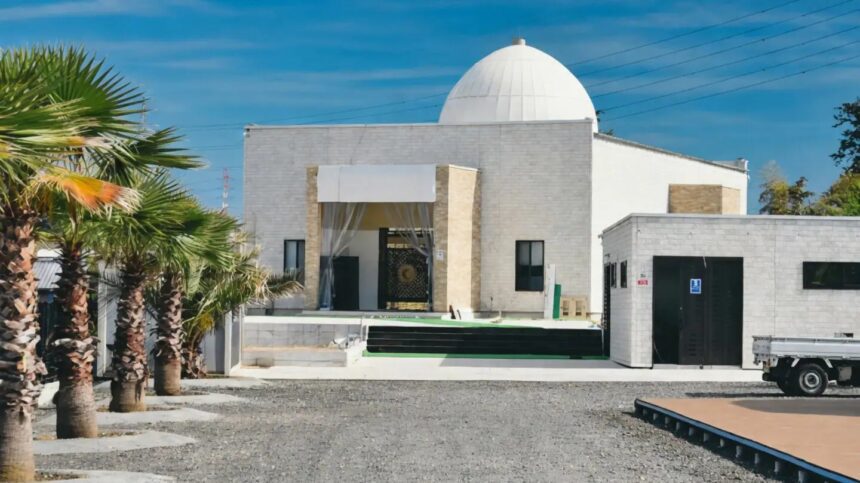

Japanese authorities have ordered the demolition of an illegally constructed mosque in Kawagoe City, highlighting stringent zoning laws and the consequences of non-compliance with local regulations. The incident raises broader concerns about the treatment of minority communities within Japan, as it underscores challenges related to the integration of foreign religious practices amid strict urban planning policies.
Overview of the Mosque’s Construction
The mosque, known as Japan Jaame Masjid Ramzan, was established on a 4,500-square-metre site in Shimo-Akasaka, Kawagoe. It opened its doors in April 2026, amidst considerable controversy. Authorities noted that the structure was erected without necessary permits in a specially regulated “urbanisation control zone” defined under Japan’s City Planning Act, where construction typically requires special municipal approval.
City officials became aware of the unauthorized construction in October 2024, spurred by complaints from local residents. Despite multiple stop-work orders issued by inspectors, construction continued, with workers reportedly claiming they did not understand Japanese when approached by officials. The original landowner and subsequent owners both distanced themselves from the building’s legal compliance.
Kawagoe City’s Regulatory Response
Kawagoe City officials have stated that the demolition order is strictly related to violations of building regulations and is not a direct affront to the mosque’s religious significance. “This structure was built without the city’s permission, and we are continuing guidance with the ultimate goal of its removal,” they emphasized in an official statement. Local authorities are closely monitoring site activity, limiting attendance to smaller prayer gatherings while instructing the owners to restore the land to its original state.
The dynamic interplay between local governance and community integration becomes increasingly apparent through this incident, as officials seek to uphold the law while managing community tensions surrounding the mosque’s existence.
Reactions From the Pakistan Embassy and Community
The Pakistan Embassy in Tokyo has publicly distanced itself from the mosque following the emergence of the controversy, asserting that it has no involvement in the violations of Japanese law. Ambassador Abdul Hameed attended the inauguration under the belief that all necessary legal approvals had been secured.
In light of these developments, the embassy has advised the Pakistani community in Japan to abide fully by local regulations during the construction of places of worship. Despite Japan witnessing a rise in the number of mosques—about 160-164 by mid-2025—the Kawagoe mosque case has drawn significant attention due to its disregard for established zoning laws and permits, contrasting the successful integration efforts by other Muslim communities.
Why It Matters
This incident exemplifies broader issues regarding religious minority rights in Japan. As the Muslim population has grown, incidents like the Kawagoe mosque’s controversial opening reveal the complexities faced by minority faiths navigating Japanese legality. The mosque’s challenges highlight the balancing act of adhering to local regulations while attempting to foster an inclusive environment for diverse religious practices. The case not only reflects on potential discrimination against foreign religious expressions in Japan but also offers critical insights for policymakers on how to better integrate diverse communities into existing legal frameworks.
Frequently Asked Questions
Why was the mosque in Kawagoe ordered for demolition?
The mosque was constructed without necessary permits in an area classified as an “urbanisation control zone,” violating Japan’s stringent City Planning Act regulations.
What is the stance of Kawagoe City officials regarding the mosque?
Kawagoe City officials have stated that the demolition order pertains solely to the violation of building regulations and is not an attack on the mosque’s religious significance.
What did the Pakistan Embassy say about the mosque’s inauguration?
The Pakistan Embassy distanced itself from the mosque, clarifying that it has no connection to any illegal developments and urging community members to comply with Japanese laws.
How does this situation affect the Muslim community in Japan?
This incident has raised awareness about the challenges faced by the Muslim community in Japan, especially regarding legal compliance and community relations, amidst a growing number of mosques in the country.