
Summary
The Indian Union Muslim League (IUML) has escalated its longstanding demand for the division of Malappuram district in Keralam from a proposed bifurcation into a trifurcation, aiming to create three distinct districts. This demand arises amid administrative pressures and demographic shifts that have raised concerns about governance efficiency, sparking debate over political motivations and demographic consolidation.
IUML’s Trifurcation Demand
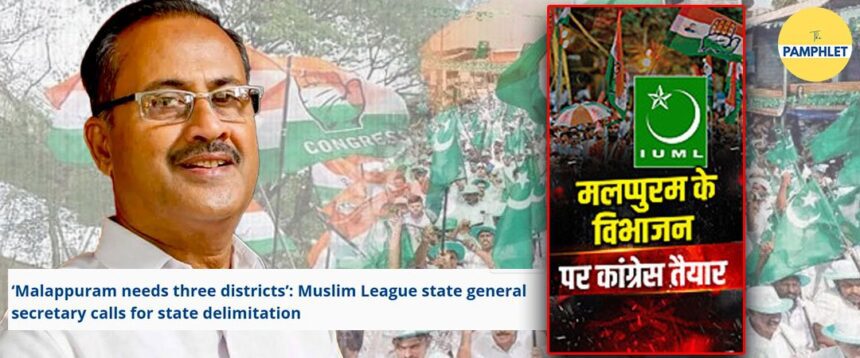
Months into governance in Keralam, the IUML, a key ally of the Congress and part of the ruling United Democratic Front (UDF), has intensified its call for the trifurcation of Malappuram. Historically, the league sought a bifurcation of the district, which, as per the 2011 census, has a Muslim population constituting 71% of its total 47 lakhs residents. The IUML’s state general secretary, PMA Salam, is now advocating for a three-district model, reflecting a shift in strategy that may align with demographic changes and political influence.
Administrative and Political Implications
The underlying rationale for this demand revolves around the administrative challenges faced by Malappuram. Proponents argue that the current size of the district results in overwhelming pressure on revenue offices and administrative institutions, making governance increasingly complex. Furthermore, supporting organizations like the Kerala Muslim Jamaat and SDPI believe that adding regions from neighboring Palakkad could alleviate the administrative burden. Critics, however, question whether the call for division is genuinely about efficiency or a strategic maneuver to strengthen political leverage among a growing Muslim population in the region.
Congress’s Response and Broader Context
The Congress-led UDF government, following its recent ascent to power, has revealed intentions to consider the IUML’s demand for bifurcation. While they promise broader district creation across Keralam, the focus appears to lean towards IUML’s agenda, hinting at a politically motivated response to rising Muslim demographics, which some say has outpaced Hindu and Christian populations. The UDF government, led by VD Satheesan, has also announced plans to initiate a delimitation commission to evaluate new district formations, potentially reinforcing existing demographic divides.
Why It Matters
The controversies surrounding Malappuram’s trifurcation highlight broader issues of governance, demographic changes, and political strategy in India. Discussions like these resonate beyond regional implications; they reflect the ongoing negotiations of identity, representation, and administrative efficiency in a diverse nation. As the balance of power continues to evolve, the consequences of such demands may set precedents affecting not just Keralam but the larger landscape of Indian governance and citizenship. This situation serves as a lens through which social cohesion and political narratives intersect, impacting governmental policy towards minority communities.
Frequently Asked Questions
What is the main issue surrounding Malappuram’s division?
The IUML is advocating for the trifurcation of Malappuram to address alleged administrative pressures and improve governance efficiency, though critics suggest it may be politically motivated.
What demographic changes are influencing this demand?
The Muslim population in Keralam has been rising, while the Hindu and Christian populations are reportedly declining, impacting political dynamics and governance needs in districts like Malappuram.
How have local organizations reacted to the IUML’s demand?
Besides the IUML, other organizations such as the Kerala Muslim Jamaat and SDPI support the demand, arguing for better administrative management and efficiency through division.
What steps has the UDF government taken regarding this issue?
The Congress-led UDF government has hinted at accepting the bifurcation demand and intends to set up a delimitation commission to study the creation of new districts, reflecting political maneuvering and responsiveness to IUML’s agenda.