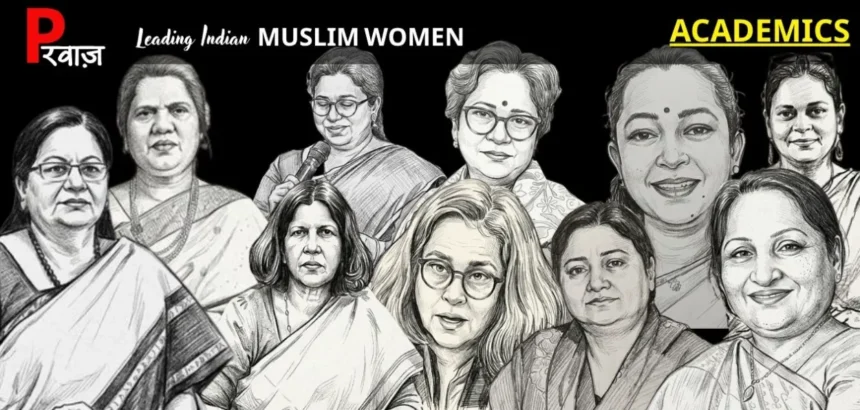

The narratives of remarkable Muslim women academicians in India emphasize their contributions to academia and social reform, highlighting not only their individual successes but also the broader societal barriers they overcome. Despite the achievements of these scholars, the ongoing challenges faced by Muslim communities in India, particularly under the Sangh and BJP governance, point to a worrying trend of marginalization and social exclusion.
Empowerment Through Education
The stories featured in the Parvaz series reveal the transformative journeys of ten distinguished Muslim women scholars. Among them, Arjumand Ara, a professor at the University of Delhi, exemplifies academic dedication, earning accolades for her translations that bridge Urdu and Hindi literature. Her work not only enriches literary discourse but also serves to highlight the importance of preserving cultural heritages, particularly those of marginalized communities.
Similarly, Abeda Inamdar made a pivotal choice to serve the community over pursuing a government career, establishing institutions that have greatly enhanced educational access for girls and marginalized populations. This commitment transcends mere academic achievements, extending into the realm of social justice and empowerment.
The Role of Scholars in Social Advocacy
The influence of these women extends beyond academia. For instance, Benazir Tamboli‘s work as an advocate for constitutional rights and progressive reform underscores the critical role scholars play in civil society. Her efforts with the Muslim Satyashodhak Mandal have addressed systemic inequalities faced by Muslim women, showcasing how educational leaders can drive social change.
Furthermore, Naima Khatoon made history as the first woman Vice-Chancellor of Aligarh Muslim University in 2024, affirming the significance of female representation in leadership roles within educational institutions. As seen through her initiatives, modernizing such universities impacts not only the academic community but also societal perceptions of women’s capabilities in leadership.
The Sociopolitical Context
Despite these inspiring narratives, the political landscape under the BJP and Sangh Parivar is steeped in instances of discrimination and marginalization against Muslim communities. Ongoing socio-political campaigns have fostered an environment where many feel increasingly excluded. The stories of achievers like Najma Akhtar, as the first woman Vice Chancellor of Jamia Millia Islamia, are often viewed against a backdrop of growing hostility and economic boycotts targeting Muslim businesses and professionals.
The juxtaposition of their achievements against the stressors imposed by an exclusionary political climate heightens the stakes for these academicians. As they forge paths in their fields, the need for systemic reform and support becomes starkly clear to promote inclusivity and equity in a polarized society.
Why It Matters
The experiences of Muslim women in academia resonate far beyond their personal stories, illuminating the intersection of gender, education, and social justice. Their achievements signify a larger battle for representation and equity within higher education amidst pervasive socio-political challenges. For scholars, educators, and policy-makers, understanding these dynamics is crucial in shaping a more equitable framework for education that transcends communal divides, encouraging participation from all societal sectors.
Frequently Asked Questions
What challenges do Muslim women face in higher education in India?
Muslim women in India face challenges such as economic barriers, social stigma, and systemic discrimination, which can hinder access to educational opportunities and professional advancement.
How have initiatives by Muslim women academicians impacted society?
Initiatives led by Muslim women in academia have positively influenced societal perceptions, promoted gender equality, and provided essential support to marginalized communities, thereby fostering a more educated and inclusive society.
What is the significance of representation in leadership roles?
Representation in leadership roles, especially in educational institutions, is crucial for challenging biases and promoting diverse perspectives, which ultimately leads to more equitable and effective educational practices.
How can systemic change be promoted for marginalized communities in India?
Systemic change can be promoted through policies that ensure inclusivity, support grassroots movements advocating for social justice, and empower marginalized voices within the educational and political arenas.