
Exploring Muslim Lives in Uttar Pradesh: Death, Memory, and Politics
Recent discussions surrounding two new books—Omair Ahmad’s Homecoming and Mohsin Khan’s Allah Miyan’s Workshop, translated by Maaz Bin Bilal—highlight the nuanced realities of Muslim lives in Awadh, Uttar Pradesh. While the narratives may not be overtly centered on death, the theme emerges as a significant force that shapes the lives of the characters, revealing the broader impacts of societal and political changes on personal and collective memory.
The Shadow of Death in Everyday Lives
Both authors engage with death as a backdrop influencing their characters’ lives. In Allah Miyan’s Workshop, 14-year-old Gibran experiences death not only as an emotional burden but as a catalyst that alters his practical circumstances. Ahmad elaborated, noting that “the death was always at the centre, that is what the book rests on.” He argues that human beings often resort to rituals and philosophies to confront the incomprehensible nature of death. However, his focus is not merely on death but on the lives and memories that linger afterward, stating, “That is both what makes death so harsh, but that is what we take away, that is what we carry.”
Contemporary Politics and Social Realities
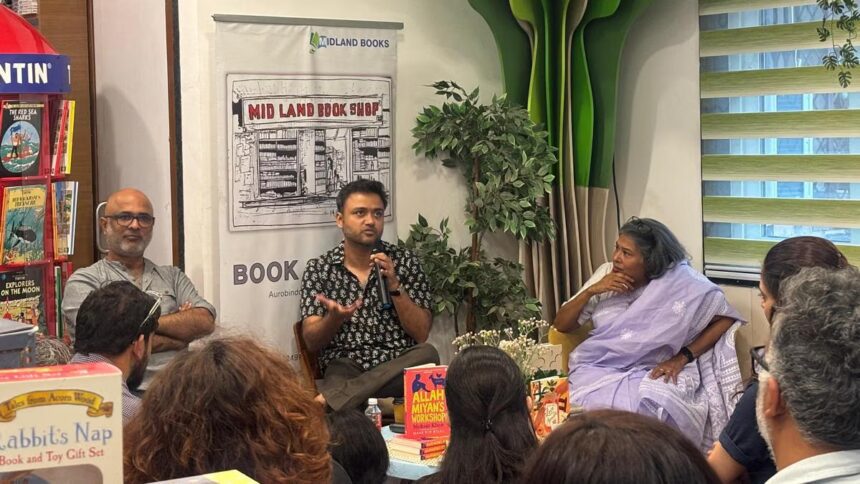
The discussion moderated by historian Madhulika Liddle touched upon how these books establish a connection between personal stories and the larger socio-political framework affecting Indian Muslims today. In Allah Miyan’s Workshop, Gibran’s father’s arrest on terrorism charges reflects a troubling reality prevalent in contemporary India, particularly for Muslims who are often unfairly subjected to suspicion and discrimination. Ahmad’s Homecoming captures the essence of a transforming Lucknow, where the destruction of monuments and icons symbolizes both a physical and cultural vanishing of a way of life. Ahmad claims, “The cities we grew up in do not exist anymore… they’ve changed. And that’s not a good thing or a bad thing, it just is.”
Intersection of Culture and Politics
One critical takeaway from the event is the crucial interplay between culture and politics. Liddle emphasized that nuances of emotion depicted in literature can resonate with a wider audience, transcending geographical boundaries. Bilal highlighted that while both novels explore Islamic themes, they also engage universal human experiences. The characters in Allah Miyan’s Workshop navigate lives where survival overshadows the concept of refined manners, illustrated by the quote, “You can’t afford tehzeeb when you are trying to get your two meals.” Both authors indicate that for writers like them, detaching from politics is nearly impossible given the broader implications it holds for their narratives and characters. As Bilal stated, “There’s politics to everything.”
Why It Matters
This conversation sheds light on the marginalization and discrimination faced by Muslims in India, especially under the current political climate. The narratives presented in the books serve as a reminder of the vital role literature plays in reflecting societal issues. As global audiences engage with these texts, they illuminate the ongoing struggles against systemic biases, misinformation, and the impact of socio-political changes on individual lives. By articulating these themes, both authors contribute to a broader understanding of the displacement and resilience present in contemporary Muslim narratives.
Frequently Asked Questions
What are the main themes in the books Homecoming and Allah Miyan’s Workshop?
The primary themes of both novels revolve around death, memory, and the sociopolitical landscape of Muslim lives in Awadh, revealing how personal experiences intersect with broader societal changes.
How do the authors address the impact of contemporary politics in their narratives?
Both authors weave in contemporary political issues, such as suspicions against Muslims and the destruction of cultural monuments, illustrating the complex relationship between individual experiences and larger socio-political dynamics in India.
What significance does Lucknow hold in these narratives?
Lucknow is portrayed as a city undergoing fundamental changes, serving as a backdrop that affects the characters’ identities and experiences, and represents the nostalgia for lost cultural values.
How do these books reflect the challenges faced by Indian Muslims today?
Through personal and emotional storytelling, the books highlight the discrimination, suspicion, and cultural shifts affecting Indian Muslims, encapsulating their struggles for recognition and representation in a changing society.