
A political storm has erupted in Rajasthan following the detention of Naveen Choudhary, a 25-year-old Instagram creator. Choudhary’s video critique of the Rashtriya Swayamsevak Sangh (RSS) led to his arrest, spotlighting ongoing debates around freedom of expression in India under the ruling Bharatiya Janata Party (BJP) and its affiliated organizations.
Background of the Incident
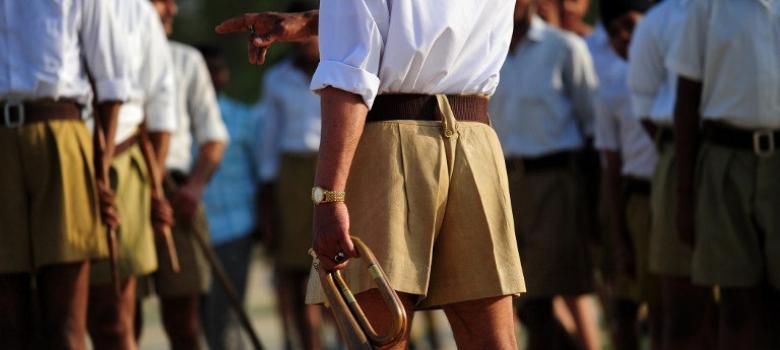
Naveen Choudhary, who manages the “Jhunjhunu Express” page with a following of over 11,000, was taken into custody on a Sunday morning after he posted a video featuring two groups of children in a playground. In the video, one group, recognized as active and athletic, is depicted skating, while the other, associated with RSS members in traditional attire, is portrayed as being influenced by hatred. Choudhary’s critical commentary suggests a stark contrast between the two groups, wherein he applauds the first for their positive contributions to society.
Police Response and Allegations
Following the video’s release, Choudhary reported that cyber police pressured him to remove the post and encountered a barrage of threatening messages, escalated by a police presence at his home. He described an incident where officers allegedly assaulted him and detained him in isolation for nearly ten hours, devoid of basic amenities. However, Kotwali SHO Shrawan Kumar Meel refuted the claims of police violence, asserting that the authorities acted on complaints regarding the video’s potential to disturb public peace. This contrasting narrative underscores the escalating tensions surrounding criticisms aimed at the RSS.
Political Reactions and Wider Implications
The political ramifications of this incident reverberate through the state, drawing sharp criticism from various opposition leaders. Former Chief Minister Ashok Gehlot labeled the police action as a manifestation of “outright dictatorship,” prompting discussions about whether dissent against the RSS has become criminalized under the current regime. Rajasthan Congress president Govind Singh Dotasra, after meeting Choudhary post-release, pledged that Congress would persist in unveiling what he termed the “true face” of the RSS. Protests from various factions, including CPI(ML) and SFI, highlight a collective pushback against perceived assaults on freedom of expression.
Why It Matters
The events surrounding Choudhary’s detention emphasize a critical juncture in India’s political landscape, particularly concerning freedom of speech and the treatment of dissenting voices. The response of law enforcement and government officials to criticism from civil society largely informs global perspectives on democratic practices in India. In an era where social media serves as a platform for diverse viewpoints, the confrontation between individual expression and institutional authority has broader implications for civic freedoms, raising questions about the intersection of technology, governance, and human rights. The situation serves as a bellwether for how effective safeguards against authoritarian tendencies can function amid rising nationalism.
Frequently Asked Questions
What led to Naveen Choudhary’s arrest?
Naveen Choudhary was arrested after posting a video critical of the Rashtriya Swayamsevak Sangh (RSS), which prompted complaints to the police about potential public disorder.
What were the allegations made against the police by Choudhary?
Choudhary alleged that the police pressured him to delete his video, threatened him, and assaulted him during his detention, which he described as being held in isolation without basic facilities.
How did political leaders respond to Choudhary’s detention?
Various political leaders, particularly from the opposition, condemned the police action. Former Chief Minister Ashok Gehlot referred to it as “outright dictatorship,” while other leaders pledged to continue voicing dissent against the RSS.
What does this incident signify for freedom of speech in India?
This incident highlights ongoing concerns regarding freedom of speech in India, particularly under the current BJP-led government, and reflects the broader societal tensions surrounding dissenting opinions and the role of ideological organizations.