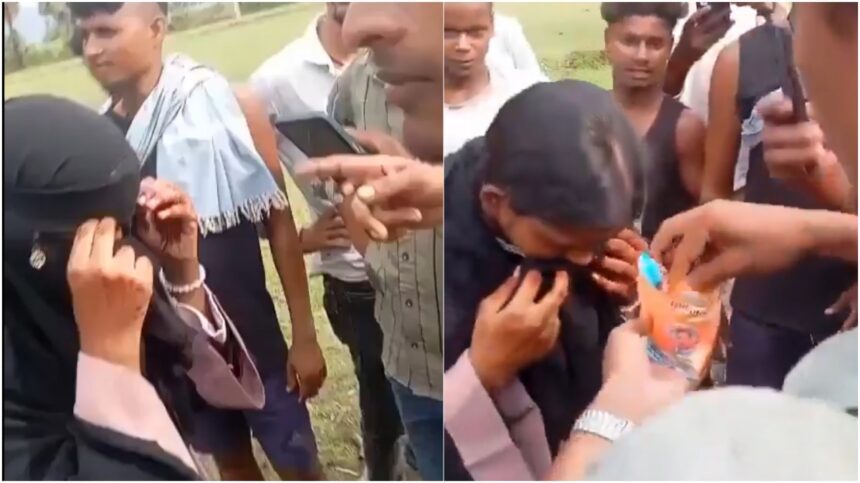

Summary of the Incident
In a distressing episode of communal harassment in Bihar’s Nawada district, two individuals have been arrested after a Muslim woman was subjected to intimidation and forced to don sindoor, a symbol of Hindu marital status. This incident, which has sparked outrage and discussions about rising intolerance, underscores the increasing vulnerability of Muslim communities in India.
Details of the Attack
On July 8, a 15-member mob surrounded the Muslim woman and her male companion in the Madhopor area while they rested under a tree after taking an examination. The group not only harassed them verbally but also insisted that the woman remove her niqab and coerced her relative to apply sindoor on her forehead multiple times. The coercive act of applying sindoor is emblematic of a cultural imposition that reflects deeper social and religious divides.
Despite the woman’s desperate pleas for the mob to cease, the attacks continued unabated. A video capturing the harrowing event has circulated on social media, leading to widespread condemnation of the act. Nawada Police, responding to the public outcry, have identified all members of the mob, with two being arrested so far. The police have stated that efforts are ongoing to apprehend the remaining attackers.
Community Response and Legal Action
The incident has ignited a wave of anger among various social groups and organizations advocating for religious equality and women’s rights. Activists have expressed concern over the implications of such communal strife for women’s safety and social harmony in India. The detained individuals, identified as Dharmendra Kumar and Bahadur Chaudhary, underscore a troubling trend of mob justice and communal vigilantism on the rise in the country.
The motorcycle used by the woman and her companion, registered under a different name, adds another layer of complexity to the case. The motorcycle’s previous owner, Parvati Devi, has since reported the sale, which highlights the ongoing issues related to social identification and accountability. Investigations are being pursued vigorously, as authorities aim to address the growing instances of communal violence that threaten social cohesion.
Why It Matters
This incident exemplifies a concerning trend of increasing intolerance and marginalization of religious minorities in India, particularly Muslims. The use of coercive religious symbols as tools of oppression not only afflicts individual victims but casts a shadow over community relations and societal acceptance. Experts argue that such events could lead to larger-scale communal tensions if not addressed adequately by law enforcement and government initiatives. This situation raises critical questions about security, social justice, and policy responses in a diverse society, ultimately impacting India’s socio-political landscape.
Frequently Asked Questions
What are the reasons behind the harassment of the Muslim woman in Nawada?
The harassment was rooted in communal tensions, with the mob targeting the Muslim woman and her male companion based on their religious background and visible practices, such as wearing a niqab.
What steps are the police taking in response to this incident?
The Nawada Police have arrested two individuals involved in the incident and are actively searching for the remaining accused. They have identified all 15 members of the mob participating in the harassment.
How does this incident reflect broader societal issues in India?
This incident underscores a worrying trend of rising intolerance towards religious minorities in India, particularly Muslims, and highlights issues of communal violence and women’s safety in the region.
What can be done to prevent such incidents in the future?
Addressing communal tensions requires a multifaceted approach, including legal accountability, community engagement initiatives, and educational programs promoting tolerance and social cohesion across religious lines.