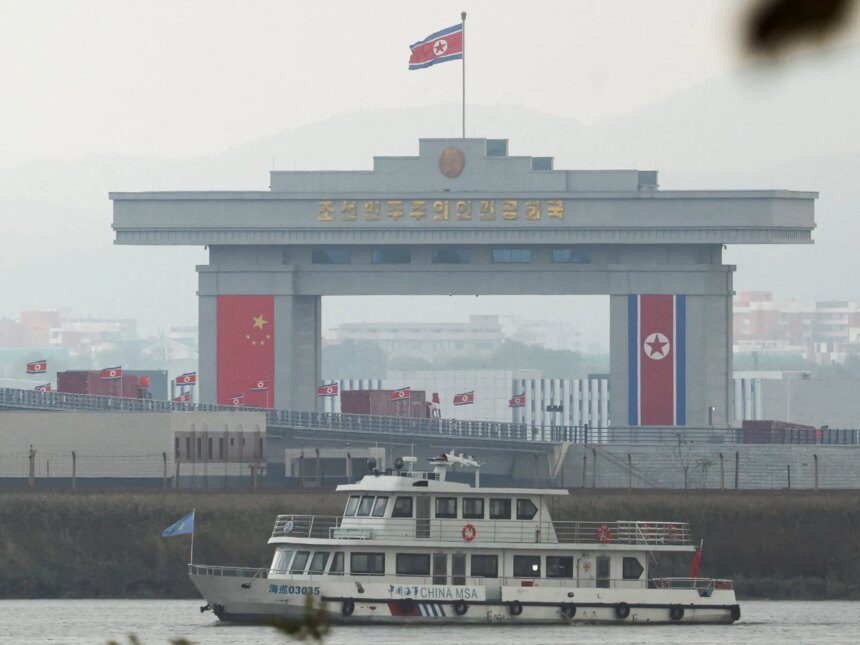

China-North Korea Relations Strengthened with New Bridge
The recent inauguration of the New Yalu River Bridge highlights the strengthening ties between China and North Korea. This development not only represents an infrastructure milestone but also signals Pyongyang’s strategic outreach towards Beijing and Moscow to alleviate its prolonged economic isolation.
Bridge Details and Significance
According to China’s official Xinhua news agency, a launch ceremony for the New Yalu River Bridge took place on Thursday. This bridge connects Dandong, a northeastern city in China, with Sinuiju, a border city in North Korea. The bridge spans 3 kilometers (1.8 miles) and is expected to significantly relieve the traffic burden on the existing Sino-Korean Friendship Bridge, which is more than five decades old. The original bridge only allows one-way traffic, making it insufficient for the growing trade demands between the two countries.
Video footage from state media showcased trucks adorned with the flags of both nations lining up on the bridge, emphasizing the celebratory atmosphere. Chinese Premier Li Qiang hailed the opening as a “new landmark” for the nations’ “traditional friendship,” calling for increased connectivity and new cooperative ventures, particularly in border areas. North Korean Premier Pak Thae Song also delivered a video address during the ceremony, underscoring the significance of this infrastructure project.
Trade Dynamics and Border Connectivity
The New Yalu River Bridge is anticipated to enhance trade dynamics, with over 70 percent of official trade between China and North Korea currently traversing the older Friendship Bridge. The new infrastructure aims to facilitate smoother and more efficient exchanges, particularly vital as both nations increasingly align their economic interests.
Data from the South Korean government indicates that there are at least 17 active road and rail links along the 1,400-kilometer (870-mile) border, illustrating the extensive connectivity that plays a crucial role in regional trade. As North Korea seeks to bolster its ties with China and Russia, this bridge serves as both a practical asset and a potent symbol of diplomatic relations.
Regional Implications in Broader Context
The implications of the opening of the New Yalu River Bridge extend beyond China and North Korea. The enhanced infrastructure could shift regional dynamics, particularly as South Korea closely monitors developments along its northern border. For India, understanding these shifts is crucial as it navigates its own geopolitical interests in the Asia-Pacific region.
India has been increasingly focused on strengthening its influence in Southeast Asia and the Indo-Pacific to counterbalance China’s rise. The deepening Sino-North Korean ties may necessitate a reassessment of India’s strategic posture in the region and its economic partnerships. Additionally, the bridge’s opening could provide an opportunity for India to engage in multilateral dialogues about stability and trade routes in the region.
What This Means
This inauguration represents more than a physical connection; it signals a strategic alignment between China and North Korea, potentially affecting geopolitical stability in Northeast Asia. For India, which has its own complex relationship with China and a vested interest in the security of its partners in the region, these developments necessitate keen observation. Understanding the dynamics at play may lead to enhanced cooperation with regional stakeholders and offer insights into navigating the challenges posed by increased Sino-North Korean collaboration.
Frequently Asked Questions
What is the New Yalu River Bridge?
The New Yalu River Bridge is a 3-kilometer (1.8-mile) road bridge that connects Dandong in China with Sinuiju in North Korea, intended to facilitate trade and enhance connectivity between the two nations.
Why was the bridge constructed?
The bridge was built to alleviate traffic congestion on the older Sino-Korean Friendship Bridge, which can only handle one-way traffic at a time, thereby improving the flow of goods and trade between China and North Korea.
How does this bridge affect trade between China and North Korea?
Over 70 percent of official trade between China and North Korea currently passes through the older Friendship Bridge. The new bridge is expected to provide a more efficient route, thereby boosting economic exchange.
What are the regional implications of this development?
The enhanced connectivity between China and North Korea may shift geopolitical dynamics in Northeast Asia, requiring countries like India to reassess their strategic frameworks in light of increasing Sino-North Korean collaboration.