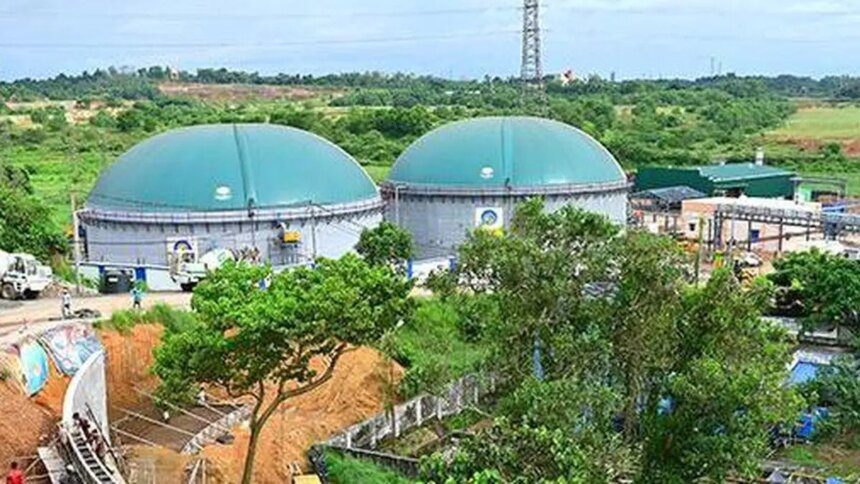

India’s compressed biogas (CBG) sector is on the cusp of significant growth, with the potential to satisfy a large portion of the nation’s natural gas demand by 2030. A recent report indicates that utilizing agricultural residues, animal waste, and organic waste could enable the production of approximately 62 million metric tons per annum (MMTPA) of CBG, addressing about 80% of projected natural gas needs.
Key Regions for CBG Development
Uttar Pradesh, Gujarat, Madhya Pradesh, and Maharashtra are emerging as pivotal markets for CBG, driven by their substantial biomass availability. These states boast biomass surplus ranging from 19.9 million metric tons (MT) in Madhya Pradesh to 21.7 MT in Gujarat. This surplus, complemented by significant agricultural and livestock resources, positions these regions favorably to harness CBG production.
According to the report titled ‘India’s compressed biogas opportunity: Pathway to energy security, import substitution and decarbonisation’ by EY and CII, the existing framework has allowed 838 projects to be registered, although only 210 are fully operational. The report emphasizes the need for operational capacity to be addressed urgently as the nation approaches blending obligations of 5% by FY29.
Challenges and Opportunities Ahead
As of FY26, CBG sales in the CNG and PNG sectors were at a mere 0.08 MMT, illustrating the vast gap between current production and future demand. The report indicates that achieving the blending target will require significant scaling of production—essentially transitioning planned projects into consistent operational capacities.
The average natural gas consumption in India is around 52 MMT, and the highlighted states contribute over half of that demand. With CBG potentially substituting a portion of this consumption, it becomes essential to streamline supply chains, improve infrastructure, and ensure project financing to build a commercial CBG ecosystem.
Government Support and Policy Framework
Various state policies play a crucial role in the CBG landscape. Uttar Pradesh and Maharashtra have dedicated policies for CBG, while Madhya Pradesh supports it through biofuel project schemes. Gujarat operates within broader renewable energy frameworks instead of a specific CBG policy. The SATAT initiative and the GOBARdhan – National Circular Bioenergy Scheme provide significant policy support, including financial backing for project development and market links.
These government initiatives reflect a commitment to scaling up CBG production, essential for decreasing India’s reliance on imported natural gas while simultaneously addressing waste management issues.
What This Means
The development of the CBG sector is not just about creating renewable energy but also addressing broader issues such as waste management and sustainability in agriculture. By converting biodegradable waste into energy, India can improve its energy security while promoting rural economic development. The emphasis on local feedstock utilization presents an opportunity for farmers and rural entrepreneurs to contribute to a renewable energy landscape that is both environmentally and economically beneficial.
Frequently Asked Questions
What are the main feedstocks for CBG production in India?
CBG production primarily relies on agricultural residues, animal waste, organic municipal waste, and agro-industrial by-products.
What is the current status of CBG projects in India?
Though there are 838 registered projects, as of now only 210 have been commissioned. The remaining projects are in various stages of construction or planning.
How does CBG blending affect environmental sustainability?
Blending CBG with conventional CNG can reduce the lifecycle carbon footprint by approximately 5–7% for every 1% of CBG blended, contributing to greener fuel alternatives.
What role do government policies play in promoting CBG?
Government policies like SATAT and GOBARdhan provide essential financial support and frameworks for project development, making it easier for the CBG sector to grow sustainably and effectively.