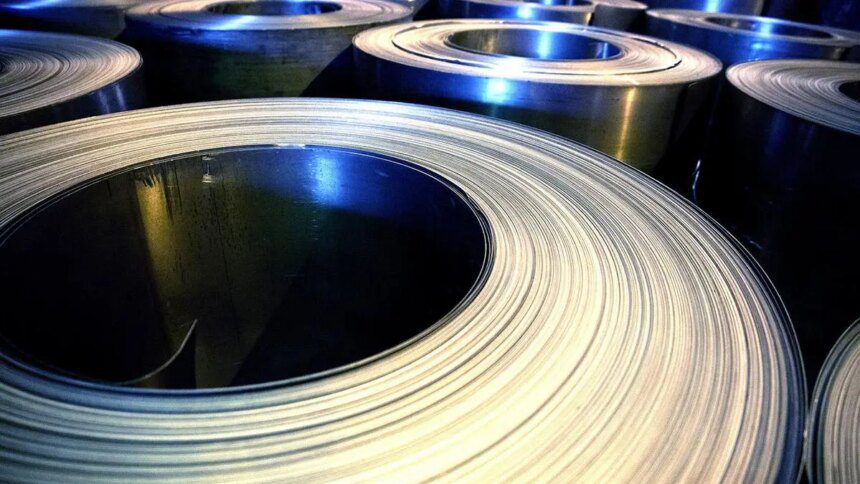

The European Union (EU) has announced the imposition of anti-dumping tariffs of up to 27.9% on cold-rolled flat steel products imported from India, Japan, Taiwan, Turkey, and Vietnam. This decision stems from findings that these products were being sold at unfairly low prices in the EU market, which could significantly impact steel exporters and the automotive, aerospace, and construction sectors relying on these materials.
Details of the Anti-Dumping Duties
The EU’s anti-dumping measures will come into effect from November 17, 2026. The duties established vary significantly by country and producer. Notably, Indian steel manufacturers such as JSW Steel and Tata Steel will face a tariff rate of 9.5%. In contrast, Japanese steel manufacturers, including Nippon Steel and JFE Steel Corp, will see rates as high as 27.9%. Taiwanese producers like China Steel Corp will also be subjected to mostly 20.7% rates, while non-compliant companies could incur a 27.0% tariff. Vietnamese producers will face a 16% duty, and Turkish steelmakers will have a range between 3.0% and 7.8%.
The cumulative market for cold-rolled flat steel products in the EU is valued at approximately €23.2 billion ($25.57 billion), with imports from the aforementioned countries accounting for about €1.78 billion. This significant market presence underscores the economic weight that these tariffs will hold for both importing countries and the EU economy.
New Methodology for Calculating Dumping Duties
This investigation marks a significant shift in how the European Commission approaches dumping duties. It has introduced the concept of “particular market situations” to determine pricing discrepancies among the examined countries. Traditionally, dumping duties are calculated by comparing domestic sales prices to export prices, assuming a normal market scenario. However, in cases where markets are deemed distorted, the EU is now employing alternative methods to assess “normal” values. Notably, in the case of China, EU regulations rely on external input costs to establish fair pricing.
In this instance, the Commission identified that Indian domestic steel prices were influenced by government regulations affecting iron ore costs, while Taiwanese prices have been suppressed due to a surge in low-cost Chinese steel imports. Adjustments were thus made to the domestic prices in these countries for a fairer comparison against export prices to the EU.
Impact on Indian Steel Manufacturers
The imposition of these tariffs will have varied implications for Indian steel producers. Companies facing a lower tariff rate (9.5%) might find an opportunity to adjust their pricing strategies and focus on improving production efficiency to absorb costs. However, they must also proactively address concerns related to external perceptions of pricing fairness.
Given that the automotive and construction sectors are substantial consumers of cold-rolled flat steel, any increase in costs could potentially affect these industries, leading to higher prices for consumers. In addition, the imposition of tariffs might compel Indian manufacturers to seek new markets or enhance competitive strategies to mitigate tariff impacts.
What This Means
The new tariffs by the EU could reshape trade dynamics for Indian steel exporters, urging them to refine their pricing strategies and explore diversification in global supply chains. The steel industry’s response will be crucial in determining how effectively these companies can navigate and adapt to changing trade policies. The ripple effects may be felt across various sectors relying on steel, including automotive production and construction, which may incur additional costs, ultimately impacting consumers.
Frequently Asked Questions
What are anti-dumping duties?
Anti-dumping duties are tariffs imposed on imported goods that are priced below fair market value, intended to protect domestic industries from unfair competition.
How do these tariffs affect Indian steel exporters?
The tariffs could lead to increased costs for Indian steel exporters in the EU market, potentially reducing their competitiveness and profit margins.
What sectors in India will be impacted by this decision?
The automotive, aerospace, and construction sectors, which heavily utilize cold-rolled flat steel, are likely to face increased costs and supply chain disruption due to these tariffs.
Are there any alternatives for Indian steel manufacturers?
Indian steel manufacturers may consider diversifying their product offerings, seeking new markets, or improving production efficiencies to mitigate the effects of these tariffs.