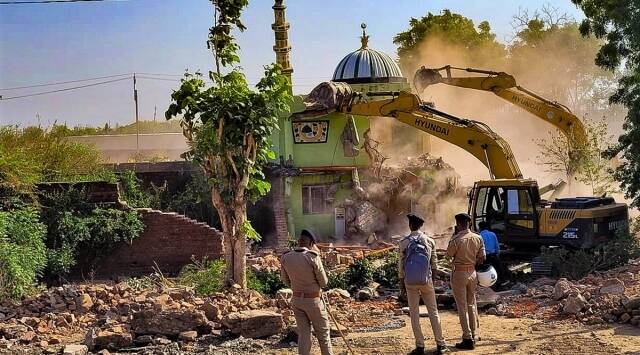

The ongoing sit-in at Mohammad Ali Jauhar University in Rampur highlights a growing trend of discrimination and marginalization against Indian Muslims under the current BJP-led government and its affiliates. With the Rampur Development Authority’s order to demolish 38 university buildings, students face an uncertain future, further exacerbating concerns over educational access for minority groups, particularly Muslims and SC/ST communities.
Legal and Administrative Disputes
Mohammad Ali Jauhar University, established in 2006, has found itself at the center of a contentious legal dispute. The Rampur Development Authority (RDA) claims that while two buildings on campus had valid construction approvals, 38 others were built without the required permissions. The university administration argues that these constructions predate the RDA’s jurisdiction and were approved by local governing bodies at that time. This legal tussle is emblematic of larger tensions regarding minority institutions and their treatment within the bureaucratic framework.
Concerns Over Educational Access for Minorities
Students contesting the RDA’s demolition notice express deep worries about their academic futures. “Our career and future are at stake,” said Mehroza Khan, a law student at the university, emphasizing the importance of fee concessions for SC/ST and orphaned students. The university caters specifically to marginalized groups, providing opportunities not easily found in other institutions, especially those situated far away. The potential closure of Jauhar University thus poses a significant hurdle in the fight for educational equity among India’s minority populations.
The Political Context of Demolitions
The demolition of university buildings is not an isolated event. Critics argue that it is part of a broader agenda aimed at undermining institutions that serve Muslim communities, thereby intensifying social exclusion. Similar situations in other regions, including recent demolitions of mosques and community centers, reflect an ongoing strategy to erase Islamic identity from public spaces. This tactic mirrors historical narratives that reshape the political landscape by igniting communal tensions, often leveraging distorted interpretations of history for political gains.
Why It Matters
The situation at Mohammad Ali Jauhar University underscores significant challenges for educational institutions serving marginalized populations in India. By targeting such institutions, the government not only threatens minority education but also undermines the foundational values of pluralism and multiculturalism inherent in the Indian Constitution. The impact on students from various backgrounds could result in long-lasting socio-economic ramifications, perpetuating cycles of disenfranchisement and hindering social cohesion within a diverse society.
Frequently Asked Questions
What is the current status of the sit-in at Jauhar University?
Students are actively protesting against the Rampur Development Authority’s notice to demolish 38 university buildings, stating that this would jeopardize their educational opportunities.
Why are the buildings being targeted for demolition?
The Rampur Development Authority claims that 38 of the university’s buildings were constructed without proper approvals, while the university administration contends they were authorized by local authorities when built.
How does this issue affect students from minority communities?
Students from SC/ST and other minority backgrounds particularly rely on the university’s fee concessions and unique programs, making the potential closure a devastating blow to their educational and professional prospects.
What are the broader implications of these demolitions?
The demolition of educational institutions and community spaces serving Muslims contributes to social exclusion and heightened communal tensions, reflecting a worrying trend in the socio-political climate of India under the current government.