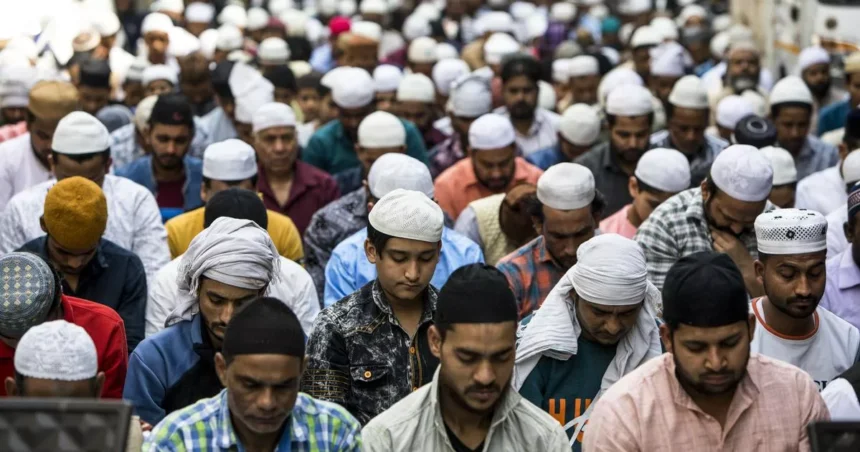

As millions of Muslims worldwide celebrated Eid al-Adha, known as Gurban in Azerbaijan, restrictive measures impacted religious practices in India. Heightened scrutiny over public gatherings has led mosque committees to implement strict regulations around prayer logistics, reflecting a broader trend of increasing marginalization of Muslim communities under the current government.
Escalating Restrictions on Public Prayer
Eid al-Adha, a significant occasion for Muslims around the globe, was celebrated this week amid growing limitations in India. In Maliyana village, Meerut District, mosque officials briefed congregants about adhering to new protocols, which emphasized not gathering outside mosque gates and managing crowd sizes due to police oversight.
Committee members urged worshippers to wait for the next prayer shift if the mosque became too full, advising against any disputes and the recording of videos during the prayers. Such measures indicate that local authorities are increasingly monitoring public religious gatherings, which has contributed to a pervasive sense of caution among Muslim residents.
Impact of Social and Political Climate
In recent years, the rise of Hindu nationalism has intensified scrutiny and restrictions surrounding Muslim religious practices. Residents have reported that public prayers in open spaces, such as roads and parks, have become increasingly rare, often attributed to concerns surrounding traffic and public order.
Additionally, protests by Hindu nationalist groups against public namaz gatherings have further complicated the environment for Muslims wishing to conduct their celebrations. Consequently, mosque committees are scaling back their arrangements, opting for staggered prayer schedules to avert conflict with authorities. One committee member stated, “We are trying to ensure there is no crowding outside the mosque,” illustrating the unease in organizing religious activities.
Cautious Religious Observance
In Uttar Pradesh, many residents have expressed that fear of legal repercussions or public backlash has necessitated a more cautious approach to organizing Eid prayers. A local resident, who spoke anonymously, noted that last year’s incidents—where individuals faced legal action for praying in open areas—have made congregants wary of potential encounters with law enforcement.
In response to these growing concerns, residents have reported that even brief gatherings outside mosques are being discouraged. This atmosphere of fear and restraint has transformed the way Eid celebrations are structured, with many worshippers reluctantly adhering to new norms to prevent escalated scrutiny and possible repercussions.
Why It Matters
The increasing restrictions on public prayers in India serve as a vital case study for analyzing the implications of sociopolitical dynamics on religious freedoms. For developers and users in the tech world—especially those involved with AI and social media—the situation underscores the importance of monitoring and analyzing discourse related to minority communities. The evolving climate can inform algorithms aimed at detecting hate speech or trends in social exclusion, thereby contributing to more ethical tech development.
Frequently Asked Questions
What is Eid al-Adha, and why is it significant?
Eid al-Adha, also known as the Festival of Sacrifice, commemorates the willingness of Prophet Ibrahim to sacrifice his son as an act of obedience to God. It is one of the two major Islamic holidays, celebrating faith, sacrifice, and community.
How have restrictions on prayers affected Indian Muslims?
In recent years, many Indian Muslims have faced limitations on public prayers, leading to feelings of marginalization and fear within their communities. Issues such as police intervention and societal backlash have made it more challenging to observe religious practices openly.
What role do Hindu nationalist groups play in these restrictions?
Hindu nationalist groups have increasingly protested against Muslim public prayers, contributing to a heightened atmosphere of scrutiny and restrictions on Muslim religious practices, often citing public order as their justification.
What measures are mosque committees taking to address these restrictions?
Mosque committees are implementing staggered prayer schedules and encouraging worshippers to avoid gathering outside mosque boundaries to minimize conflict with authorities, reflecting heightened caution amid rising scrutiny.