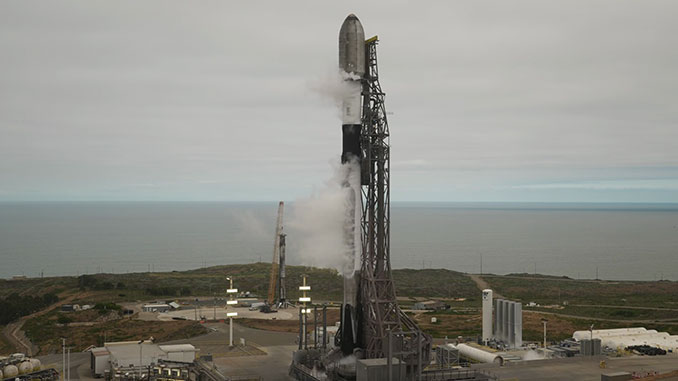

SpaceX is set to launch another 24 satellites for its Starlink internet service from Vandenberg Space Force Base in California on Wednesday evening. This mission highlights SpaceX’s increasing launch cadence on the West Coast, showcasing their capabilities in satellite deployment.
SpaceX’s Pioneering Launch from Vandenberg
On June 22, 2026, the sight of two Falcon 9 boosters at Space Launch Complex 4E epitomized SpaceX’s focus on rapid deployments from Vandenberg. The launch of the Starlink 17-45 mission is scheduled for 8:30 p.m. PDT (11:30 p.m. EDT / 0330 UTC).
First stage B1081, making its 25th flight, will carry 24 Starlink V2 Mini satellites. Following liftoff, the booster will return to the drone ship ‘Of Course I Still Love You,’ approximately 8.5 minutes later. The satellites will be deployed just over an hour after launch, indicating a streamlined operational capacity that greatly enhances SpaceX’s satellite internet service.
California’s Rise as a Launch Hub
With the decision to focus on Starship operations at Cape Canaveral, California has emerged as SpaceX’s primary launch site in 2026. June will see SpaceX execute seven out of eight planned launches from Vandenberg, eclipsing the six launches scheduled from Florida during the same period.
Despite owning two launch pads at Cape Canaveral, SpaceX is currently constrained to Space Launch Complex 40 for Falcon 9 launches, reserving Launch Complex 39A for Falcon Heavy missions. This shift allows SpaceX to continue developing their Starship facility with minimal disruption, while efficiently utilizing Vandenberg for satellite launches.
A Record Turnaround and Future Prospects
The swift turnaround at Space Launch Complex 4E was exemplified by the launch of Starlink 17-28 on June 21, occurring just 56 hours after its predecessor, NROL-179. This impressive efficiency was highlighted by the fact that the booster from the previous mission was still visible at the landing zone when preparations for the subsequent launch began.
If the current schedule proceeds as planned, SpaceX is on track to achieve a remarkable milestone, launching 40 missions from Vandenberg against 37 from Cape Canaveral in the first half of 2026. This feat not only showcases their operational skill but also underscores their commitment to expanding satellite internet access through the Starlink initiative.
Why This Is Trending
Indians are increasingly searching for information on SpaceX and its Starlink venture due to the growing interest in satellite internet technologies and their feasibility in remote areas across India. With a burgeoning demand for high-speed internet, particularly in rural regions, SpaceX’s advancements in satellite communication resonate strongly within the Indian populace. Additionally, discussions around the potential impacts on local markets and traditional internet service providers are sparking conversations here, making it a trending topic.
Frequently Asked Questions
What impact will SpaceX’s Starlink service have in India?
Starlink aims to provide internet services to underserved and rural areas in India, potentially transforming access to education, healthcare, and business opportunities.
How often is SpaceX launching satellites in 2026?
SpaceX has planned multiple launches from both Vandenberg and Cape Canaveral, with a notable emphasis on Vandenberg where they are executing a rapid launch cadence.
Are there any collaborations between SpaceX and Indian companies?
While specific details on collaborations are not widely publicized, the potential for partnerships in satellite communication and infrastructure development exists as interest in Starlink grows nationally.
How does the efficiency of SpaceX’s launches benefit their operations?
Rapid turnaround times for launches indicate an optimized operational model that improves reliability and lowers costs, allowing SpaceX to deploy more satellites swiftly and effectively.