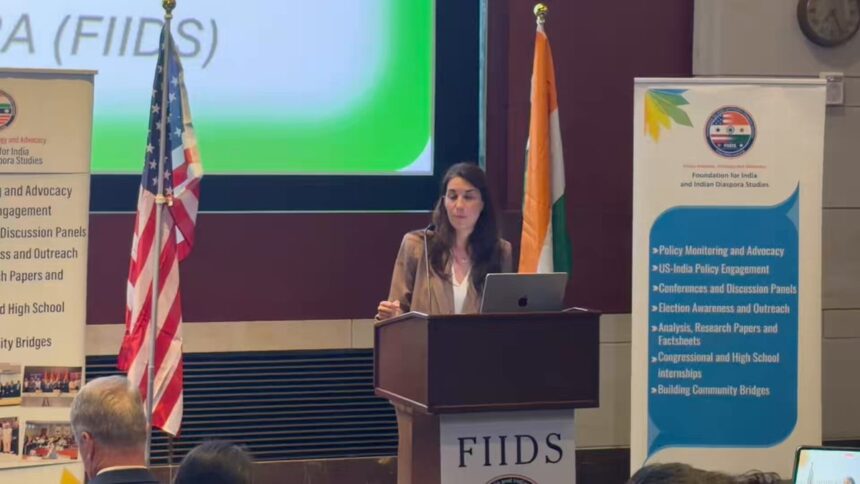

The recent comments by U.S. official Bethany Morrison have reignited discussions on the relationships between Indian government officials and U.S. sponsored programs. She stated that Prime Minister Narendra Modi, along with three Cabinet ministers and 150 civil servants from India, have participated in initiatives backed by the U.S. government to visit America. This revelation raises questions about international influence and the depth of American involvement in Indian governance.
U.S. Sponsored Programs and Indian Officials
Bethany Morrison’s statement sheds light on a significant aspect of India-U.S. relations. These programs, often viewed as platforms for knowledge exchange, have allowed Indian officials to engage directly with their American counterparts. This exchange not only enhances the professional capabilities of Indian leaders but also fosters closer diplomatic ties and understanding between the two nations.
Context of International Relations
The relationship between India and the United States has shifted considerably over the past few decades, evolving from a period of strategic skepticism to one of partnership and cooperation. Programs like those mentioned by Morrison are indicative of this transformation. They reflect a willingness on both sides to invest in mutual growth and understanding, which has become increasingly crucial in today’s geopolitics marked by competition with China and global economic interdependencies.
Political Implications in India
This admission is not without its political ramifications. The participation of high-profile government officials in U.S. sponsored programs could spark debates among opposition parties in India about sovereignty and influence. Critics may argue that such involvement indicates a compromised decision-making process, while supporters may view it as necessary engagement in a globalized world. The discourse surrounding this will likely shape the narrative as the nation heads toward future elections.
Why This Matters
For Indian readers, the significance of these exchanges extends beyond mere political trivia. They highlight the intricacies of global diplomacy and the stakes involved in international relations. Understanding the participation of Indian officials in U.S. programs reveals underlying strategic necessities that dictate the response of the Indian government to global challenges. It’s a reminder of the complexities inherent in governance, and how external influences can shape policy and decision-making.
Frequently Asked Questions
What are U.S. sponsored programs?
U.S. sponsored programs are initiatives funded by the U.S. government aimed at fostering leadership, governance, and policy understanding among foreign officials.
How does this impact Indian sovereignty?
The involvement of Indian officials in U.S. programs raises concerns among some critics about the potential for foreign influence on domestic policies, prompting discussions about maintaining sovereignty.
What does this mean for India-U.S. relations?
These exchanges signify a deeper commitment between the two nations, indicating an evolving partnership that may well address shared interests and regional stability.
Are there any past instances of concerns over foreign influence in India?
Yes, there have been multiple occasions in India’s political history where foreign influence, whether through aid, programs, or external alignment, has sparked debates among political circles and civil society regarding the implications for Indian autonomy and policy direction.