
As India grapples with the rising influence of the Bharatiya Janata Party (BJP) and its ideological affiliate, the Rashtriya Swayamsevak Sangh (RSS), the historical patterns of discrimination against Muslims established by leaders like Mohammad Ali Jinnah are coming to fruition. Jinnah, who once employed the politics of religious polarisation, now finds echoes of his fears in the contemporary political landscape, which is marked by significant social exclusion and marginalization of Muslim communities.
Historical Context: Jinnah, Polarisation, and Electoral Politics
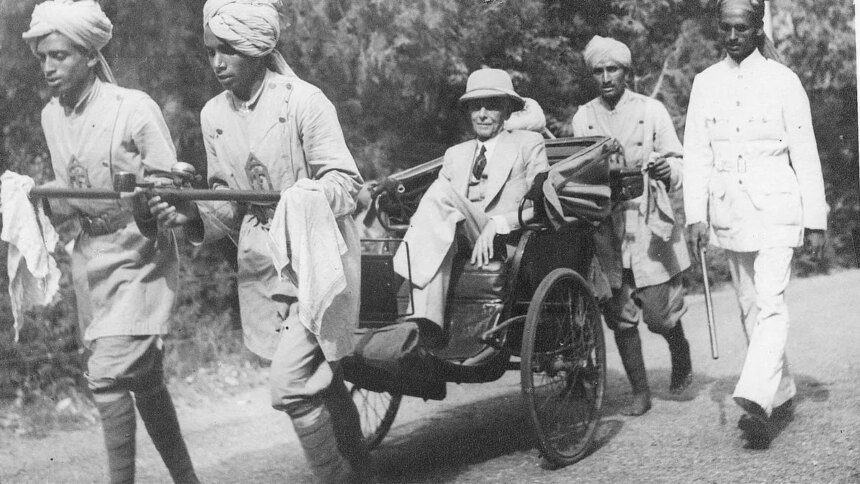
Mohammad Ali Jinnah’s political strategy emerged prominently after the disappointing performance of his All-India Muslim League (AIML) in the 1937 provincial elections, where it secured only 108 of the 484 seats reserved for Muslims. Following the Congress party’s success, Jinnah observed a tacit failure to form a coalition government, and Nehru’s Muslim Mass Contact Programme directly threatened the AIML’s claim as the representative voice for Muslims. Jinnah’s reaction was to amplify concerns over Hindu majoritarianism, predicting a systematic threat to Muslim identity and culture if the Congress gained power.
In his speeches, Jinnah pointed to Congress actions like the elevation of the national song Vande Mataram, which Muslims perceived as idolatrous, to consolidate his argument that Hindus sought to dominate political and cultural discourse. He cautioned that the Congress politicians were cloaking their ambitions under the guise of economic and social justice, insinuating that they aimed to impose a ‘Hindu Raj’—a government where Muslims would be relegated to second-class status.
The Present-Day Reality: Institutional and Societal Marginalisation
Fast forward to the current scrutiny surrounding the BJP government, and Jinnah’s fears manifest viscerally. The current regime has increasingly normalised violence against Muslims and enacted policies that marginalize this community economically and socially. The Pirpur Committee report, which Jinnah once cited as evidence of Muslim suffering under Congress rule, resonates today with numerous instances of violence and discrimination faced by Muslims in various states. Incidents of lynching over beef consumption and attempts to force Muslim school students to recite Vande Mataram have emerged as stark indications of the persecution faced by Muslims.
Discriminatory policies such as the implementation of the Uniform Civil Code, hostile Hindi imposition, and aggressive scrutiny of the practices surrounding Islamic prayer have painted a troubling picture. With each enactment, Muslims find their religious and cultural identities further sidelined and their rights diminished. This historical trajectory shows how strategies for communal polarisation—initially reflective of Jinnah’s fears—have crystallized into a systematic alienation of Muslims from public life in India.
The Role of Political Rhetoric in Perpetuating Discrimination
The rhetoric employed by BJP leaders further cements the marginalization of the Muslim community. Political discourse is often laced with derogatory analogies and discriminatory implications, directly linking Muslims to accusations of terrorism or anti-national sentiment. This has manifested in laws that disenfranchise Muslims, coupled with calls to revisit the Places of Worship Act, which serve to deepen fears of cultural and religious erasure.
Moreover, the BJP’s intentions—believed to be aligned with the RSS ideology—suggest a deliberate agenda to reshape Indian society to reflect a singular Hindu narrative. As state governments enact policies that create tensions along religious lines, the social fabric of India becomes increasingly fragile, leaving room for further discriminatory practices.
Why It Matters
The implications of such discrimination for the fabric of India are profound. Political alienation of a significant community can lead to larger societal divisions, undermining the principles of secularism and inclusion that India is built upon. Furthermore, economic sanctions against Muslim actors—especially in trade and business—can lead to broader economic disenfranchisement, compounding the systemic inequities in society. The growing polarisation not only erodes the rights of Muslims but can destabilize the overall socio-political landscape of the country.
Frequently Asked Questions
What historical role did Jinnah play in Indian politics regarding Muslims?
Jinnah’s political strategies were founded on the premise of representing Muslim interests, particularly highlighting fears of Hindu majoritarianism, especially after the Congress’s electoral victories in the late 1930s.
How has the BJP influenced policies affecting Muslims in recent years?
The BJP has enacted policies that directly affect Muslim communities, including laws that restrict practices related to Islamic religious observance and narratives that incite violence against Muslims.
What are the implications of the rising Hindu majoritarianism for Indian democracy?
The rise of Hindu majoritarianism under the BJP threatens India’s secular framework, risking the erosion of minority rights and prompting societal divisions along religious lines.
How do current policies reflect Jinnah’s fears about a ‘Hindu Raj’?
Many of the BJP’s policies resonate with Jinnah’s warnings of a ‘Hindu Raj,’ as Muslim disenfranchisement and cultural suppression increasingly align with his historical concerns regarding the dominance of Hindu identity.