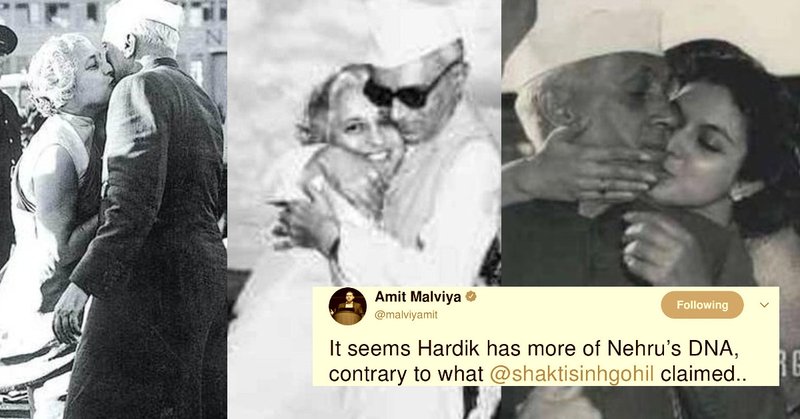

The conversation around Jawaharlal Nehru’s personal life recently reignited when BJP IT cell head Amit Malviya shared images of Nehru with his sister, Vijaylakshmi Pandit, and niece, Nayantara Sehgal. In a tweet, he claimed that Hardik Patel, a prominent political figure, has more of Nehru’s DNA, alluding to familial connections. However, this assertion has been met with criticism, particularly for its potential misrepresentation of familial affection, especially given that the images depict public displays of love among family members.
Context of the Claims
On October 23, 2023, Amit Malviya’s tweet generated considerable discussion online, particularly among BJP supporters and critics. The tweet included a collage of photos that showed Nehru being affectionately kissed by his sister and niece. Malviya’s claim raised eyebrows as it seemed to directly connect Nehru’s familial relationships with Hardik Patel’s political identity, suggesting blood ties where none have been established. The references to Nehru’s familial affection appear to have been used strategically to bolster Patel’s political standing in the eyes of BJP supporters.
The Historical Significance of Nehru’s Family
Jawaharlal Nehru, India’s first Prime Minister, is often subject to analysis not only for his political strategies but also for his familial ties. Vijaylakshmi Pandit, Nehru’s sister, was an influential figure in her own right, serving as India’s ambassador to the Soviet Union and the United States. Nayantara Sehgal, his niece, is a noted author and has also contributed to public discourse about Indian politics. The images shared by Malviya emphasize the close-knit nature of Nehru’s family, which stands in contrast with the often stark political divisions prevalent in contemporary India.
Understanding the Misleading Narrative
Critics, including Mohammed Zubair, have pointed out that the BJP’s use of these images is not only misleading but also manipulative. By sharing such images and misrepresenting their context, it risks fostering baseless assumptions about political lineage and identity. Zubair emphasized the need for factual representation, particularly when discussing historical figures whose legacies are continually interpreted through various political lenses. This incident highlights the broader trend where political narratives can overshadow factual accuracy, raising questions about the integrity of political discourse in India.
Why This Matters
The political significance of this episode lies in the way it reflects ongoing dynamics within Indian politics. The BJP’s attempt to align Hardik Patel with Nehru’s legacy serves a dual purpose: it seeks to legitimize Patel in a party that has faced criticisms related to family ties among its leaders, and it simultaneously taps into the historical reverence surrounding Nehru. Misleading messages like this can shape public perception and skew political discourse, revealing the method of deploying history for contemporary gain. As such, voters must remain critically aware of these narratives and their implications for political identity in India.
Frequently Asked Questions
What was the main claim made by Amit Malviya in his tweet?
Amit Malviya claimed that Hardik Patel has ‘more of Nehru’s DNA,’ based on affectionate pictures of Nehru with his family members. This statement sparked significant debate over its accuracy and implications.
Who are the individuals shown in the images shared by Malviya?
The images depict Jawaharlal Nehru alongside his sister, Vijaylakshmi Pandit, and his niece, Nayantara Sehgal, showcasing their familial bond in public settings.
What criticism has been directed at the BJP’s narrative surrounding these images?
Critics have labeled the use of these images as misleading, arguing that the BJP is manipulating historical familial ties to forge a politically advantageous narrative for Hardik Patel.
Why is Nehru’s family important in the context of Indian politics?
Nehru’s family, particularly his sister and niece, were significant political actors in their own right, influencing both national discourse and international relations. Their public affection also adds layers to how Nehru is perceived historically and in contemporary political discussions.