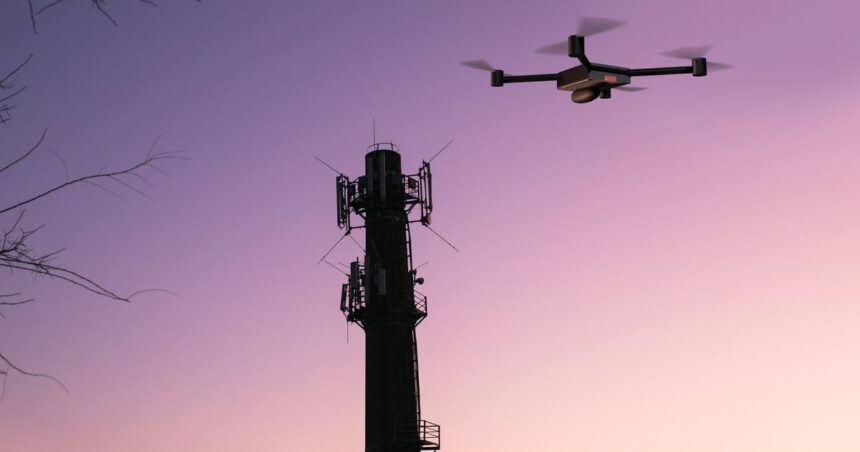

Lockheed Martin is set to introduce a groundbreaking drone detection service called NetSense, leveraging Verizon’s 5G network for commercial users. This innovative service aims to enhance airspace awareness and improve security operations across various sectors, making it a significant development in the realm of drone technology and public safety.
Cutting-Edge Technology for Airspace Safety
NetSense integrates cutting-edge technology with artificial intelligence, utilizing tools from Nvidia, Keysight Technologies, and the newly formed startup ODC. This platform was recently demonstrated in a live scenario near Miami, showcasing its ability to detect, track, and monitor drones in complex urban environments without altering the existing 5G network infrastructure.
The service aims to provide real-time airspace awareness via subscription, targeting critical infrastructures such as stadiums, power plants, and hospitals. Lockheed Martin plans pilot deployments for later this year and expects full availability by 2027.
How It Works: The Technology Behind NetSense
NetSense operates using a sophisticated assembly of technologies. ODC’s AI-RAN software collects radiofrequency (RF) measurements from existing 5G networks, feeding this data into Nvidia’s AI Aerial platform. Consequently, Lockheed Martin’s algorithms analyze the information to determine drone threats effectively.
Both Verizon and Keysight have collaborated with Lockheed Martin since late 2021 through its 5G.MIL program, which integrates commercial 5G technology into military operations. This collaboration underscores the potential of 5G networks to enhance safety and security through intelligent sensing capabilities.
The Implications for Security and Industry
As drones become increasingly accessible, there is a pressing need for sophisticated airspace awareness technologies. Lockheed Martin emphasizes the importance of evolving these technologies in tandem with potential threats. The versatility of NetSense makes it a viable solution for various sectors, including local and federal government agencies.
The ability to repurpose existing cellular infrastructure for drone detection minimizes financial and logistical challenges. This development is crucial as industries and governmental bodies look for efficient solutions to manage the rise in drone usage, especially in sensitive areas.
Why This Is Trending
The advancements in drone detection are garnering significant attention, particularly in India, where the adoption of drones is rapidly increasing. With the potential influx of low-cost drones used for various applications—ranging from delivery services to aerial photography—there is an urgent demand for robust airspace security systems. The unfolding narrative around NetSense adds critical insights into balancing technological innovation with safety and regulatory frameworks in the Indian context.
Frequently Asked Questions
What is NetSense?
NetSense is a drone detection service developed by Lockheed Martin that utilizes Verizon’s 5G network. It aims to enhance airspace awareness and track unmanned aircraft systems in real-time.
When will NetSense be available for commercial use?
The general availability of NetSense is planned for 2027, with pilot deployments set to occur in the latter half of this year and early next year.
What technologies are integrated into NetSense?
NetSense combines advanced technologies from Nvidia, Keysight Technologies, startup ODC, and Lockheed Martin’s subsidiary Astris AI to provide comprehensive drone detection services using AI algorithms.
Why is this initiative important for India?
As drone usage expands in India, particularly for commercial and recreational purposes, systems like NetSense can help ensure airspace security and safety, addressing potential threats effectively.