
Summary
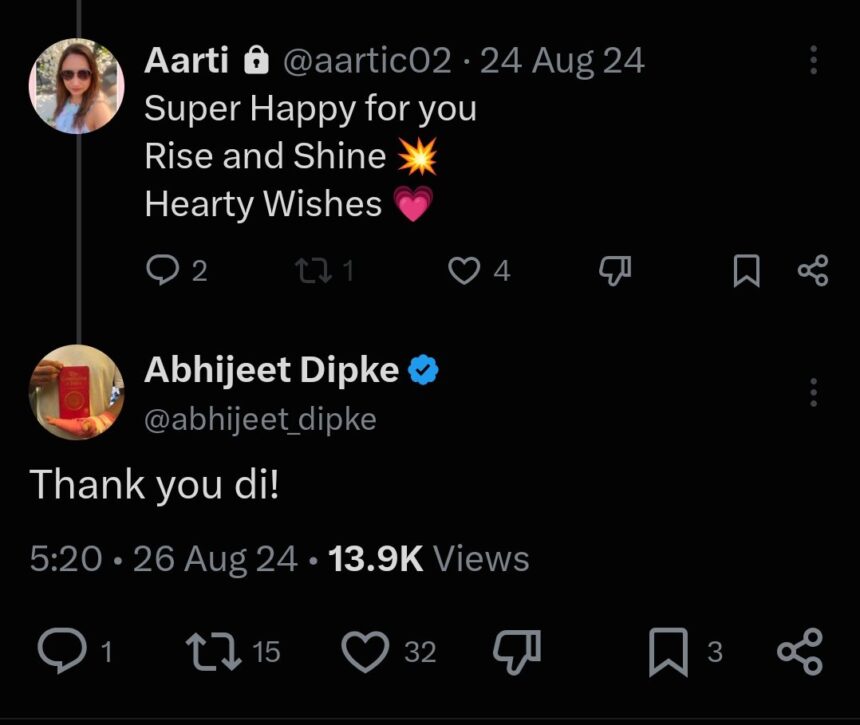
Recently, a situation has emerged involving an exchange between Shreya Arora, a prominent social media figure, and followers reacting to her association with Abhijeet Dipke. The conversation highlights the role of social media in shaping public discourse around personal relationships and judgments, particularly in political contexts.
Background of the Incident
In the center of this controversy is Shreya Arora, who has garnered attention for her vocal opinions on various political matters in India. In a recent tweet, she questioned another user about their relationship with Abhijeet Dipke, drawing attention to the dynamics within social media circles. This comes against the backdrop of an increasingly polarized political landscape where associations and affiliations are scrutinized and sometimes weaponized.
Abhijeet Dipke himself is a notable figure, often discussed within political circles. His social media presence contributes to the ongoing debates regarding political alliances and the personal lives of public figures. The tweet exchange, particularly the reactions from other users labeling Arora with condescending terms despite her being over 50, points to the ageist attitudes that persist within online discussions.
The Role of Age and Gender in Social Media Discourse
The discourse surrounding Arora also sheds light on ageism and sexism prevalent in social media conversations, especially within the Indian political landscape. As a woman over 50, Arora faces a unique position; she is subject to attacks that often focus on her age and gender rather than her arguments or qualifications. The derogatory comments directed at her underscore a societal tendency to undermine women based on age, as evident in the phrase “di,” which translates to “sister,” used in a dismissive manner.
This case is not isolated; it reflects broader patterns where women’s voices in politics and social discussions are frequently marginalized. Despite the critical discussions surrounding political connections, critics often resort to personal attacks, diverting attention from the actual issues at hand.
Shreya Arora’s Impact and Response
Shreya Arora’s continued engagement with political discourse places her in a significant role, particularly as a voice for younger generations and women in politics. Her challenges in navigating this space highlight the importance of resilience against casual sexism and ageism that many public figures encounter. By addressing questions directly and insisting on accountability from those attacking her, she champions a narrative that emphasizes the importance of respectful dialogue, regardless of age or gender.
Arora’s challenges also serve as a rallying point for advocates of women’s rights in India, as they work towards dismantling toxic norms that favor a narrow spectrum of representation in politics. Her ability to leverage her platform to pose tough questions to users diminishes the validity of derogatory interactions while elevating the conversation to more substantial political matters.
Why This Matters
The incident holds significant political ramifications as it illustrates the intersection of social media dynamics with political accountability and gender roles. In India, where political narratives often sway public opinion, events like this can drastically affect how women navigate the political arena. As citizens engage more via digital platforms, the discourse around personal affiliations and public personas will only escalate.
Moreover, the scrutiny women face underlines the necessity for societal change in accepting diverse voices in political discussions. Understanding these challenges is crucial for fostering an inclusive political environment where individuals are respected for their ideas rather than subjected to personal judgments based on age or gender.
Frequently Asked Questions
What was the cause of the controversy involving Shreya Arora?
The controversy arose when Shreya Arora posted a tweet questioning another user’s relationship with Abhijeet Dipke, leading to a backlash that included condescending remarks regarding her age and gender.
What impact does this situation have on discussions around women in politics?
This situation highlights the persistent ageism and sexism faced by women in politics, calling for greater awareness and change in how such discussions are framed within social media contexts.
How does social media shape political discourse in India?
Social media serves as a platform for vibrant political discussions, but it can also amplify personal attacks and toxic interactions, especially targeting women and marginalized groups.
What can be done to combat ageism and sexism in political discussions?
Raising awareness about these issues, promoting respectful discourse, and supporting the voices of women and marginalized groups are essential steps for creating a more inclusive political environment.