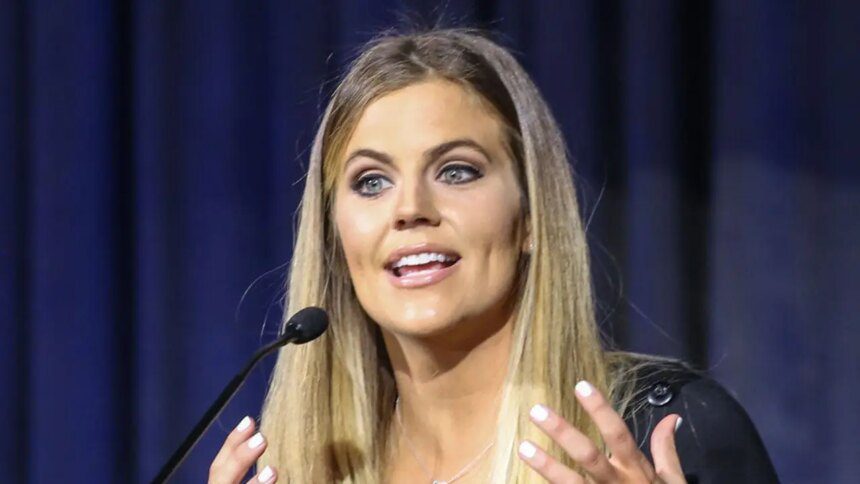

Former ESPN host Sam Ponder recently voiced her concerns regarding the inclusion of transgender athletes in women’s sports, particularly in the WNBA. Ponder’s call for the league to define what it means to be a woman has spurred discussions not only in the U.S. but also in other parts of the world, including India, where the conversation surrounding gender and sports continues to evolve.
Sam Ponder’s Advocacy for Women’s Sports
Sam Ponder, known for her outspoken views on sports and gender issues, has urged the WNBA to take a definitive stance on the inclusion of transgender athletes. In a recent social media post, she stated, “The WNBA should be courageous. Stand for women. You can’t stand for something you can’t even define.” Ponder believes that recognizing the inherent differences between genders is essential for fair competition in sports.
During a recent meeting of WNBA team presidents and general managers, discussions took place around the eligibility of transgender athletes but no clear rules were established. Sources revealed that the focus was primarily on the “hate and vitriol” directed at players online rather than addressing the pressing issue of athlete inclusion.
Reaction and Controversy
Ponder’s remarks have sparked significant backlash, illustrating the polarizing nature of this debate. WNBA players and various media figures have criticized her for defending the separation of male and female athletes. Notably, players like Sophie Cunningham have faced scrutiny for expressing similar sentiments on the protection of women’s sports. As more athletes feel the pressure to conform to politically correct narratives, discussions on gender and sports continue to grow contentious.
In her previous tenure at ESPN, Ponder was one of the few advocates for women’s rights in sports, alongside fellow journalist Sage Steele. After her departure from ESPN nearly two years ago, sources indicated that her stance on male athletes participating in female sports significantly impacted her exit, though financial considerations were also a factor.
Public Opinion and Polling
Despite the strong reactions against Ponder, surveys indicate that a significant portion of the American public shares her views. Recent Gallup polls show that nearly 80% of adults disapprove of biological males competing in female athletics. This sentiment highlights a broader societal concern about fair competition and the integrity of women’s sports. Similar views are seen globally, indicating a growing divide on how gender and competition should be understood and regulated.
Why This Is Trending
As discussions around gender identity and inclusion intensify globally, Indians are increasingly searching for information on how these issues manifest in sports. The Indian sports landscape is evolving, with women’s sports gaining prominence, and the implications of gender policies are drawing attention. The topic resonates with audiences who are keen on understanding not just the dynamics in American sports but also their relevance in local contexts, where traditional views on gender roles are being challenged.
Frequently Asked Questions
What does Sam Ponder advocate for regarding women’s sports?
Sam Ponder advocates for clear definitions of gender in sports, urging organizations like the WNBA to establish rules that distinguish between male and female athletes to ensure fair competition.
What was discussed in the recent WNBA meeting about transgender athletes?
The recent WNBA meeting focused on discussing the inclusion of transgender athletes but failed to establish any eligibility rules, instead addressing concerns about online harassment toward players.
How has public opinion shifted regarding transgender athletes in women’s sports?
Public opinion appears to lean heavily against the inclusion of transgender athletes in women’s sports, with nearly 80% of adults expressing disapproval according to recent polls.
Why is this issue gaining attention in India?
This issue is gaining attention in India as the country grapples with its own definitions of gender and sports, paralleling global discussions while wrestling with traditional views and modern inclusivity.