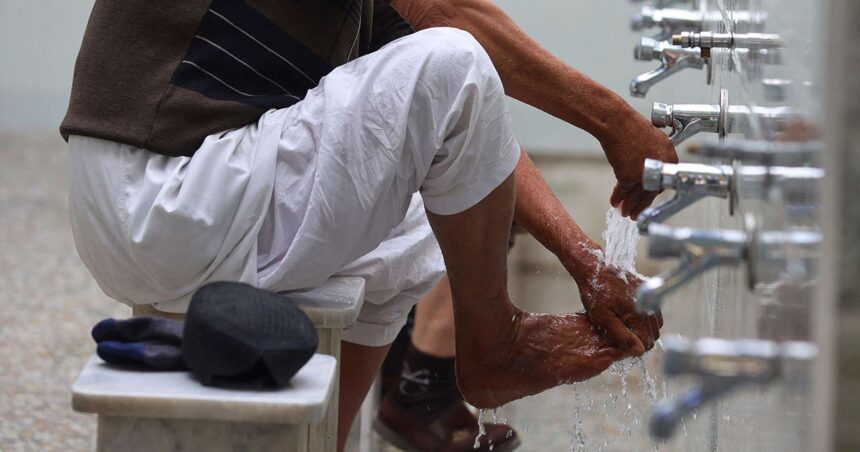

Dallas-Fort Worth International Airport (DFW) is considering adding foot-washing stations for Islamic travelers to its international terminal. This proposal aims to enhance accommodations for Muslim passengers, reflecting a growing recognition of diverse religious practices in public spaces, though it remains in the evaluation phase without final approval.
Enhancing Accessibility for Diverse Faiths
According to Katie Chaumont, assistant vice president of communications at DFW, the new ablution stations are proposed for the pre-security side of the international terminal. “Like many international airports across Texas and the country, DFW has offered an ablution washing station on the post-security side for years without concerns,” Chaumont explained. The airport is currently assessing an internal proposal to expand this service to include additional restrooms.
In recent years, DFW has taken steps to enhance its accommodation for various faiths, indicating a broader trend toward inclusivity. While there has been an existing ablution station post-security, this extension to the pre-security area signifies a more comprehensive approach to catering to the needs of travelers from diverse religious backgrounds.
The Context of Ablution in Religious Practice
Ablution, known as Wudu in Islam, involves washing certain parts of the body as a ritual of purification before prayer. This practice is crucial for many Muslims, who must perform it before they can engage in prayer, highlighting the need for readily accessible facilities in public areas. While DFW Airport has provided two ablution stations within the Interfaith Chapel since 2019, efforts to expand this service reflect the airport’s commitment to accommodating Muslim travelers effectively.
The project is estimated to cost around $300,000 and is speculated to be privately funded, as indicated by a record from the Texas Department of Licensing and Regulation. The ongoing evaluation stages suggest consideration of various factors before finalizing the decision.
Trends in Global Airports toward Inclusivity
The proposal for additional ablution stations aligns with a growing trend among major airports worldwide, which are increasingly recognizing the importance of catering to the diverse needs of international travelers. DFW Airport was ranked the fourth-busiest airport globally in 2025, serving over 85 million passengers, highlighting the need for services that accommodate all travelers.
As airports, including DFW, adapt to the increasing diversity of their passenger base, the expansion of facilities like ablution stations is not just about religious accommodation but also about fostering an environment of respect and inclusivity. This reflects a gradual shift in cultural awareness and sensitivity towards different communities within the travel industry.
Why It Matters
The significance of this proposal extends beyond DFW Airport, reflecting the growing recognition of diverse religious practices in public spaces globally. The need for inclusive facilities is vital as air travel continues to connect communities across cultural and religious lines. Enhancing accessibility for Muslim travelers not only accommodates their needs but also sets a precedent for other airports to follow, promoting inclusivity in aviation.
Frequently Asked Questions
What is the purpose of the proposed ablution stations at DFW Airport?
The proposed ablution stations are intended to provide facilities for Muslim travelers to perform Wudu, a ritual washing required before prayers.
Who is responsible for funding the new ablution stations?
The project is estimated to cost around $300,000, which is expected to be privately funded, although details are still being finalized.
Is the proposal for additional ablution stations approved?
As of now, the proposal is still in the evaluation stage and has not received final approval from airport authorities.
How do ablution stations enhance airport services?
Ablution stations enhance airport services by accommodating the needs of Muslim travelers, promoting inclusivity, and ensuring that religious practices can be observed while traveling.