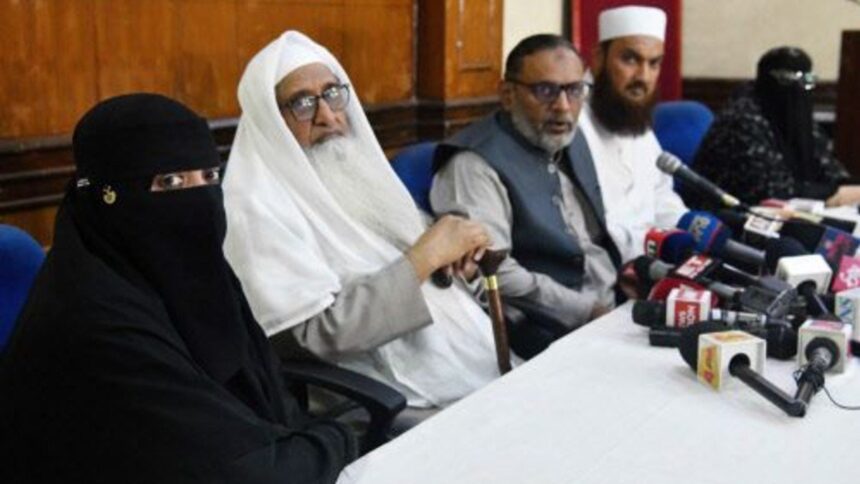

The All India Muslim Personal Law Board (AIMPLB) has launched a nationwide campaign aimed at addressing the perceived marginalization of Muslims in India under the current political climate, particularly focusing on violence against the community and proposed legal changes such as the Uniform Civil Code (UCC).
Nationwide Campaign Against Marginalization
The AIMPLB is initiating a coordinated effort to combat the social and political marginalization of Muslims across India. Spokesperson Syed Qasim Rasool Ilyas stated that this decision emerged from a recent executive committee meeting where concerns about the community’s current circumstances were discussed. The board plans to establish a special action committee to organize events that will work alongside “peace-loving and justice-oriented sections of society,” focusing on protecting the rights and dignity of Muslims.
Escalating Violence and Demolition Concerns
During the committee meeting, AIMPLB raised alarms over increasing incidents involving mob lynching, as well as what they claim to be unlawful demolitions of mosques and madrasas in states such as Uttar Pradesh, Madhya Pradesh, and Rajasthan. Ilyas emphasized that a “climate of hostility” seems to be fostering ongoing attacks on Muslims, impacting their safety and religious practices. Though these claims reflect their internal sentiment, they have yet to be independently verified.
Objections to National Policies: UCC and Vande Mataram
The board has explicitly opposed discussions surrounding the Uniform Civil Code in various states, arguing that its imposition would violate Article 25 of the Indian Constitution, which guarantees freedom of religion. AIMPLB is preparing to challenge such implementations legally, citing their ongoing case against the Uttarakhand UCC law. They have also denounced attempts to mandate the singing of “Vande Mataram” in educational institutions, describing it as contradictory to Islamic beliefs. Dr. S. Q. R. Ilyas stressed that enforcing this policy would violate religious freedoms recognized in the Constitution.
Why It Matters
The current situation poses significant implications for minority rights and democratic discourse in India. The rising concerns articulated by the AIMPLB highlight a broader trend of societal exclusion and potential legal inequities faced by the Muslim community. As tensions intensify, the reactions from both political bodies and civil society could shape future legislative frameworks and impact the overall stability of communal relations in India. Understanding these dynamics is crucial for policymakers, advocates for civil rights, and the international community, as they navigate the complexities of religious freedom and minority representation.
Frequently Asked Questions
What is the All India Muslim Personal Law Board (AIMPLB)?
The AIMPLB is an organization focused on advocating for the rights and interests of the Muslim community in India, particularly concerning personal laws and religious freedoms.
What are the concerns raised by the AIMPLB regarding violence?
The AIMPLB has raised concerns about rising mob lynching incidents, alleged demolition of mosques and madrasas, and what they perceive as a hostile environment for Muslims in several Indian states.
What is the Uniform Civil Code (UCC), and why do they oppose it?
The UCC aims to replace personal laws based on the scriptures and customs of each major religious community in India with a common set governing every citizen. The AIMPLB argues that its implementation would infringe upon religious freedoms as protected under the Constitution.
What is the significance of “Vande Mataram” in this context?
“Vande Mataram” is a national song in India. AIMPLB opposes making it mandatory in schools and madrasas, arguing that certain parts conflict with Islamic principles, thus impacting their religious freedom.