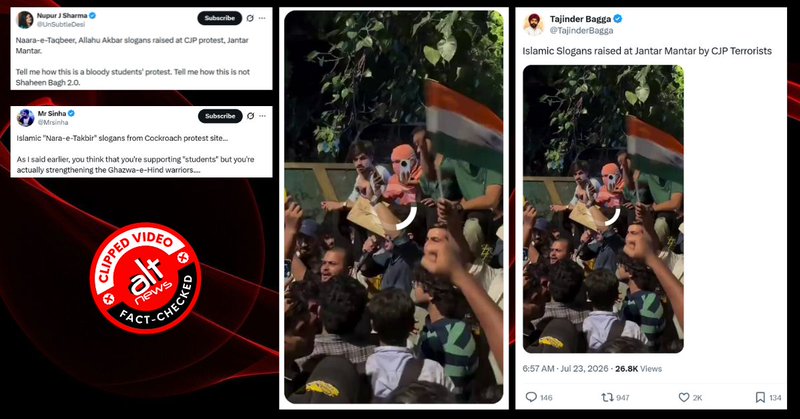

Recently, BJP leader Tajinder Bagga, along with OpIndia editor Nupur Sharma and others, shared a short, five-second clip claiming that Islamic slogans were raised during a protest organized by the Coalition for Justice and Peace (CPJ) at Jantar Mantar. However, this video was incomplete; the longer version also showcased chants of “Jai Shri Ram,” revealing a more nuanced context.
Context of the Protest
The ongoing protests at Jantar Mantar, organized by the Coalition for Justice and Peace and various student organizations, have been drawing significant attention over the past few weeks. Participants are primarily demanding the resignation of Union Education Minister Dharmendra Pradhan. This protest reflects broader concerns among student communities regarding academic policies and governmental actions that they deem unfavorable.
The Video Controversy
The controversy erupted when a brief segment of video footage was circulated, which highlighted Islamic slogans being shouted during the protest. This clip was seized upon by political figures and media outlets to incite narratives surrounding religious sentiments. However, the full video, which includes counter-slogans like “Jai Shri Ram,” has raised questions about the selective presentation of information. Media analysis indicates that the shorter clip omits critical elements of the protests, ultimately presenting a skewed view of the events.
Responses and Political Ramifications
This incident has elicited strong responses across the political spectrum. Some commentators argue that the use of selective video clips is a tactic aimed at polarizing public opinion and furthering divisive narratives. On the other hand, supporters of the BJP insist that any demonstration involving religious slogans—whether Islamic or Hindu—deserves scrutiny, reflecting a challenging environment where political factions are keen to assert their narratives. Political analysts suggest that such episodes may widen societal rifts, particularly in a reality where communal tensions can escalate swiftly.
Why This Matters
The significance of this incident lies in its broader implications for Indian society and politics. The manipulation of media and misinformation is increasingly becoming a weapon in political discourse, capable of swaying public opinion and influencing electoral outcomes. Moreover, it highlights the intense scrutiny that political protests face, with implications for free speech and dissent in the country. As India approaches crucial elections, the ability to control narratives will likely become even more critical for all political parties involved.
Frequently Asked Questions
What was the original claim made by BJP leaders regarding the protest?
BJP leaders claimed that Islamic slogans were chanted during a protest at Jantar Mantar, based on a five-second video clip they shared.
What is the context of the Jantar Mantar protests?
The protests are organized by the Coalition for Justice and Peace and student organizations demanding the resignation of Union Education Minister Dharmendra Pradhan, reflecting broader concerns about education policy.
How has the full video changed the perception of the event?
The full video included chants of “Jai Shri Ram,” indicating that there was a mix of slogans from different communities, thus complicating the narrative presented by the BJP leaders.
Why is this incident politically significant?
This incident underscores the role of media manipulation in shaping political narratives in India, which can influence public opinion and deepen societal divisions, especially in the lead-up to elections.