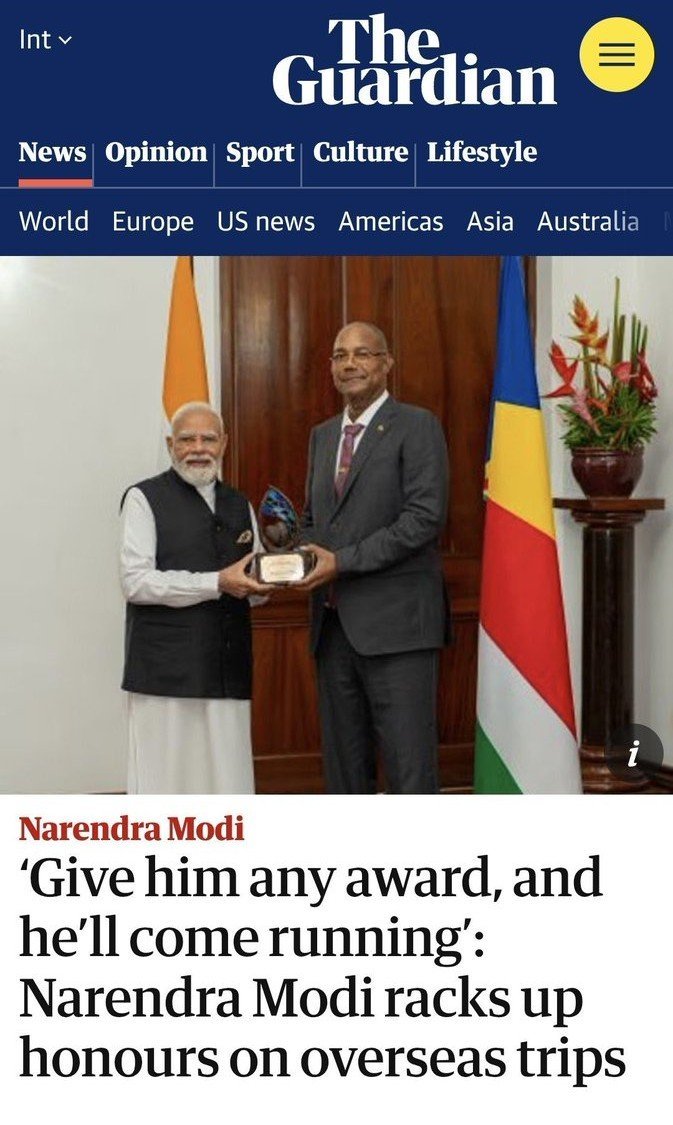

The recent presentation of the Philip Kotler Presidential Award to Prime Minister Narendra Modi has sparked controversy and raised questions regarding its legitimacy. Critics have pointed out that the award’s existence was not mentioned on the official website, prompting media scrutiny and political opposition.
Background of the Philip Kotler Presidential Award
The Philip Kotler Presidential Award is named after renowned marketing expert Philip Kotler. This award aims to recognize global leaders who demonstrate excellence in leadership and contribution towards social empowerment and sustainable development. However, the announcement of the award’s inaugural recipient—Prime Minister Narendra Modi—has raised eyebrows, particularly due to the lack of mention of the award on its official website.
Questions and Controversies Surrounding the Award
Following the award announcement, notable political commentator Mohammed Zubair flagged several discrepancies. He pointed out that the official website does not list any category for the Philip Kotler Presidential Award, suggesting that its legitimacy could be questioned. Additionally, he noted that the website associated with the award, wma18.com, has been taken down, raising further doubts about the authenticity of the award itself.
Moreover, there have been allegations that the official Twitter handle of the award has removed several images related to the event. This, combined with the lack of proper documentation, has led to skepticism about the award’s origins and the motives behind its presentation to Modi.
Public Reactions and Media Scrutiny
The media’s reaction has been quite critical, with numerous outlets questioning the award’s validity and the seeming lack of transparency involved in the process. Political analysts and journalists have highlighted that the timing of the award aligns with Modi’s governmental campaigns, suggesting a potential political strategy rather than a genuine recognition of merit.
Opposition parties have begun to leverage this controversy to critique Modi’s administration, questioning the government’s priorities and integrity. Detractors argue that the focus should be on real achievements and governance rather than fabricated awards that serve more as public relations maneuvers.
Why This Matters
For Indian readers, the unveiling of the Philip Kotler Presidential Award raises pertinent questions about accountability and transparency in governance. In a democratic society, the legitimacy and authenticity of awards presented to public figures are crucial, as they can significantly impact public perception and trust in leadership. Furthermore, the controversy surrounding this award highlights ongoing tensions within Indian politics, particularly between the ruling party and its critics. Such incidents can shape the political landscape in the lead-up to elections, influencing voter opinions and engagement.
Frequently Asked Questions
What is the Philip Kotler Presidential Award?
The Philip Kotler Presidential Award is designed to recognize exceptional leadership and contributions towards social empowerment and sustainable development. Named after marketing expert Philip Kotler, it aims to honor leaders who exemplify these values.
Why are there controversies surrounding the award?
Critics have pointed out that the official award website did not list any category for this award, leading to questions regarding its legitimacy. Furthermore, the award’s official website has been taken down, and images related to the event have been removed from social media, fueling skepticism.
What has been the media’s response?
The media response has largely been critical, with journalists questioning the authenticity and motivations behind the award. Political analysts suggest that this could be a strategic move by the ruling party to bolster public image rather than a genuine recognition of service.
What political implications does this have?
This controversy serves to highlight ongoing political tensions in India. It may impact public trust and perceptions of the ruling government, especially in the context of upcoming elections, as opponents use this incident to undermine the government’s credibility.