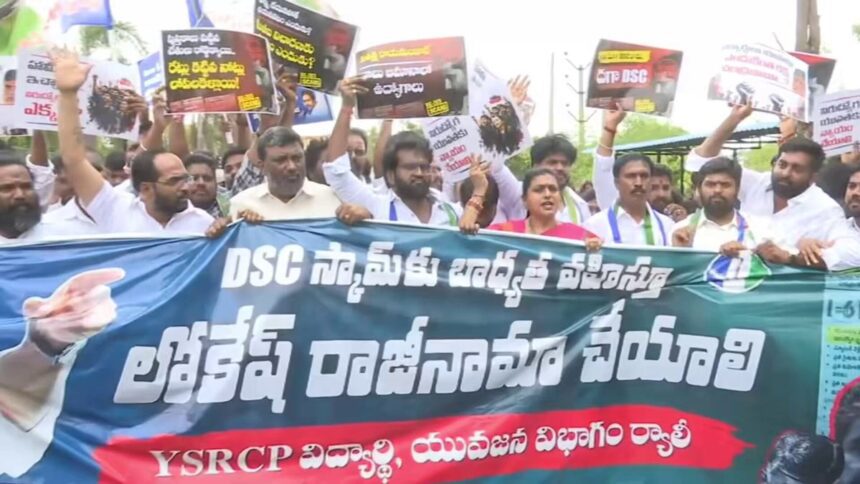

The ongoing political tussle in Andhra Pradesh has been exacerbated by perceived bias in media coverage. Recently, YSRCP, the opposition party, accused the Andhra Pradesh government—led by the TDP—of neglecting significant issues like alleged irregularities in the District Selection Committee (DSC) examinations while receiving little to no media attention for their protests and claims.
Background of DSC Exam Controversy
The District Selection Committee (DSC) examinations are pivotal in recruiting teachers for various educational institutions in Andhra Pradesh. Recently, YSRCP has alleged irregularities in these examinations, prompting widespread protests across the state. They are calling for the resignation of Nara Lokesh, the IT and HRD Minister, claiming that lapses in the examination process reflect a systemic failure in the state’s education governance.
Amidst these protests, the YSRCP has taken a firm stance, deeming the state government’s approach as inadequate. The significant issue here revolves around the educational future of thousands of candidates who aspire to secure teaching positions. Given the accusations made against Lokesh, the controversy has gained traction within the state’s political discourse.
Media Coverage and Bias
The feedback from media outlets regarding the unfolding events has raised eyebrows among political commentators and supporters of YSRCP. Press Trust of India (PTI), one of the prominent news agencies in India, reportedly did not cover the YSRCP protests, nor did it publish any statements from the opposition party concerning the alleged examination irregularities. Instead, it seemed to offer greater emphasis to the government’s rebuttals to YSRCP’s claims.
This selective coverage has led to allegations of a one-sided narrative, amplifying concerns about media impartiality. Political analysts argue that this lack of coverage may skew public perception, allowing the ruling party to operate without proper scrutiny regarding serious allegations that could undermine public trust in its governance.
The Reaction from TDP
In response to YSRCP’s criticisms, TDP members have denied any wrongdoing related to the DSC examinations. Following YS Jagan Mohan Reddy’s statement on social media, TDP was quick to provide counter-narratives and positions that defended their approach to education policy. The quick mobilization of statements from TDP after the media’s engagement with YSRCP has further fueled the narrative of a lack of balanced reporting.
This reaction from TDP illustrates the volatility of the current political landscape in Andhra Pradesh, where media representation can play a pivotal role in shaping opinions and public dialogue. TDP’s responsiveness to the allegations, paired with the media’s choice of emphasis, underscores a dynamic of contention that appeals to varying segments of the electorate.
Why This Matters
The political landscape in Andhra Pradesh is emblematic of larger issues faced across India, where media coverage can greatly influence political outcomes. The manner in which news is represented feeds into the greater narrative of accountability—or the lack thereof—within state governance. As YSRCP and TDP tussle for public favor, the type and quality of media exposure become critical.
This incident becomes significantly important as it may reflect broader voting patterns at the state and national level. If a party like YSRCP feels marginalized in media coverage, it could impact their electoral strategies and public engagement. Moreover, in a democracy, equitable media coverage is essential for the functioning of informed citizenry and robust political discourse. The case highlights the urgent need for media professionalism and responsibility in portraying political narratives in a balanced manner.
Frequently Asked Questions
What triggered the protests by YSRCP in Andhra Pradesh?
YSRCP staged protests over alleged irregularities in the District Selection Committee (DSC) examinations, demanding the resignation of the IT and HRD Minister, Nara Lokesh.
Why did the media not cover the YSRCP protests?
There are accusations that the coverage was biased, as PTI did not report on the protests but focused on responses from the ruling party, TDP.
What impact could biased media coverage have on politics in Andhra Pradesh?
Biased coverage can skew public perception, diminish the accountability of the ruling party, and affect electoral outcomes by influencing voter sentiment.
How does this incident reflect broader issues in Indian politics?
This situation illustrates ongoing challenges regarding media impartiality and its implications for democracy, showcasing the need for balanced reporting in a politically charged environment.