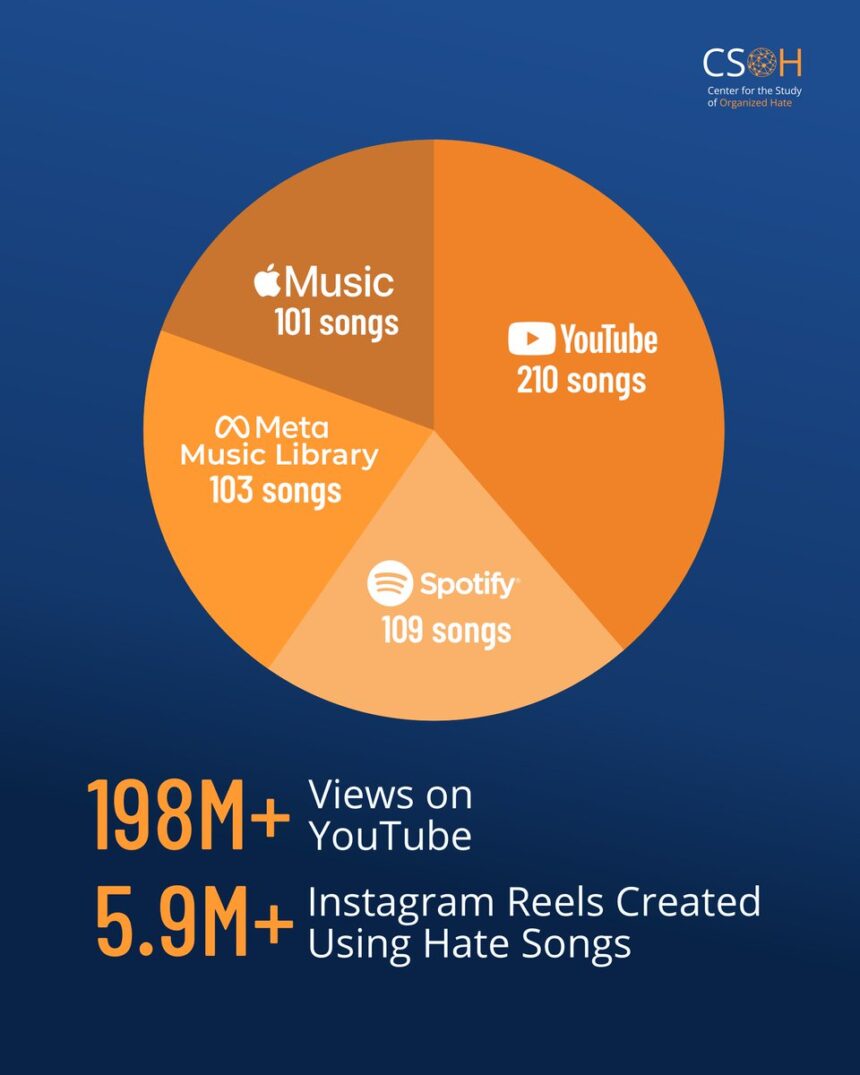

Recent findings from researchers, including Kunal Purohit, reveal that major social media platforms are allegedly funding and promoting Hindutva Pop music that incites violence against Muslims. The researchers documented 523 songs that contribute to hate speech, raising serious questions about platform accountability in upholding their own community guidelines.
Understanding Hindutva Pop Music
Hindutva Pop music has emerged as a controversial genre that blends political ideology with popular music. It often reflects sectarian themes that endorse violence or discrimination against minority communities, particularly Muslims in India. The genre has gained traction over the last few years, leveraging social media for widespread dissemination. Platforms like YouTube, Meta (formerly Facebook), and Spotify have become instrumental in this process, inadvertently supporting a narrative that fosters communal divide.
Research Findings and Allegations
Kunal Purohit and his research team undertook an extensive investigation, culminating in the documentation of 523 songs that promote violence and discrimination against Muslims. The researchers claimed that not only were major tech companies amplifying these songs, but they were also financially supporting their production and distribution. This finding puts these platforms in a contentious position regarding their stated community guidelines, which ostensibly prohibit hate speech and violence. The apparent contradiction raises the stakes for these companies as they navigate the complex political and cultural landscape of India.
The Role of Social Media Platforms
Social media platforms have a well-documented challenge in moderating content. The algorithms often prioritize engagement and popularity over compliance with community standards. This leads to a scenario where incendiary content can gain visibility and traction while legitimate counter-narratives struggle to reach the same audience. The findings presented by Purohit point to a systematic oversight, suggesting that platforms might be complicit in promoting a specific ideological narrative, particularly one aligned with Hindutva.
Why This Matters
The implications of this research extend beyond the specifics of Hindutva Pop music. It underscores a larger concern regarding how social media platforms can shape public discourse in India. The influence of these platforms on societal attitudes is profound, especially when content that incites violence is readily available. By not adhering to their own guidelines, these companies may inadvertently become instruments of divisive rhetoric, intensifying polarization in an already complex socio-political landscape. For Indian readers, this should prompt a critical examination of the role that Big Tech plays not only in shaping public opinions but also in potentially endangering communal harmony.
Frequently Asked Questions
What is Hindutva Pop music?
Hindutva Pop music is a genre that combines popular music with themes aligned with Hindutva ideology, often promoting narratives that are anti-Muslim or sectarian in nature.
What are the claims made by Kunal Purohit’s research?
Purohit’s research claims that platforms like YouTube, Meta, Apple, and Spotify have been complicit in significantly promoting and funding Hindutva Pop songs that encourage violence against Muslims.
How do social media platforms respond to hate speech?
Typically, social media platforms have community guidelines that prohibit hate speech; however, the effectiveness of these policies is often called into question, especially when content promoting violence remains accessible.
Why is this issue significant in India?
This issue is significant because it highlights how social media can shape public discourse and social attitudes, especially in a country like India, where communal tensions can be exacerbated by divisive narratives.