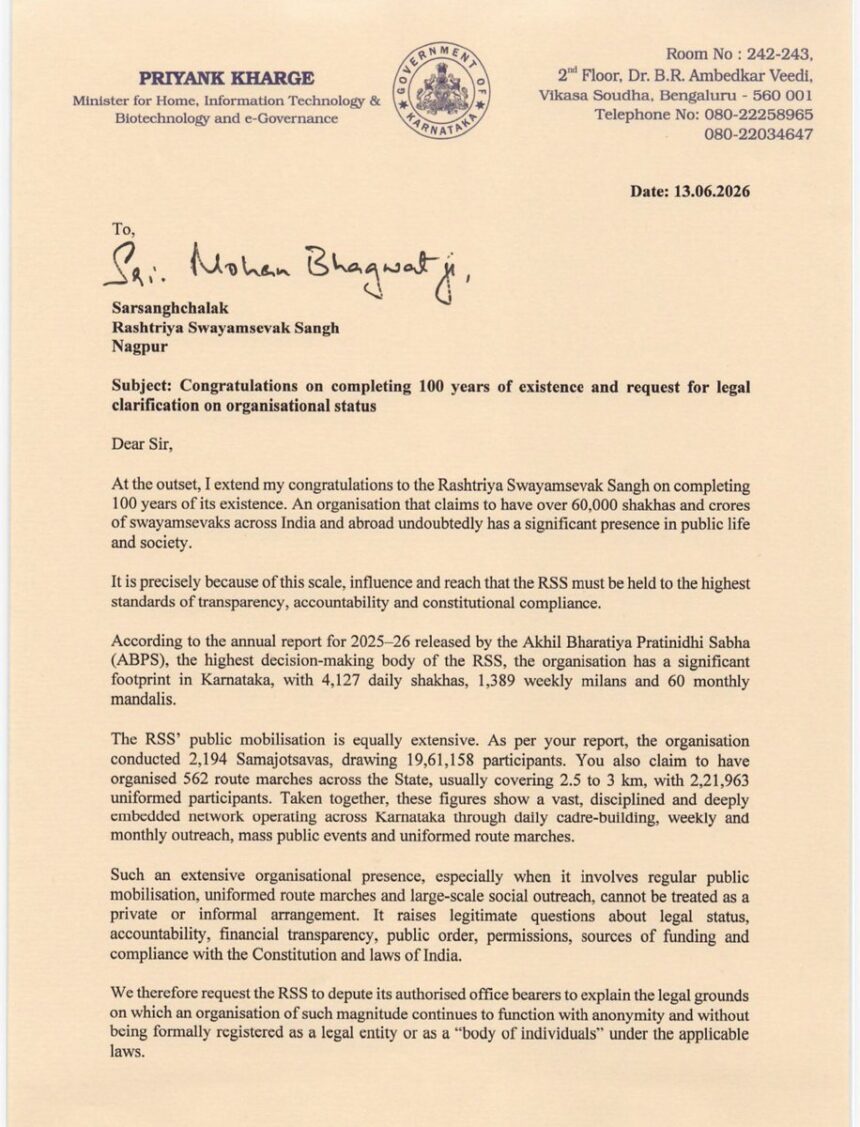

This letter highlights a call for transparency and accountability from the Rashtriya Swayamsevak Sangh (RSS) in light of its significant influence and status as it celebrates 100 years. The author emphasizes the need for the organization to align with constitutional obligations, particularly regarding registration, funding, and operations.
Context of the Letter
The letter addressed to Shri Mohan Bhagwat, the chief of the RSS, opens with congratulations on the organization’s centenary. The letter notes that the RSS has extensive reach within India, boasting over 60,000 shakhas (branches) and millions of swayamsevaks (volunteers). Such scale necessitates an examination of the organization’s legal and operational frameworks.
Concerns Regarding Transparency
The author points out the impressive annual statistics presented in the RSS’ Karnataka report from the Akhil Bharatiya Pratinidhi Sabha for the years 2025-26. This report details numerous daily shakhas, weekly milans, and public events that collectively involve millions of participants. Given this extensive network and the influence it can command, the letter raises critical questions about the need for transparency in how the RSS operates. The expectations placed on other organizations, such as NGOs and companies regarding registration and legal compliance, underscore the importance of equal accountability.
Comparative Accountability Standards
The letter argues that if citizens and various organizations are mandated to adhere to legal frameworks—including registration, tax, and expenditure disclosures—the RSS should not be exempt from these regulations. The call for transparency is framed as an essential responsibility, especially in the centennial year of the RSS, where public trust and constitutional compliance become paramount. It suggests that the organization should be proactive in showcasing its operations to foster trust among citizens.
Why This Matters
The implications of this letter go beyond mere compliance; they touch the fabric of democratic engagement in India. As one of the largest voluntary organizations in the country, the RSS plays a critical role in shaping socio-political narratives. Transparency can enhance stakeholder trust, reduce suspicions, and foster a spirit of collaboration with other entities, including the state and civil society. In a nation striving for accountability, the RSS’ adoption of transparency gets amplified significance, prompting questions about the relationship between civil society, authority, and accountability.
Frequently Asked Questions
What is the main concern expressed in the letter?
The letter calls for the RSS to enhance transparency regarding its operations, funding, and legal status, particularly given its vast influence and activities across India.
Why is transparency important for the RSS?
Transparency builds public trust and ensures that the organization complies with laws that other institutions are expected to follow. It enhances accountability and can facilitate better engagement with society.
What does the author suggest should happen in the RSS’s centenary year?
The author suggests that the RSS should responsibly abide by constitutional obligations, including registration, tax compliance, and transparency in operations.
How might this call for transparency affect the RSS’s reputation?
Maintaining transparency could bolster the RSS’s reputation among critics and supporters alike, as it may demonstrate a commitment to accountability, which is essential in a democratic society.