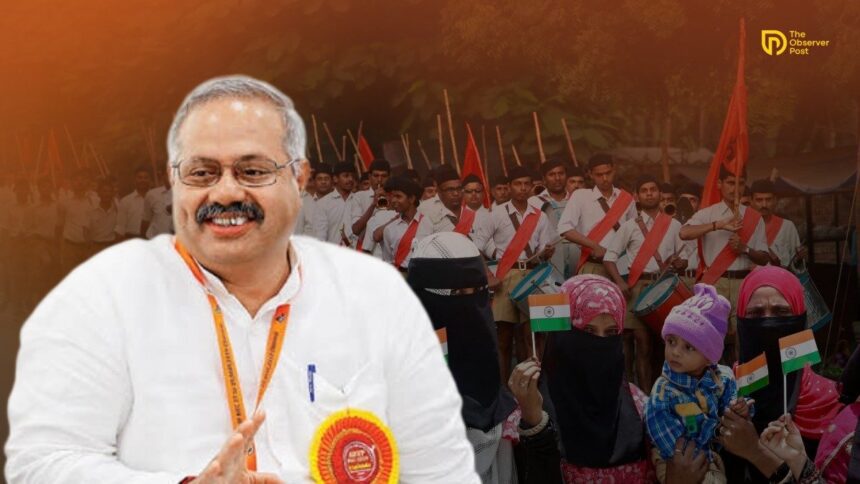

Recent remarks by Rashtriya Swayamsevak Sangh (RSS) publicity chief Sunil Ambekar highlight ongoing tensions in India regarding Hindu-Muslim relations, demographic policies, and the socio-political landscape affecting Indian Muslims. With calls for an end to communal conflicts, the remarks also underline the socio-economic marginalization faced by Muslims since the partition of India in 1947.
Ending Communal Tensions: A Call for Unity
Sunil Ambekar emphasized the need for the Hindu-Muslim conflict in India to cease, stating that all Indians share the same genetic makeup. Speaking at an event held by the Pune Union of Working Journalists, Ambekar referenced long-standing communal tensions that predate the formation of the RSS. His assertion that everyone shares “the same DNA” is aimed not only at fostering unity but also at combating the divisive narratives that contribute to the marginalization of Indian Muslims.
Revisiting Historical Narratives and National Identity
Ambekar’s commentary also touched upon the belief among some Muslims that changing one’s religion could alter one’s nation and history. This type of separatist thinking, he argued, contributed to the partition of India in 1947, which remains a significant source of discrimination and exclusion for many Muslims in the country. By encouraging reflection on this mindset, Ambekar hopes to pivot discussions toward societal harmony rather than divisiveness, a conversation critical for the empowerment and integration of Muslim communities into the broader national discourse.
A Shift in Perspective: Lessons from Indonesia
In his speech, Ambekar encouraged Indian Muslims to look towards Indonesia as a role model rather than Pakistan. He highlighted that Indonesia, despite being home to the largest Muslim population in the world, continues to honor its Hindu-Buddhist cultural heritage. This call for inspiration from Indonesia instead of Pakistan can be seen as an attempt to reframe notions of identity among Muslims in India. It suggests a pathway to coexistence and acceptance, yet it raises questions about how the legacies of Pakistan and Indonesia are perceived and integrated into India’s national fabric.
Why It Matters
The implications of Ambekar’s remarks are significant, not just for the domestic political landscape but also for perceptions of India abroad. The ongoing discrimination and social exclusion faced by Indian Muslims impact global narratives surrounding religious freedom, human rights, and secularism. As communal tensions remain a focal point in Indian society, the global community must pay attention to how such discussions shape social attitudes and policies. Recognizing the plight of marginalized groups is essential for fostering a spirit of inclusivity and understanding in India’s diverse societal fabric, particularly in the tech-driven era where social cohesion is key for sustainable development.
Frequently Asked Questions
What were Sunil Ambekar’s main points regarding Hindu-Muslim relations?
Ambekar called for an end to communal tensions, asserting that all Indians share the same DNA. He emphasized the need for unity and the rejection of divisive narratives.
What did he say about the impact of historical beliefs on society?
He noted that beliefs among some Muslims that changing religion could alter one’s nationality contributed to the partition of India and called for moving past such separatist thinking for social harmony.
How did Ambekar suggest Indian Muslims draw inspiration?
He urged Indian Muslims to look towards Indonesia, which has a large Muslim population but retains significant Hindu-Buddhist cultural influences, instead of looking towards Pakistan.
What are the implications of Ambekar’s remarks for demographic policies in India?
Ambekar clarified the RSS’s focus on demographic balance rather than strict population control, suggesting that demographic stability is crucial for India’s cultural identity and future.