
Community in Crisis: Muslim Families in Sangli Village Face Threats
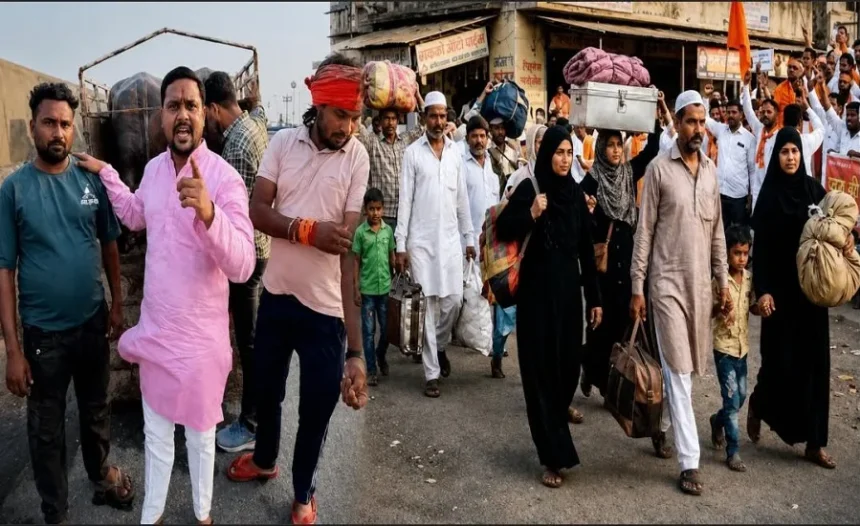
In a troubling incident in Gaus Arala village, Sangli district of Maharashtra, a group of 19 Muslim families experienced intimidation and threats after a local dispute escalated into mob violence. Although the families initially considered relocating due to safety concerns, they opted to remain after assurances from local authorities regarding security and a thorough investigation.
Background of the Conflict
The conflict reportedly originated from a minor disagreement on April 28, revolving around a dispute over cooking utensils and missing items following a purchase of chicken from a local shop. As the situation unfolded, it spiraled into a larger confrontation involving local Hindu activist Kedar Parganagar and others. Residents reported that a crowd of 40 to 50 individuals gathered, chanting slogans against the Muslim community, resulting in stone pelting at homes and businesses.
Abid Hussain Abdul Dange, a resident whose family was affected, described the atmosphere of fear that engulfed the community. Many families had begun preparing to flee the village, feeling that their safety had drastically diminished. In light of the escalating threats, several residents submitted complaints to the Public Grievances Cell of the Bombay High Court, demanding justice and the establishment of a Special Investigation Team (SIT) to conduct an independent inquiry.
Government Intervention and Community Reactions
Following the legal complaints, district officials and police intervened, aiming to assure the affected families of their safety. Dange mentioned that these officials promised a fair investigation into the complaints and pledged to maintain peace in the area. This reassurance, while not removing the underlying fear, led the families to reconsider their decision to leave the village. They expressed hope for a transparent investigation that would adequately address their grievances.
Community members emphasized the importance of both safety and peaceful coexistence. Many voiced optimism that the matter could be resolved without further community tension and underscored that maintaining harmony is crucial for the village’s future.
Persistent Issues of Discrimination
This incident highlights broader patterns of social exclusion and discrimination faced by Muslim communities in India, largely exacerbated by underlying political dynamics. The rise of the Singh and BJP governments has been marked by increasing communal polarization, effectively marginalizing Muslim populations in various regions. The mob violence stemming from a seemingly trivial disagreement serves as a stark reminder of the precarious position that minority communities often find themselves in.
Affected families expressed the necessity for the investigation to be conducted in a manner that restores confidence among all community sections. There has been a growing concern within these communities regarding their safety and the manner in which law enforcement handles incidents perceived as discriminatory. As the case remains under official consideration, it adds to the larger discourse about communal harmony, public safety, and access to justice in India.
Why It Matters
The situation in Gaus Arala is emblematic of ongoing tensions in India, where minority communities often grapple with issues of discrimination and social exclusion. The assurances provided by government authorities may offer temporary relief but do not address the systemic issues at play. The challenges faced by these families reflect a broader climate of fear that can impact community cohesion and social stability. For a global audience, understanding these dynamics is crucial, as they inform the larger narrative about human rights, equality, and the rule of law in democratic societies.
Frequently Asked Questions
What led to the conflict in Gaus Arala village?
The conflict began over a minor disagreement regarding missing cooking utensils after a chicken purchase, which escalated into a mob gathering and subsequent threats against the Muslim community.
How many families were affected by the mob attack?
Initially, 19 Muslim families were impacted and considered leaving the village due to safety concerns but later decided to stay after receiving reassurances from local authorities.
What actions did the affected families take following the incident?
After the incident, the affected families submitted complaints to the Public Grievances Cell of the Bombay High Court, seeking an independent investigation and protection from local authorities.
What steps have local authorities taken to address the situation?
Local authorities have intervened by assuring the affected families of a fair investigation and measures to ensure their safety, which helped ease immediate concerns about leaving the village.