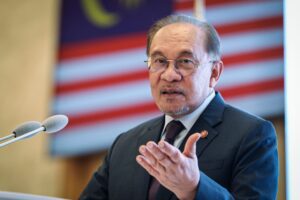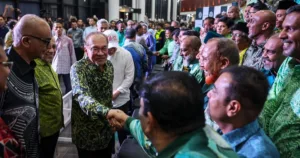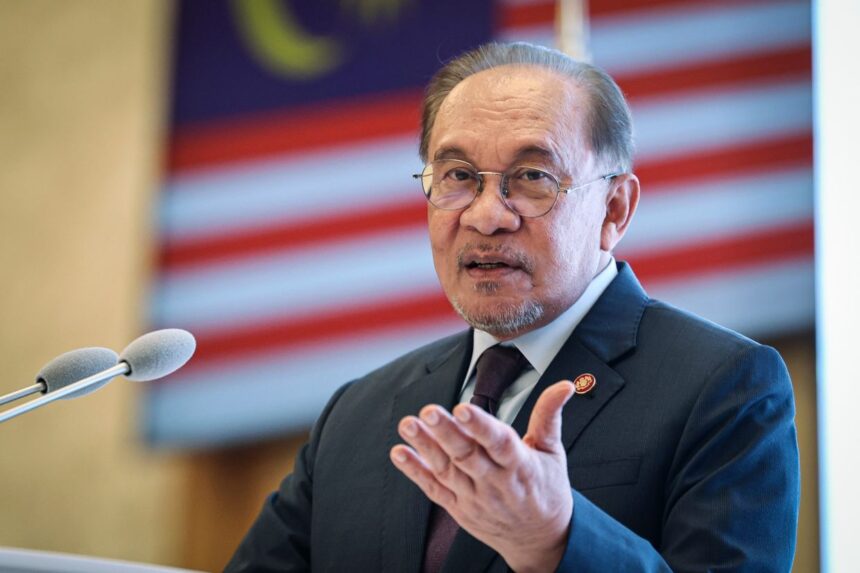

BUTTERWORTH: In a compelling appeal, Prime Minister Datuk Seri Anwar Ibrahim has urged the Indian Muslim community to champion unity and positive engagement as pivotal forces in Malaysia’s path towards a cohesive and prosperous nation. Acknowledging the challenges posed by a politically polarized environment, he emphasized the critical need for collaboration across ethnic lines to realize meaningful change.
Unity Amidst Diversity
Addressing a gathering of Indian Muslims, Prime Minister Anwar highlighted the importance of rekindling a spirit of unity rooted in the teachings of the Quran. He stressed that while diversity is a hallmark of Malaysia’s identity, it should serve as a strength rather than a point of division. “Precisely meaning that we can succeed, insya-Allah, as Mukmin, as Malaysia, as a nation, if we rekindle this flame to effect change as ordained in the al-Quran al-Karim,” he stated. The call for unity is particularly essential in a context where minority communities, such as Indian Muslims, often face societal and economic challenges exacerbated by exclusionary policies.
Confronting Political Polarization
Anwar acknowledged the political climate rife with hostility and division, which often manifests through disparaging narratives aimed at garnering votes. He noted, “The narrative out there is contention, rancorous exchanges, hatred and enmity, creating issues out of nothing.” This prevailing atmosphere complicates how marginalized communities, including Indian Muslims, navigate their socio-economic reality. The Prime Minister called for a balance between accountability and fostering a sense of communal responsibility, encouraging Malaysians to “criticise when necessary” while avoiding the breeding of animosity.
Acknowledging Shortcomings
In a candid reflection on governmental shortcomings, Anwar conceded that the administration has overlooked certain issues affecting minority groups. “We have our faults. We have sometimes ignored issues,” he remarked, implicitly recognizing that systemic bias can contribute to the exclusion and marginalization of communities like the Indian Muslims. He emphasized that progress towards unity requires a commitment to understanding the grievances of all ethnicities and working collectively towards rectifying them. The Prime Minister’s promising vision is further strengthened by his assertion that race should not be an impediment to national progress, encouraging collaboration among all citizens.
Why It Matters
The leaders’ rhetoric on inclusivity and community engagement has implications beyond Malaysia’s borders. As global societies grapple with issues surrounding racial discrimination, equity, and social justice, the approach taken by Anwar’s government could serve as a model for other multicultural societies striving for harmony. The emphasis on accountability, understanding, and civil discourse highlights a governance model that could benefit artificial intelligence (AI) developers and users. In a world increasingly reliant on AI, fostering understanding and cooperation among diverse communities could lead to more equitable technological advancements and applications, minimizing the risks of bias ingrained in algorithms.
Frequently Asked Questions
What is the current political climate in Malaysia regarding minority communities?
The political climate in Malaysia is marked by polarization, with ongoing tensions often impacting minority communities like Indian Muslims. There are concerns about exclusionary practices that could hinder unity and societal progress.
How does Anwar Ibrahim propose to address issues of marginalization?
Anwar Ibrahim has called for unity among Malaysia’s diverse communities and emphasized the importance of accountability and collaboration. His acknowledgment of governmental shortcomings also indicates a willingness to address the grievances of marginalized communities.
What role do Indian Muslims play in Malaysia’s socio-political landscape?
Indian Muslims represent a minority community in Malaysia, contributing to the country’s rich cultural tapestry. Despite facing challenges such as economic marginalization and social exclusion, they possess significant potential to influence positive change when united with other racial groups.
Why is racial cooperation important for Malaysia’s future?
Racial cooperation is crucial for social cohesion and national progress. Anwar Ibrahim argues that collaboration among different ethnic groups can help address systemic issues, foster a more inclusive society, and drive Malaysia towards a brighter future.