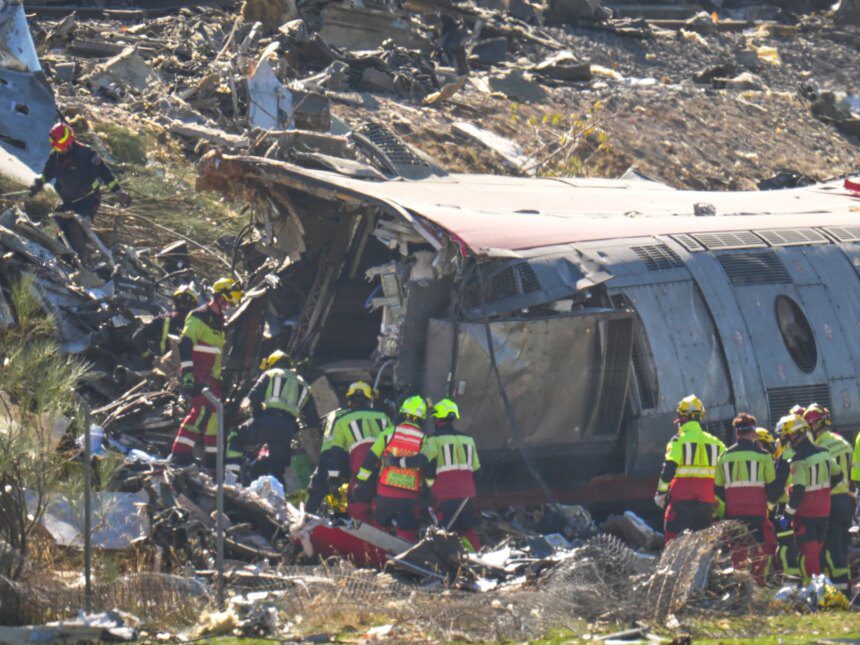

A tragic train accident in central Spain has led to the death of at least 30 passengers and left over 80 injured after a high-speed train collided with a stationary train near Urda, Toledo province. The incident, occurring early Wednesday, has raised concerns about train safety and emergency responses in Spain, reminiscent of other devastating train accidents in the past.
Details of the Accident
The collision took place in the early hours of Wednesday, as a high-speed train crashed into the rear of another train that had stopped. This resulted in the derailment of two carriages amidst widespread chaos. The region’s president, Emiliano Garcia-Page, expressed deep sorrow over the loss of life and indicated that the death toll may rise as rescue operations continue.
Emergency responders are prioritizing the rescue of potential survivors trapped in the wreckage, while also recovering bodies from the two most severely affected carriages. Spain’s Health Minister Monica Garcia confirmed that hospitals in the vicinity are receiving the injured, highlighting the urgent need for medical assistance.
Previous Train Accidents in Spain
This incident marks a significant moment as it follows a deadly January train crash in southern Spain that resulted in 45 fatalities when a train derailed and collided with an oncoming service. The recent crash has been described as one of the deadliest in recent Spanish history, reminiscent of the 2013 derailment in Galicia, which claimed 80 lives and remains a painful memory for the nation.
These tragic events have sparked discussions about the safety protocols in place for high-speed rail operators in Spain, a country known for its advanced rail infrastructure. Conversations are increasing regarding the need for stringent checks and updated safety measures to prevent such accidents in the future.
Indian Context: Safety and Flashpoints
The recent train accident in Spain serves as a reminder of the vulnerabilities in rail safety worldwide, including in India. India’s railway system, one of the largest in the world, has faced similar challenges with derailments and accidents, causing substantial loss of life. The Indian government has been working to modernize its rail infrastructure and improve safety standards, yet issues still persist.
In India, several high-profile accidents have led to fatalities, prompting public outcry and demands for better safety measures. This Spanish tragedy could reignite discussions in India about the urgency of rail safety reforms and improvements to emergency response protocols, as railway accidents can have catastrophic human and economic consequences.
What This Means
The train disaster in Spain sheds light on ongoing safety concerns in rail travel that resonate with Indian readers. It underscores the importance of assessing and reinforcing safety regulations, responding to emergencies effectively, and fostering a culture of safety within transportation systems. As India continues to enhance its rail network, lessons from international incidents can inform strategies for accountability and precautionary measures to ensure passengers’ safety.
Frequently Asked Questions
What caused the train collision in Spain?
The collision was caused by a high-speed train slamming into the rear of a stationary train, although investigations are ongoing to determine the exact circumstances leading to the incident.
How many people were injured in the accident?
At least 80 people were reported injured in the crash, with emergency services focusing on rescuing survivors from the wreckage.
What has been the government’s response to the accident?
The Castilla-La Mancha regional president and Spain’s Health Minister are actively involved in coordinating rescue efforts and providing updates on the situation, emphasizing support for the injured and the families of the deceased.
How does this train accident compare to previous incidents in Spain?
This train crash is among the deadliest in recent years in Spain, recalling the tragic January crash that killed 45 and the 2013 derailment that resulted in 80 deaths, highlighting significant concerns around railway safety.