
Summary
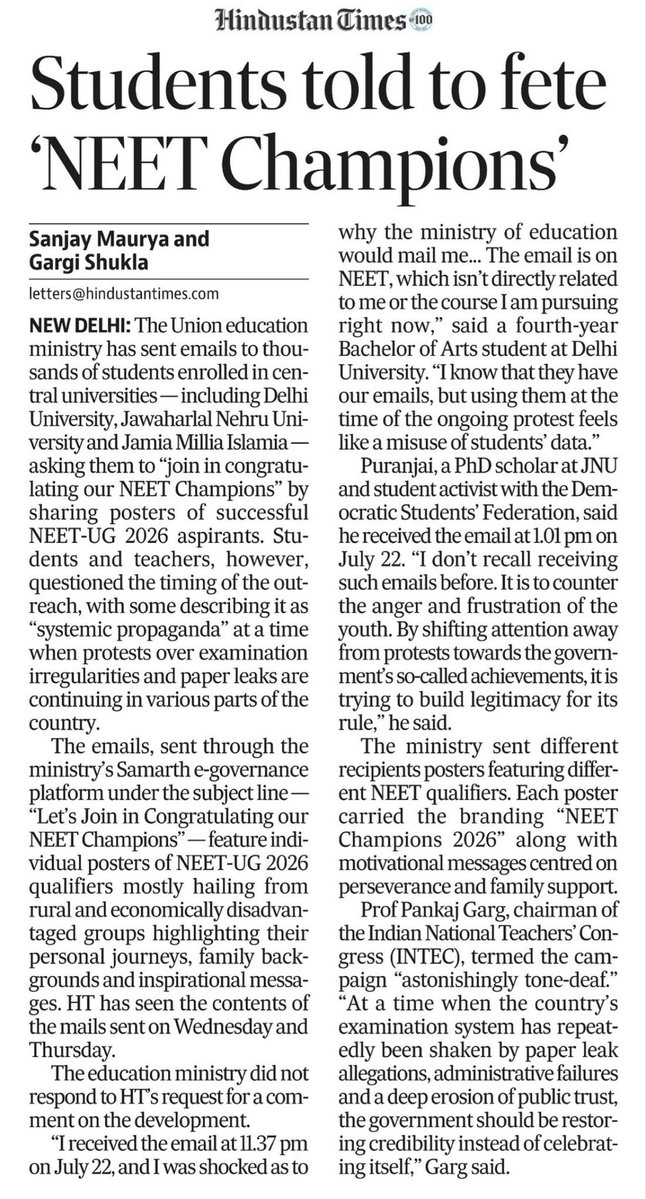
The Union Education Ministry of India has been actively encouraging students to congratulate the NEET toppers through mass emails. Meanwhile, political commentator Mohammed Zubair criticized actions taken by the government-funded public broadcaster DD News, suggesting they are promoting positive statements about Prime Minister Narendra Modi in light of recent controversies surrounding exam paper leaks and student protests.
Government Outreach to Students
The recent initiative by the Union Education Ministry to send emails to students urging them to congratulate NEET toppers has generated mixed reactions. This move appears aligned with a push to celebrate academic achievements, but it has also sparked debates about the timing and context surrounding such communications. Critics argue that such measures may aim to divert attention from ongoing issues in the education sector.
NEET, the National Eligibility Entrance Test, is a crucial examination for aspiring medical students in India. Toppers often receive media coverage and accolades that could enhance their future opportunities. However, the government’s strategy to directly engage students in this manner raises questions about the intended message and the underlying political motives.
Criticism of State-Run Media
In a subsequent post, Mohammed Zubair pointed out the actions of DD News, India’s public broadcaster, stating that the outlet is soliciting praise for PM Modi from school children. This request comes in the aftermath of significant issues, including paper leaks and student protests taking place in Jantar Mantar and other states. Zubair’s commentary underscores the problematic nature of a government entity seeking public affirmation amidst substantial public dissent regarding education policies.
This criticism reflects broader concerns about how state-run media platforms operate in India, particularly in times of political unrest. Observers note that the focus seems to lean more towards damage control for the government rather than addressing the genuine grievances expressed by the student community.
Context of Student Protests
The student protests unfolding across India have drawn attention to a myriad of issues affecting the education sector, particularly the integrity of examinations. The NEET paper leak incident has engendered mistrust among students and parents alike. The anger over such lapses indicates a pressing demand for accountability and transparency from the education administration.
The backdrop of these protests highlights the broader issue of educational reforms necessary in India. Fundamental questions arise regarding the fairness of examinations and the adequate support systems for students. Engaging with students for the sake of generating accolades for government officials seems to misplace priorities amid legitimate calls for reform.
Why This Matters
The political significance of these developments cannot be overstated. The Indian government’s efforts to shape public perception through means such as outreach initiatives reveal a strategic approach to navigating controversies. As elections draw closer, the focus on education as a tool for political gain becomes apparent. This dynamic may influence how voters perceive the effectiveness of the current administration in addressing pressing societal issues.
Moreover, the relationship between the government and its media apparatus raises essential questions about press freedom and the role of public broadcasters in a democracy. The apparent drive for curated narratives could undermine public trust in state institutions and exacerbate existing political tensions.
Frequently Asked Questions
What is the NEET examination?
NEET, or the National Eligibility Entrance Test, is a gateway examination for admission to medical colleges in India. It serves as a standardized test for evaluating students’ proficiency in science subjects relevant to medical studies.
Why are students protesting?
Students are protesting due to concerns over exam integrity, such as paper leaks, inadequate infrastructure, and the overall administration of the education system. They are demanding reforms that ensure a fair and transparent examination process.
What role does DD News play in these communications?
DD News is a public broadcaster funded by taxpayer money, responsible for providing unbiased news coverage. Its recent actions of soliciting positive statements about the government from students have drawn criticism regarding its independence and objectivity.
Why is congratulating NEET toppers controversial?
The encouragement to congratulate NEET toppers amidst ongoing issues surrounding exam integrity and student dissatisfaction has been viewed as a potential distraction from more pressing educational reforms and concerns raised by the student body.