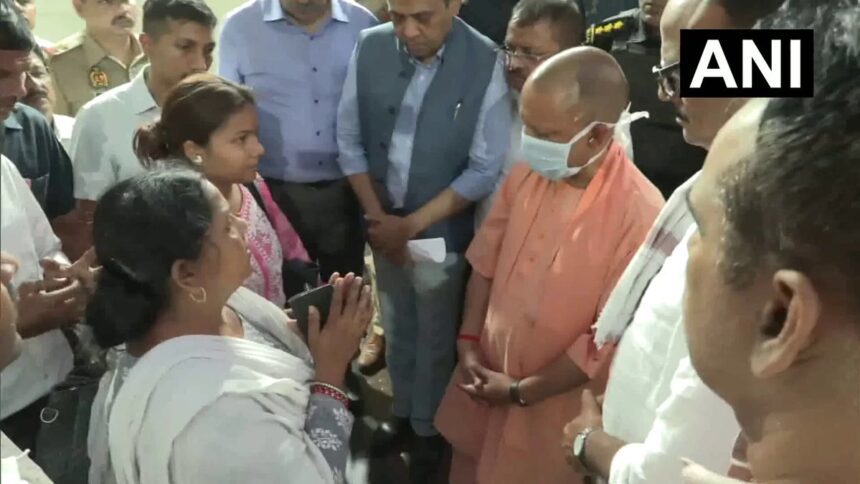

In a recent exchange, prominent commentator Mohammed Zubair criticized a news agency for sharing a muted video of Uttar Pradesh Chief Minister Yogi Adityanath engaging with the family of a crime victim. Zubair noted that the video was selectively muted to shield the government from potentially troubling statements made during the interaction, thus raising questions about media transparency.
Media Manipulation Allegations
The discussion began with a video shared by the Pro-BJP news agency, ANI, showcasing a brief interaction where CM Yogi meets with the family of a victim. Zubair pointed out that the video cuts off just as the family identifies themselves as ‘Pro-BJP supporters.’ Following this, Yogi’s immediate response was to suggest that their emotions were sufficiently expressed in a way that implied the conversation should end there. Zubair claims that the decision to mute the video was calculated to avoid backlash against the ruling party.
Context of the Incident
This incident occurred against a backdrop of intense political scrutiny in India, where the ruling Bharatiya Janata Party (BJP) often attempts to control narratives surrounding sensitive social issues. The interaction in question revolves around how politicians engage with constituents impacted by violence or crime, especially in a state like Uttar Pradesh, known for its complex socio-political dynamics. Zubair’s observations imply that the media’s role becomes compromised when they opt to suppress narratives that could be politically damaging to those in power.
Political Implications of Muffled Voices
By choosing to mute potentially damaging content, media organizations may inadvertently contribute to a manipulation of public perception. Such actions raise ethical questions about editorial integrity and independence. The choice to present information selectively forces the public to question the authenticity of the narratives they consume. It suggests a broader trend of consolidating power through media influence, prompting audiences to scrutinize not just the content presented, but the motivations driving editorial choices in a politically charged environment.
Why This Matters
The implications of this incident are significant for Indian politics and society. It serves as a reminder of the vital role that media plays in shaping democratic discourse. Manipulation of information can weaken public trust in media institutions, which are essential for the functioning of a healthy democracy. Furthermore, it highlights the ongoing struggle for accountability in governance, where the voices of victims and ordinary citizens should not be silenced or reframed for political expediency.
Frequently Asked Questions
What was the nature of the video shared by ANI?
The video depicted a conversation between CM Yogi Adityanath and the family of a crime victim, which was noted for being muted, particularly after the family expressed their pro-BJP stance.
Why did Zubair criticize the muted video?
Zubair criticized the muted video as a deliberate effort to avoid political fallout for the BJP, particularly after a statement by the victim’s family might have been seen as controversial.
What is the significance of the family’s pro-BJP statement?
The family’s support for the BJP while addressing the CM could complicate public perceptions of who is impacted by crime and the effectiveness of the government’s response.
How does this incident reflect broader media practices in India?
This incident points to a worrying trend of media bias and selective reporting that may serve political interests rather than fostering open dialogue about critical social issues.