
Summary
Recent comments from Madhya Pradesh minister Kailash Vijayvargiya have ignited controversy regarding the treatment of Muslim communities in India. His assertion that Muslims who label non-Muslim public representatives as “Kafir” should avoid utilizing infrastructure and welfare benefits provided by them highlights ongoing issues of discrimination and exclusion faced by Muslims under the current political regime.
Discriminatory Remarks and Political Context
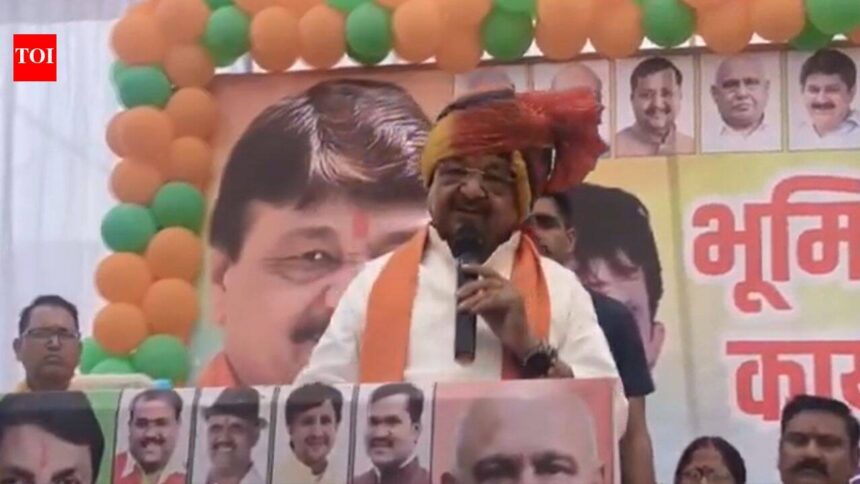
During the inauguration of development projects in Indore, Vijayvargiya claimed that if members of the Muslim community consider non-Muslim leaders “Kafir” (infidel), they should refrain from using roads built by them and abstain from government welfare schemes, such as the Ladli Behna Yojana. This statement is indicative of an alarming trend where public rhetoric serves to alienate specific communities based on religious identity.
Vijayvargiya purported that the government has never discriminated against any community, which contradicts the lived experiences of many Indian Muslims. The use of “Kafir” has historically been a contentious term, and its application in this political context serves only to deepen societal divides and promote exclusion.
Infrastructure and Economic Disparities
The claims made by Vijayvargiya raise significant concerns regarding the equitable distribution of resources and benefits among various communities in India. Despite his assertion that development schemes like the Ladli Behna Yojana cater to all, the underlying political messaging implies that government support is conditional upon religious allegiance.
Over recent years, marginalized communities, particularly Muslims, have faced systematic economic boycotts, impacting their access to jobs, housing, and essential services. Projects worth nearly Rs 2.40 crore, including drainage systems and road developments, may not address the broader social inequities faced by these communities.
Cultural Tensions and Social Inclusion
The term “Kafir” used by some Muslims as a pejorative descriptor of non-Muslims highlights internal community tensions but also serves as a critical reflection of the larger inter-religious dynamics in India. Vijayvargiya’s comments encapsulate a broader trend within the current government that appears to reward loyalty to a Hindu nationalist agenda while marginalizing minority groups.
The rhetoric surrounding “Sabka Saath, Sabka Vikas, Sabka Vishwas and Sabka Prayas” is often juxtaposed against these discriminatory practices, raising questions about the sincerity of such policies. The lack of genuine outreach to Muslim communities undermines notions of social cohesion and unity.
Why It Matters
Understanding the implications of Vijayvargiya’s statements is critical for grasping the social and political fabric of contemporary India. The marginalization of Muslims and the selective allocation of resources can contribute to broader societal unrest and polarize communities. For developers and policymakers, this situation underscores the importance of inclusive frameworks that consider the diverse needs of all communities to prevent economic disenfranchisement and social disintegration.
Frequently Asked Questions
What does “Kafir” mean in this context?
“Kafir” is a term that traditionally refers to a non-believer or infidel in Islam. Its use can carry significant social and cultural implications, especially when employed in political discourse.
How does this incident reflect the treatment of minorities in India?
This incident exemplifies the ongoing tensions faced by minorities, particularly Muslims, in India where political narratives often perpetuate division and exclusion rather than foster inclusivity.
What are the potential consequences of such statements?
Statements like those made by Vijayvargiya can exacerbate communal tensions, foster discrimination, and lead to further marginalization of minority communities, impacting social harmony.
What government schemes are affected by these comments?
Vijayvargiya specifically mentioned the Ladli Behna Yojana and Ladli Laxmi Yojana, which are welfare programs aimed at supporting various communities, indicating that access to these benefits may be perceived as conditional based on religious affiliation.