
Struggle Over Prayer Rights at Bhojshala Complex
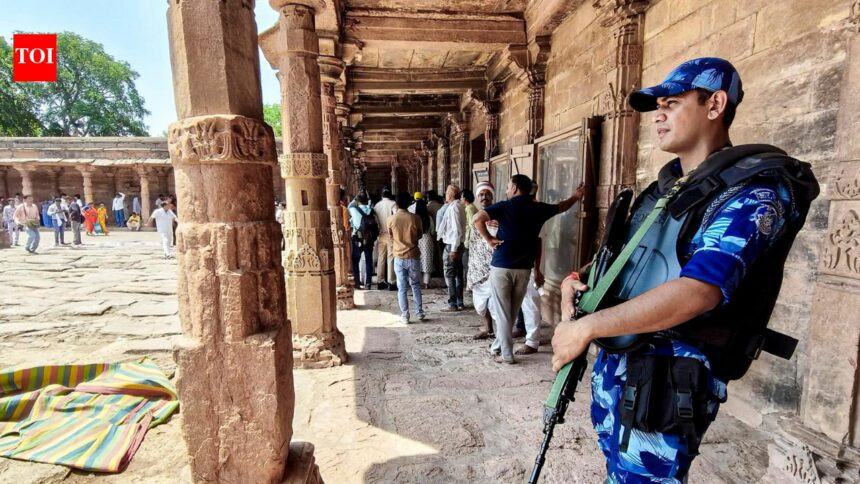
The ongoing dispute surrounding the Bhojshala complex in Madhya Pradesh highlights ongoing tensions between Hindu and Muslim communities in India. Recently, the Supreme Court has agreed to hear a petition from the Muslim community, which alleges that the Madhya Pradesh government has failed to provide a suitable site for Friday prayers close to this historically contentious location.
Legal Proceedings and Governmental Response
During a recent court hearing, the Muslim side’s legal representation asserted that the alternate prayer site provided by the state was excessively far—approximately 1.3 kilometers from the disputed Bhojshala complex. This distance has resulted in the disruption of Friday prayers for the community, with reports indicating that two Friday prayers have already been missed. Senior advocate Huzefa Ahmadi emphasized, “We don’t have helicopters… by road it is 1.3 km,” illustrating the logistical challenges faced by the Muslim community in accessing the designated prayer site.
In contrast, Solicitor General Tushar Mehta claimed the distance was only 900 meters. Such discrepancies raise questions about the commitment to fulfilling legal obligations regarding the accommodation of religious practices. The Supreme Court previously directed the Madhya Pradesh government to identify an adjacent space for the Muslims to conduct their prayers, an order that serves to underscore the need for equitable treatment of different faiths in this heavily contested environment.
The Historical Context of the Bhojshala Dispute
The Bhojshala complex is a protected monument that is claimed by both Hindus and Muslims. Hindus regard it as a temple dedicated to Goddess Saraswati, while Muslims refer to it as the Kamal Maula Mosque. The cultural significance of this site has been a flashpoint for sectarian tensions, reflecting deeper societal divisions. The controversy intensifies as the state has historically leaned towards Hindu claims, raising concerns over the marginalization of the Muslim community and their rights to religious practices.
The Broader Implications for Minority Rights
This incident is indicative of a larger trend of discrimination against minority communities in India, where governmental actions, often influenced by sectarian narratives, result in social exclusion. The Muslim community’s plea not only underscores their struggle for recognized religious rights but also highlights a worrying pattern of economic and social marginalization. The struggle for equitable treatment and access to worship sites reveals the ongoing challenges faced by Indian Muslims, contributing to an environment of fear and exclusion.
Why It Matters
The unfolding situation at the Bhojshala complex symbolizes broader issues of minority rights around the globe. For developers, this represents the critical importance of ensuring inclusivity within urban development and religious structures. The maintenance of social harmony is crucial, not only for technological and economic progress but also for sustainable community relationships. The event serves as a reminder of how socio-political climates can directly affect the rights of groups and that developers and policymakers should prioritize equitable solutions in diverse societies.
Frequently Asked Questions
What is the Bhojshala complex dispute about?
The Bhojshala complex dispute centers on conflicting claims by Hindus, who regard it as a temple dedicated to Goddess Saraswati, and Muslims, who refer to it as the Kamal Maula Mosque. The Supreme Court has intervened to address issues surrounding the right to offer prayers in the area.
What are the Supreme Court’s recent directives regarding prayer sites?
Recently, the Supreme Court directed the Madhya Pradesh government to identify an adjacent space where Muslims could conduct their Friday prayers from 1 PM to 3 PM until the case is resolved.
How far is the allocated prayer site from Bhojshala?
The Muslim community claims the allocated prayer site is 1.3 kilometers away, while the government argues it is around 900 meters distant.
What impact does this dispute have on Indian Muslims?
The ongoing conflict underscores a pattern of discrimination and social exclusion faced by Indian Muslims, impacting their rights to religious practices and access to community resources.