
Summary
In a recent incident, President Donald Trump faced accusations of Islamophobia following a provocative social media post juxtaposing himself and First Lady Melania Trump with Democratic Senate candidate Abdul El-Sayed and his wife Sarah, who wears a hijab. This event highlights ongoing discussions about identity politics, particularly concerning Muslim Americans, amid a polarized political landscape.
Islamophobia in Political Discourse
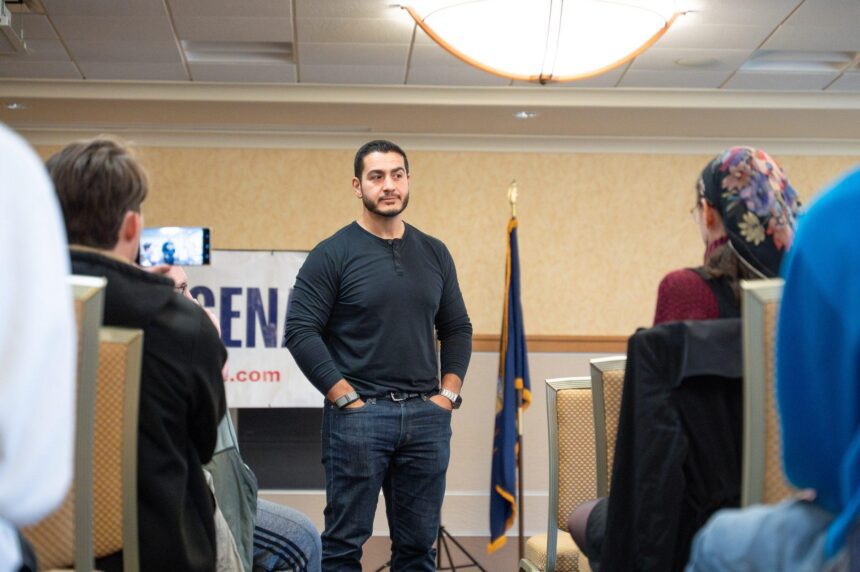
The graphic posted on Trump’s Truth Social platform presents formal photos of the Trumps alongside a casual image of the El-Sayeds, captioned “Two VERY DIFFERENT America’s,” with a grammatical error in the possessive form. Critics interpreted this as an attempt to foreground the couple’s Muslim identity rather than address any substantive policy differences.
El-Sayed, an Egyptian American physician and epidemiologist, responded to Trump’s post during an appearance on CNN. He acknowledged the implication of the frame and redirected the conversation to economic issues affecting Americans, stating, “Yeah, he’s right,” before highlighting challenges such as affordable healthcare and job availability. His remarks emphasized the relevance of policy over identity in American politics.
Amplification of Anti-Muslim Rhetoric
The incident gained traction with support from Trump ally Laura Loomer, known for her anti-Muslim activism. Loomer used Trump’s post to reignite calls for a ban on immigration from Muslim-majority countries, contributing to a broader wave of anti-Muslim discourse aimed at El-Sayed since his Democratic primary win. This suggests a strategic effort by political figures to frame the upcoming election around identity and cultural divisions, particularly regarding religious affiliations.
Political Identity vs. Policy Debate
The exchange not only put El-Sayed’s identity under scrutiny but also illustrated the challenge of navigating political discourse in an environment where personal attributes are leveraged as weapons. Political opponents are likely to intensify their focus on candidates’ identities, potentially overshadowing critical policy debates. El-Sayed’s retort about his marriage—”he and his wife ‘like each other'”—was a pointed contrast to the Trumps, adding a personal dimension to the political exchange.
This pattern of marginalization and discrimination is reflective of broader sociopolitical dynamics in the U.S., where identities can attract scrutiny that overshadows qualifications and policy positions. Such actions signal the need for voters to critically engage with the underlying issues rather than being swayed by identity-centric narratives.
Why It Matters
This incident is emblematic of the challenges faced by minorities in political discourse. Identity politics can often complicate the discussion around issues like economic disparity and healthcare, diverting attention from essential governance concerns. The way candidates are portrayed can influence public perception and voter behavior, especially among communities that feel marginalized or discriminated against.
For the global audience and policymakers, understanding the implications of identity-based political strategies is essential. This control of narratives not only affects elections but can also perpetuate cycles of discrimination and social exclusion, particularly against Muslim communities in America and elsewhere.
Frequently Asked Questions
What are the implications of identity politics in the U.S. elections?
Identity politics can affect voter perception and behavior, often overshadowing substantive policy discussions. Candidates may use identities as a strategy to influence electoral outcomes.
How has anti-Muslim rhetoric changed in recent years?
Anti-Muslim rhetoric has intensified, particularly among political figures and activists, often manifesting in policies and statements that marginalize Muslim communities and reinforce stereotypes.
What strategies do political candidates use to frame their opponents?
Candidates often frame opponents by emphasizing differences in identity, culture, or religion, attempting to create a stark contrast that resonates with their voter base while diverting attention from policy debates.
How can communities combat discrimination in politics?
Communities can combat discrimination by promoting inclusive dialogues, supporting diverse candidates, and advocating for policies that address systemic inequalities, thereby encouraging a move beyond identity-based narratives.