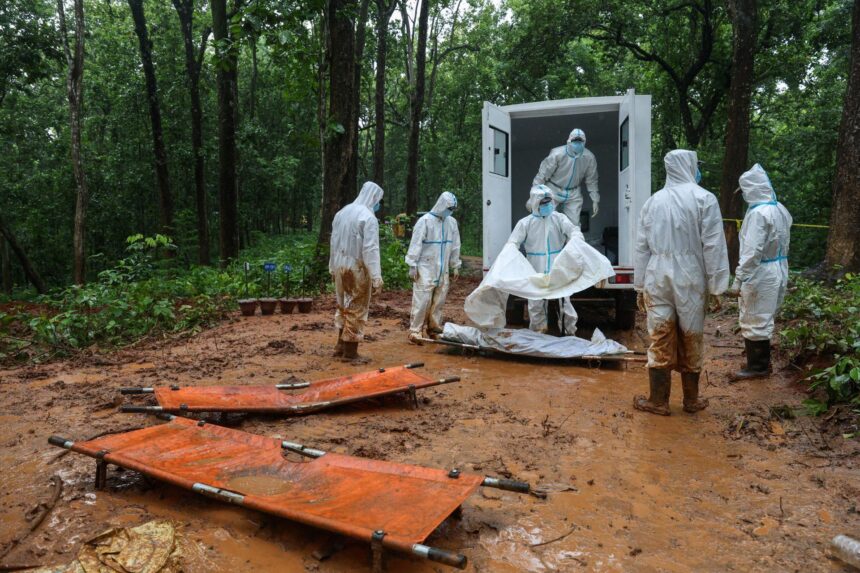

ISLAMABAD (AA) — The flash floods and mudslides that struck the Nepal-China border have led to a tragic loss of life, with the death toll reaching 1,130. Official figures show that 4,462 individuals are still unaccounted for, prompting extensive search and rescue operations involving thousands of security personnel.
Casualties and Rescue Efforts
According to Nepal’s National Disaster Risk Reduction and Management Authority, the calamity began on August 26 when a glacier on Mount Langtang Lirung fractured, resulting in a devastating avalanche. So far, 1,114 bodies have been recovered, and 292 individuals have sustained injuries. In Nepal alone, 3,916 people are missing, including 583 foreigners. The disaster has affected approximately 1.6 million individuals across the country.
Authorities have launched extensive rescue operations, with around 12,000 people rescued from the impact zones. Over 21,000 security personnel, comprising both army and police, have been mobilized to assist in search and rescue missions. Meanwhile, the Chinese side of the border has reported at least 16 fatalities, with 546 individuals missing, including 261 foreigners, according to China’s state-run Xinhua News Agency.
International Response and Assistance
In the wake of this calamity, substantial international assistance has begun pouring in. A 44-member Korea Disaster Relief Team from South Korea arrived in Nepal to aid search efforts, as at least nine South Koreans remain unaccounted for. China has also sent experts equipped with drones, DNA testing gear, water purification technology, and other resources to assist in recovery efforts. Additionally, India has dispatched specialists for DNA analysis to support the ongoing search operations.
The Gyirong Port in Tibet, a crucial area affected by the mudslides, has seen restoration of road access after days of repair work, allowing rescue teams and relief supplies to reach the area effectively.
Impact on Affected Regions
The disaster has heavily impacted several regions, including Nepal’s Rasuwa, Nuwakot, Dhading, and Kavre districts, alongside parts of the Kathmandu Valley. The flash floods triggered by the glacier’s collapse unleashed a significant debris flow, with floodwaters and mud inundating the valleys along the Nepal-China border. In Tibet, the aftermath of the mudslides also buried portions around the Gyirong border crossing, exacerbating the tragedy on both sides of the border.
Why It Matters
This disaster underscores the importance of disaster preparedness and international cooperation in humanitarian efforts. With the interconnectivity of global economies and societies, the ripple effects of such crises can be felt far beyond the immediate geographic area. Timely response and assistance can lead to better recovery outcomes, minimizing long-term social and economic impacts on affected communities. For developers and technologists in disaster management, this incident illustrates the critical need for innovative solutions in crisis response, such as improved communication technologies and data analysis tools for efficient deployment of resources.
Frequently Asked Questions
What caused the flash floods and mudslides along the Nepal-China border?
The disaster was initiated when a glacier on Mount Langtang Lirung fractured, leading to an ice-and-rock avalanche that resulted in a massive debris flow, significantly affecting both Nepal and Tibet.
How many people are currently missing due to the disaster?
As of the latest reports, 4,462 individuals remain missing, including 844 foreigners. In Nepal alone, there are 3,916 missing persons, including 583 foreigners, while the Chinese side reports 546 missing individuals.
What assistance is being provided internationally?
Countries such as South Korea and China have sent rescue teams and equipment. South Korea dispatched a 44-member disaster relief team, while China contributed drones, DNA testing tools, and other resources to support recovery efforts.
What has been the impact of the floods on the local population?
Approximately 1.6 million people have been affected by the disaster, with substantial losses in lives and property. The regions impacted have seen significant infrastructural damage and ongoing search and rescue difficulties.