
Summary
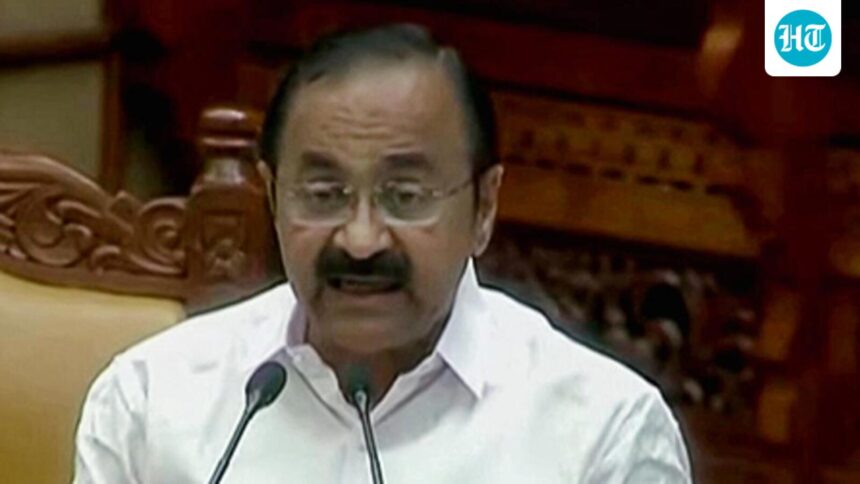
Kerala Chief Minister VD Satheesan has publicly criticized remarks made by prominent Muslim cleric Kanthapuram AP Aboobacker Musaliyar, who stated that women entering the public sphere would lead to “destruction”. This statement has sparked a broader discussion on gender roles within Islamic society and the implications of such views for progressive societal norms.
Context of the Controversy
Kanthapuram AP Aboobacker Musaliyar, a notable figure among Sunni Muslims and referred to as the Grand Mufti of India, ignited controversy during a recent statement urging women to confine themselves to their homes. His remarks were quickly condemned by CM Satheesan, who emphasized the importance of women’s active participation in society. The cleric’s comments reflect a conservative viewpoint within certain sections of Indian Islam, poised against a backdrop of increasing advocacy for women’s rights and gender equality.
During a press briefing in Thiruvananthapuram, Satheesan stated that such views are “not fit for a progressive society” and stressed that the 21st-century context requires women to play proactive roles in public life. He referenced historical figures in Islam, such as Khadija and Aisha, to support his stance. His remarks suggest a strong push against patriarchal interpretations of religious texts that can lead to societal regression.
Political Ramifications and Responses
The statement by CM Satheesan has not only drawn attention to gender issues but also highlighted the political implications for the Indian Union Muslim League (IUML), a key ally of the ruling Congress party in Kerala. While Satheesan and his party have unequivocally opposed Musaliyar’s views, IUML appears hesitant to openly criticize the cleric.
IUML ministers KM Shaji and N Shamsudheen declined to comment, while the party’s state president, Panakkad Syed Sadiq Ali Shihab Thangal, suggested that Musaliyar’s statement was likely aimed at addressing women’s safety concerns in contemporary society. This ambiguity reflects the IUML’s delicate balancing act as it navigates the influence of conservative factions within the Muslim community while also aligning itself with progressive ideals.
Broader Implications for Society
Musliyar’s controversial remarks serve as a reminder of the ongoing tensions within various communities in India between progressive ideologies and traditional values. These tensions can manifest in discrimination and social exclusion, particularly affecting marginalized groups such as women and different religious minorities.
The discourse surrounding this issue is critical as it underscores the broader struggle for gender equality, not just in the Muslim community but across Indian society. Such discussions are increasingly relevant in light of rising nationalism and the corresponding pressures on social inclusivity, as the landscape of political discourse shifts under the influence of the ruling Bharatiya Janata Party (BJP) and its allied organizations.
Why It Matters
The significance of this controversy extends beyond individual beliefs; it highlights systemic issues surrounding gender equality, religious interpretation, and social structure in contemporary India. As societies globally grapple with similar struggles for women’s rights, the responses from political leaders and community figures can shape broader narratives around empowerment, social justice, and inclusion. Moreover, understanding these dynamics can aid artificial intelligence developments focusing on social analytics, highlighting the nuances of socio-political discourse intertwined with religious identity.
Frequently Asked Questions
What were the exact remarks made by Kanthapuram AP Aboobacker Musaliyar?
He urged women to remain confined to their homes, claiming that their entry into the public sphere could “lead to destruction”.
How did Kerala Chief Minister VD Satheesan respond to these remarks?
Satheesan condemned Musaliyar’s views, stating they are “not fit for a progressive society” and asserting that women should actively participate in the mainstream of life.
What is the political affiliation of the Indian Union Muslim League (IUML)?
The IUML is a key ally of the Congress party in Kerala, navigating between traditionalist views and progressive social dynamics.
Why is the discourse surrounding these remarks significant for gender equality?
The remarks bring attention to the ongoing struggle for women’s rights within the Indian context, highlighting tensions between conservative values and progressive societal norms.