
France has recently experienced significant unrest as protests against rising living costs turned violent, resulting in widespread damage and numerous arrests. The clashes underscore growing frustrations over economic conditions and political leadership, raising questions about stability in France ahead of upcoming elections.
Protests Turn Violent Across France
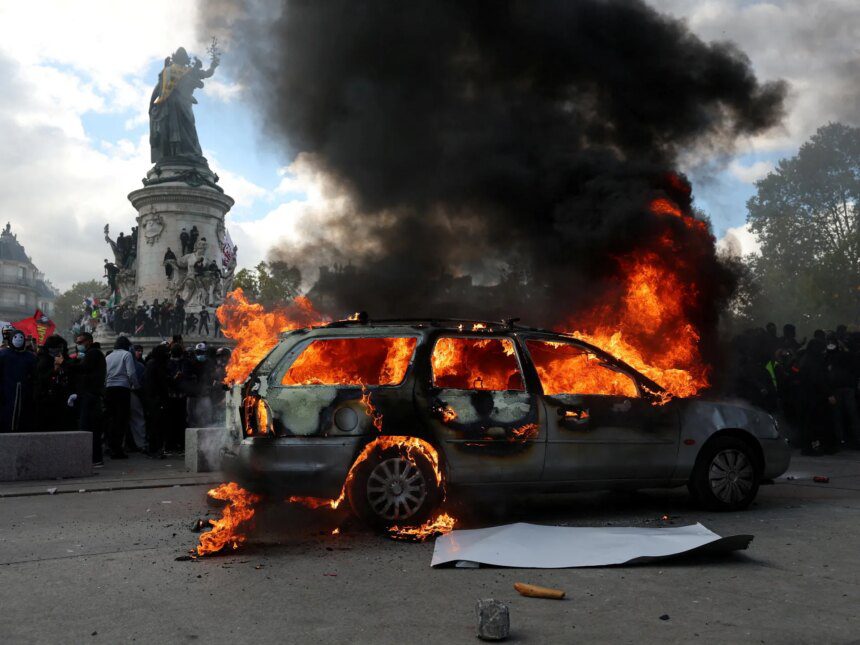
What began as peaceful demonstrations against soaring prices and declining living standards quickly escalated into unrest across major French cities on Saturday. Demonstrations in Paris, Marseille, Nice, Bordeaux, Lille, and Strasbourg saw masked individuals engaging in violent confrontations with law enforcement, igniting vehicles, and looting shops.
Authorities reported around 1,200 arrests and injuries to approximately 150 police officers during the protests. Paris Deputy Mayor Emmanuel Gregoire described the destruction, stating “whole streets have been devastated.” Prime Minister Sebastien Lecornu noted that it was “a miracle the toll isn’t higher” given the severity of the violence.
Casualties and Damage Reports
The protests not only led to property destruction but also injuries, with one reported case in Saint-Etienne where a 17-year-old lost his right hand due to a crowd-control grenade. Key governmental buildings, including town halls in Limoges, Marseille, and Lille, were vandalized, along with a police compound in Bordeaux and a tourist office in Lyon.
The ongoing violence is particularly concerning as it follows weeks of student protests advocating for increased investment in education, highlighting a broader sense of unrest among various sections of society. With the presidential election looming just six months away, the timing of the unrest poses significant challenges for the current administration.
Political Implications in France
The unrest has intensified the political blame game in France, with far-right and left-wing political candidates accusing each other of inciting violence. President Emmanuel Macron has stepped into the fray, promising that those responsible for the riots will be prosecuted and punished. This situation creates a critical backdrop for the approaching election, as public opinion may shift based on perceptions of government handling of social unrest.
The stakes are high not only for Macron but also for political contenders looking to capitalize on public discontent. Given the importance of economic indicators in shaping voter sentiment, the government’s response to both the protests and broader economic issues will be closely scrutinized.
What This Means
The violence and unrest in France serve as a reminder of the delicate balance between civil unrest and governmental stability in any democratic nation. For India, a country that has faced its share of protests over various issues in the past, the events in France underscore the potential volatility that can arise when citizens feel disenfranchised or ignored by their leaders.
As a rising global power, India may find itself needing to strengthen its social safety nets and economic policies to prevent similar types of unrest. Ensuring better mechanisms for public discourse around economic grievances could also be essential in maintaining stability.
Frequently Asked Questions
What sparked the protests in France?
The protests were initially sparked by dissatisfaction over rising living costs and declining standards of living, which have affected many citizens across the country.
How have French authorities responded to the unrest?
French authorities have responded by deploying tear gas and water cannons to disperse crowds, leading to many arrests and injuries among both protesters and police officers.
What are the political implications of the protests?
The protests come at a critical time as they occur six months before the presidential election, potentially affecting public opinion and voter sentiment toward current political leadership.
What can other countries learn from the unrest in France?
Countries like India can learn the importance of addressing citizens’ grievances proactively to maintain social stability and prevent escalations into violence.