
Summary
The recent demolition of nearly 100 homes in the Muslim-majority Nasirnagar settlement of Surat, Gujarat, has sparked widespread outrage and prompted legal action. Local authorities have denied involvement in the demolitions, raising questions about accountability, discrimination, and the treatment of marginalized communities under the ruling Bharatiya Janata Party (BJP) government.
The Context of the Demolitions
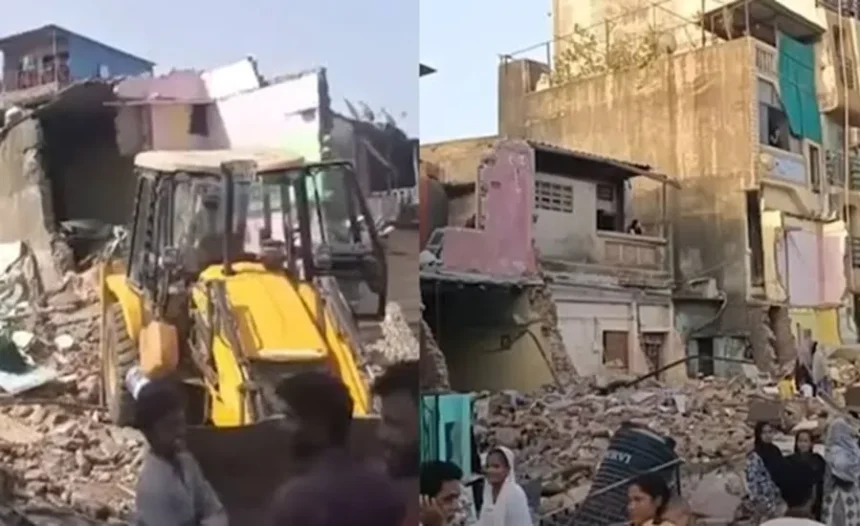
On May 30 and June 1, residents of Nasirnagar found their homes destroyed by bulldozers in a swift operation characterized by the absence of prior notice. Situated in Gujarat’s Katargam area, this informal settlement housed families whose lives were significantly disrupted as possessions accumulated over the years were reduced to rubble. Witnesses reported that women and children pleaded with officials as their homes were razed in the presence of police officers, leading to questions about the legitimacy of the operation.
Government Denials and Investigations
The Surat Municipal Corporation issued a statement denying any responsibility for the demolitions and indicated that it is conducting an inquiry to uncover who authorized such an operation. Officials claimed that personnel present in the area were engaged in land demarcation and road measurements, rather than demolitions. However, the municipal commissioner further insinuated that the land in question might belong to a private entity, casting doubt on accountability for the destruction of homes.
Uncertainty looms as even leaders from the ruling BJP have affirmed the unusual nature of the demolitions, pointing out the absence of any formal orders from the municipal body. They too expressed confusion over how such an extensive operation could occur without proper legal sanction. In the aftermath, Ajij Husain Shaikh, a resident who lost his home, has taken the issue to the Gujarat High Court, alleging violations of due process. His case is set to be heard this week.
Opposition Calls for Accountability
The opposition Congress party has seized the opportunity to demand an independent investigation, emphasizing that nearly 100 homes cannot be demolished without the knowledge of high-ranking officials. They have criticized the lack of clarity surrounding who sanctioned this operation and have urged the state government to provide answers. The episode raises broader questions about discrimination, social exclusion, and the treatment of marginalized populations, particularly Muslims, under state policies.
Why It Matters
This incident underscores systemic issues faced by marginalized communities in India, particularly under the BJP regime. It highlights the precariousness of land rights for informal settlements, especially in urban settings where vulnerable populations often find themselves on the periphery of society. Furthermore, the lack of accountability from authorities raises concerns about the potential for state-sanctioned violence against marginalized groups. Such events challenge the credibility of governance and undermine the principles of justice and equality.
Frequently Asked Questions
What happened during the demolition in Nasirnagar?
Nearly 100 homes were demolished without prior notice in the Nasirnagar settlement between May 30 and June 1, resulting in significant displacement of families.
How has the Surat Municipal Corporation responded to the demolitions?
The Surat Municipal Corporation has denied conducting the demolitions and stated it is investigating who authorized the action, claiming officials present were performing land demarcation.
What legal actions have been taken in response to the demolitions?
Ajij Husain Shaikh, a resident of Nasirnagar, has approached the Gujarat High Court, alleging that the demolitions violated due process and were carried out without legal authorization.
Why is this incident significant for the Muslim community in India?
This incident reflects ongoing issues of discrimination and marginalization faced by Muslims in India, particularly under the current BJP government, raising concerns about land rights and state complicity in such actions.