
Summary
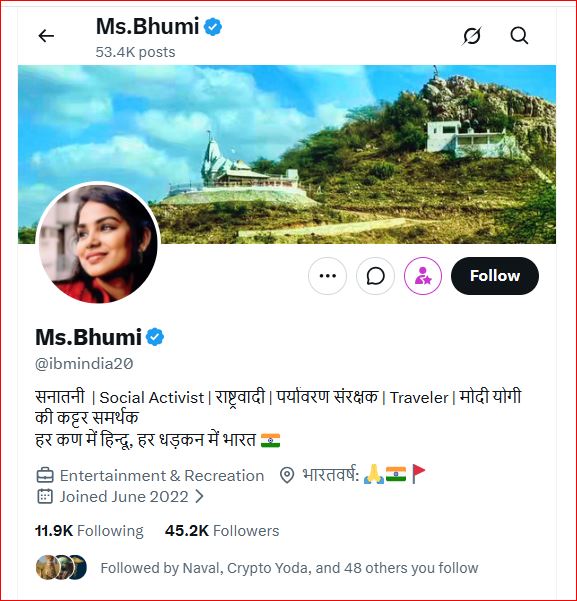
In a recent online post, prominent Indian political commentator Mohammed Zubair (@zoo_bear) highlighted a Twitter account claiming to be a woman who identifies as a staunch supporter of Prime Minister Narendra Modi and Uttar Pradesh Chief Minister Yogi Adityanath. Zubair criticized the accountability of law enforcement under Adityanath’s leadership, suggesting that misbehavior on social media should be addressed by the Uttar Pradesh Police, whom he believes operate under the Chief Minister’s direction.
Context: Social Media’s Role in Political Discourse
Social media platforms have become essential tools for political discourse in India. They enable users to express opinions and mobilize support, often transcending traditional media channels. The rise of accounts that promote specific political parties or leaders, such as the one pointed out by Zubair, reflects a trend where individuals align themselves closely with political figures, often creating an echo chamber for their beliefs. However, this can also lead to polarizing online interactions and instances of harassment or misinformation, prompting calls for accountability from authorities.
Background: Law Enforcement in Uttar Pradesh
Uttar Pradesh, the most populous state in India, has experienced significant scrutiny surrounding its law enforcement practices. Under Chief Minister Yogi Adityanath, the UP Police have often been critiqued for their handling of various cases, particularly regarding political dissent and social media conduct. Critics argue that the police act as an arm of the ruling party rather than an impartial body of justice. In this context, Zubair’s remarks underscore a growing concern about the politicization of law enforcement, especially in cases linked to online activity.
Analysis: Identity and Political Allegiance
The account noted by Zubair has a bio that identifies it as a “Kattar Samarthak” (staunch supporter) of Modi and Adityanath, mirroring a phenomenon where political identities are tied to social media personas. This can create a sense of belonging among followers but also foster hostility towards dissenters. By emphasizing identity in online discourse, such accounts contribute to a fragmented political landscape where loyalty to a political figure often outweighs the value of constructive dialogue. Zubair’s observations highlight the implications of such behavior in a democracy, where citizen engagement should ideally promote discussion rather than division.
Why This Matters
The unfolding controversy surrounding social media accounts and their ties to political inclination holds significant implications for India’s democratic fabric. As discourse increasingly shifts to online platforms, the government’s approach to policing social media actions could set precedents for freedom of expression and political dissent. The comments from Zubair reflect a broader concern about how closely intertwined political power and law enforcement can lead to the silencing of voices that challenge the status quo. This situation raises questions about accountability and transparency within the government and its institutions, particularly concerning the dissemination of information in the digital age.
Frequently Asked Questions
What does Mohammed Zubair’s tweet address?
Zubair’s tweet addresses an account that claims to be a woman and identifies itself as a staunch supporter of PM Modi and CM Adityanath, calling into question the actions of the Uttar Pradesh Police under their leadership.
Why is the identity of social media users significant in Indian politics?
The identity of social media users often reflects their political allegiance, which can influence public engagement and opinion. This can lead to polarized dialogue and impact the overall political climate.
What issues has Uttar Pradesh’s law enforcement faced under Yogi Adityanath?
Law enforcement in Uttar Pradesh has faced criticism for being politicized and excessively controlling dissent, especially regarding cases involving social media and political opinions.
Why is it important for law enforcement to act independently?
Independent law enforcement is crucial for maintaining rule of law and protecting civil liberties. When police operate under political influence, it undermines public trust and the principles of justice and accountability.