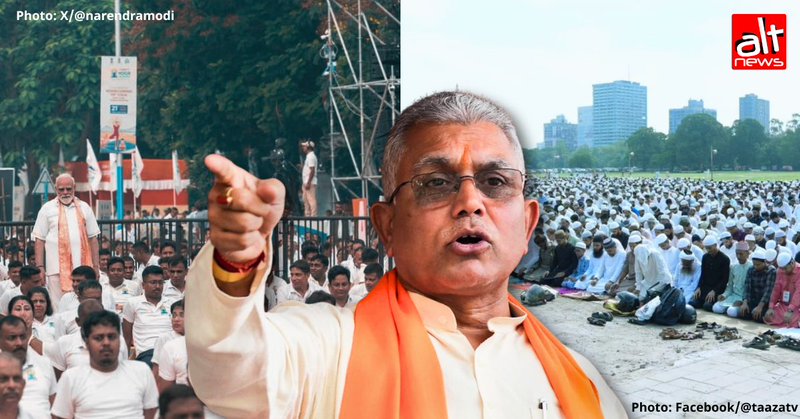

The recent closure of Red Road for seven days to accommodate a Yoga Day event led by Prime Minister Modi has sparked controversy, especially with the decision to relocate traditional Eid prayers from the same venue. Bengal minister Dilip Ghosh further inflamed the situation by suggesting that those wanting to offer namaz should go to Bangladesh or Pakistan, raising concerns about religious sensitivity and state policy.
Context of the Red Road Closure
Red Road, a prominent thoroughfare in Kolkata, is often used for various public events and celebrations. This year, it has been designated for a week-long celebration of International Yoga Day, which is led by Prime Minister Narendra Modi. The event is part of a broader initiative to promote yoga and wellness among the Indian populace. However, this closure has inconveniently overlapped with the time when Eid prayers, significant for the Muslim community, would typically be held, spurring backlash.
Government Response and Controversy
The decision to prohibit Eid prayers at the venue was met with accusations of bias against Muslim citizens. Minister Dilip Ghosh’s comments, suggesting that Muslim worshippers should go elsewhere for their prayers, have been criticized as inflammatory. This response not only accentuates the logistical issues arising from the venue’s closure but also raises questions about the government’s respect for religious plurality and the rights of minority communities in India. Many citizens view this as a reflection of systematic neglect towards the Muslim populace, especially during significant religious occasions.
Public Reaction and Political Implications
The political landscape in India is often polarized on religious lines, and this incident is likely to evoke strong sentiments among various communities. Critics have called for the state to manage public spaces in a way that respects all religious practices. The episode has triggered protests and mobilizations, with activists and political opponents voicing their concerns over Ghosh’s comments. Such incidents can lead to heightened tensions, complicating the already delicate balance between different religious communities in India. This controversy may become a focal point for political discourse leading up to future elections, influencing voting behavior among religious constituents.
Why This Matters
The situation is emblematic of broader questions about secularism and minority rights in India. How the government navigates the tension between hosting large-scale events celebrating certain cultural identities while respecting the practices of diverse communities reflects on its commitment to an inclusive society. Given that such incidents can polarize communities, the government’s approach could have significant implications for social cohesion and political stability in the country. This event could galvanize various groups and play a pivotal role in shaping the political narrative in West Bengal and beyond.
Frequently Asked Questions
Why was Red Road closed for Yoga Day?
The closure was intended to facilitate a week-long celebration of International Yoga Day led by Prime Minister Modi, promoting health and wellness through yoga.
What did Dilip Ghosh say about Eid prayers?
Dilip Ghosh suggested that those wanting to offer namaz should go to Bangladesh or Pakistan, which has been criticized as a disrespectful remark towards the Muslim community.
How has the community reacted to this decision?
The community has reacted with anger and disappointment, viewing the decision as an infringement on their religious rights and a sign of bias against Muslims.
What are the potential political implications of this incident?
This incident may impact voter sentiments, particularly among minority communities, and could influence political alliances and outcomes in future elections in West Bengal and on a national scale.