
The ongoing conflict in Gaza has significantly impacted the daily lives of its residents, especially in the tobacco market. Due to severe restrictions on imports, street vendors have started mixing molokhia—a local herb—with nicotine to create smoking substitutes, raising serious health concerns.
Economic Hardships and Rising Tobacco Prices
Since the outbreak of war in Gaza, the economic landscape has drastically shifted. Israeli forces have implemented stringent regulations that have blocked the import of essential goods, including tobacco products. This blockade has resulted in soaring prices for traditional tobacco, with the cost of a single pack surging from 15 shekels ($5.15) to 500 or 600 shekels ($171 to $205).
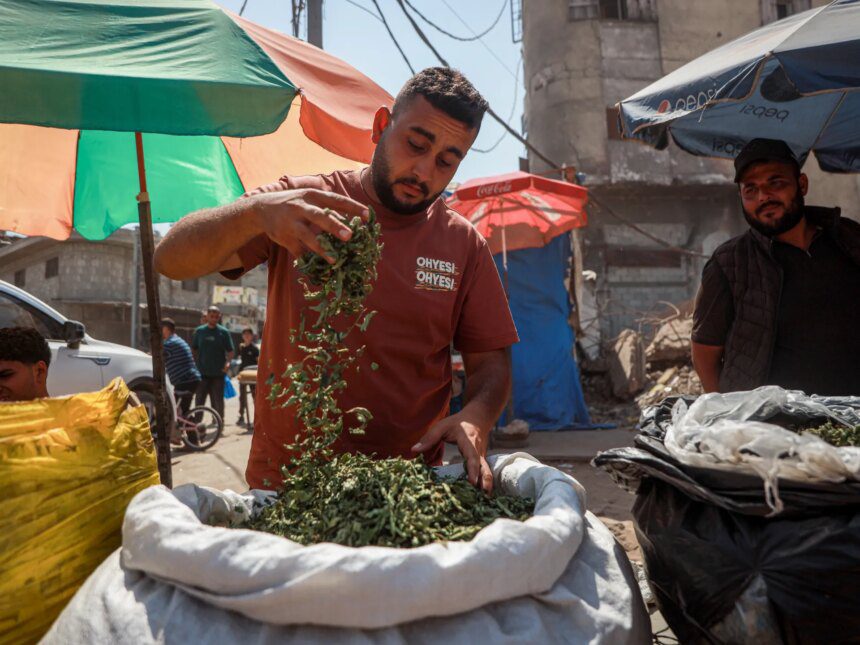
Abdul Karim Heles, a 36-year-old vendor from Shujayea, reflects on the challenges: “We’ve been working in tobacco since before the war… and we continued during it. I have no other profession.” The drastic price hike has forced vendors and consumers to find alternative solutions, despite the dangers that may come with them.
Molokhia: The Unconventional Substitute
In a desperate response to the financial pressures of rising cigarette prices, many have turned to a makeshift alternative. Molokhia, a herb common in Middle Eastern diets, has become a popular base for improvised smoking mixtures. This herb is mixed with raw nicotine—a dangerous substance that poses serious health risks.
“Using raw nicotine with herbs is dangerous… it’s toxic and can cause death,” says Heles, who recalls tragic incidents where two individuals suffered fatal consequences after consumption. The rudimentary preparation process, involving the drying and crushing of molokhia, lacks any safety standards, exacerbating the health risks associated with this alternative.
Health Risks and Consumer Behavior
Despite warnings about the dangers of using raw nicotine, the practice has gained traction due to economic necessity, reflecting a troubling trend in consumer behavior. The rise in unconventional substitutes is less about health awareness and more about survival amidst scarcity. Many residents can no longer afford traditional tobacco products due to sharp increases in prices, leading them to seek alternatives.
“Nicotine doesn’t stick to all herbs,” Heles explains. “Molokhia holds it… that’s why it became so widespread.” However, as more people resort to these alternatives, the consequences for public health could be severe. The ongoing scarcity of viable options means that many in Gaza are left with little choice but to gamble with their health for the sake of affordability.
What This Means
This situation in Gaza offers critical insights into the broader issues of economic sanctions, public health, and human resilience. For Indian readers, the implications are relevant on multiple levels. Not only does it highlight the impact of geopolitical conflicts on civilian life, but it also serves as a reminder of the potential health crises that can arise from economic desperation.
As markets become unstable, the shift in consumer behavior also raises questions about public health responses. Moreover, as India has its own challenges with tobacco regulation and health impacts, this case can resonate with initiatives aimed at ensuring the welfare of citizens in the face of economic and health-related challenges.
Frequently Asked Questions
What is molokhia, and why is it used in Gaza?
Molokhia is a leafy green vegetable commonly used in Middle Eastern cuisine. In Gaza, due to the economic crisis caused by the blockade, it has been repurposed as an ingredient mixed with nicotine to create smoking substitutes.
Why are cigarette prices in Gaza so high?
Cigarette prices in Gaza have skyrocketed due to Israeli restrictions on tobacco imports, leading to scarcity and inflation. A pack that previously cost 15 shekels is now priced between 500 and 600 shekels.
What are the health risks associated with using nicotine mixed with herbs?
Using raw nicotine with herbs like molokhia poses severe health risks, including poisoning and even death. Such substances are toxic, and there have been reports of fatalities linked to their consumption.
How has the conflict in Gaza affected local businesses?
The ongoing conflict and restrictions have destabilized local businesses, leading to a reliance on unconventional and unsafe alternatives. Vendors like Abdul Karim Heles struggle to maintain their livelihoods while facing soaring costs and dwindling supplies.